
Australian Cattle Dog
Queensland Heeler, Blue Heeler, Hall's Heeler, ACD, Cattle Dog, Red Heeler
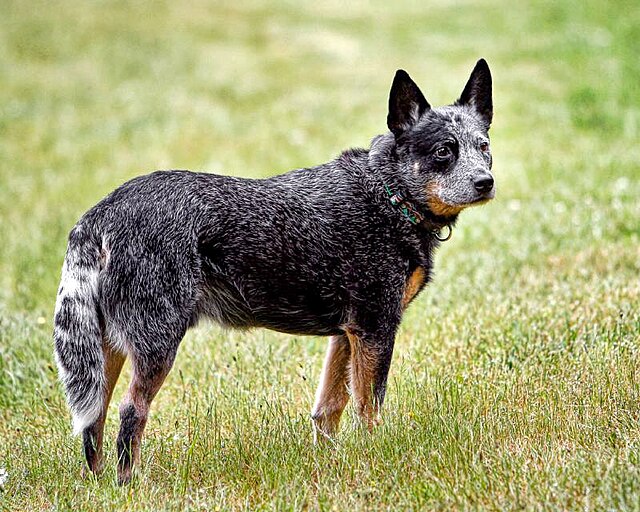
The Australian Cattle Dog, still widely called the Blue Heeler or Queensland Heeler, is a compact, hard-muscled working dog bred to move stubborn cattle across big country. This is one of the most intelligent and driven breeds you will meet, and that cuts both ways. Given a job, daily physical work and something to think about, a Cattle Dog is loyal, biddable and almost tireless. Left under-exercised in a suburban backyard, the same dog will dig, bark, nip heels and reorganise your house out of sheer frustration. They bond hard to one or two people and can be wary of strangers. They are not a good match for first-time owners, very young children or people who are out all day. The short, dense coat needs little more than a weekly brush, with heavier moulting twice a year.
Size
Medium
Lifespan
12-15 years
Group
Group 5 - Working Dogs
Height
Male: 43-51 cm (17-20 inches), Female: 43-48 cm (17-19 inches)
Weight
Male: 13-28 kg (29-62 lbs), Female: 13-28 kg (29-62 lbs)
Origin
Australia
Compatibility & care
How this breed fits into life with you
Scores are out of 5. Tap the help icon next to any trait to see what it really means.
Personality
How they think and behave
With family
Who they get along with
Care needs
What they ask of you
Origin & history
Developed in 19th-century New South Wales, the breed was bred to fix a real problem: British herding dogs could not cope with semi-wild cattle and long droving distances in the Australian heat. Stockmen, most famously Thomas Hall and later George Elliott and the Bagust brothers, crossed working collie types with the native Dingo, then added Dalmatian and a dash of Kelpie influence. The result was a quiet, hardy heeler that worked stock by nipping at the heels rather than barking. It became indispensable to the Australian beef industry and is genuinely one of the country's signature breeds. The Dingo blood is still visible in the build, the coat and the independent streak. A Cattle Dog named Bluey from Victoria held the record as one of the longest-lived dogs ever recorded, which says plenty about the breed's working hardiness.
Temperament
With its own family this is an affectionate, intensely loyal dog that wants to be near its people and involved in whatever is happening. With strangers it tends to be reserved and naturally watchful, which makes it an excellent alarm dog, though without early socialisation that wariness can tip into suspicion. The herding instinct is strong, so many Cattle Dogs will try to round up children, joggers and other pets by nipping at heels, a habit that needs redirecting from puppyhood. They are bright enough to learn almost anything and equally capable of inventing their own entertainment if bored. Same-sex dog aggression is not unusual. This is an independent thinker that respects calm, consistent handling and switches off badly when its mind and body are not worked. Give it a job and clear leadership and you have a superb partner.
Appearance
A sturdy, slightly long-bodied dog standing roughly 43 to 51 cm at the shoulder and weighing around 15 to 22 kg, with males larger than females. The build is all working substance, muscular and agile rather than bulky. The weatherproof double coat is short and dense, sitting close to the body. Two colours are standard: blue (often called blue mottled or blue speckled, sometimes with black, tan or blue markings) and red speckle. Pups are born white and develop their speckling as they grow. The ears are pricked and wide-set, the eyes oval and dark, and the overall expression is alert and slightly watchful.
Suitability
This is a house-and-acreage dog, or at the very least a committed runner or rural worker's dog, not an apartment breed. It needs an active, confident owner who genuinely enjoys training and will provide a real outlet every single day, whether that is stock work, long runs, agility or canine sports. First-time owners usually find them too much. They can tolerate a few hours alone if properly exercised first, but long daily isolation breeds destructive, noisy behaviour. The breed copes well with the Australian climate, including heat, thanks to its working heritage, though like any dog it needs shade and water on hot days. Keep yards securely fenced, as a bored Cattle Dog is a known escape artist.
Health
Most Australian Cattle Dogs are tough and live around 12 to 15 years, often longer. The two best-documented inherited problems are hip dysplasia and progressive retinal atrophy, a DNA-testable cause of gradual blindness. Congenital deafness is a real concern in the breed and is linked to the extreme white spotting gene rather than to merle, so responsible breeders BAER hearing-test their pups. Primary lens luxation also occurs and has a DNA test. Buy only from a breeder who can show you current hip scores, an eye certificate, BAER results and the relevant DNA tests (PRA and PLL) on the parents. Skip any breeder who will not produce paperwork, and keep your dog lean, since an overweight Cattle Dog puts needless strain on its joints.
Find your Australian Cattle Dog
Browse trusted Australian Cattle Dog breeders across Australia and read genuine reviews from real owners, or take the quiz to be sure of the fit.