
Airedale Terrier
Waterside Terrier, Bingley Terrier, Irish Red Terrier
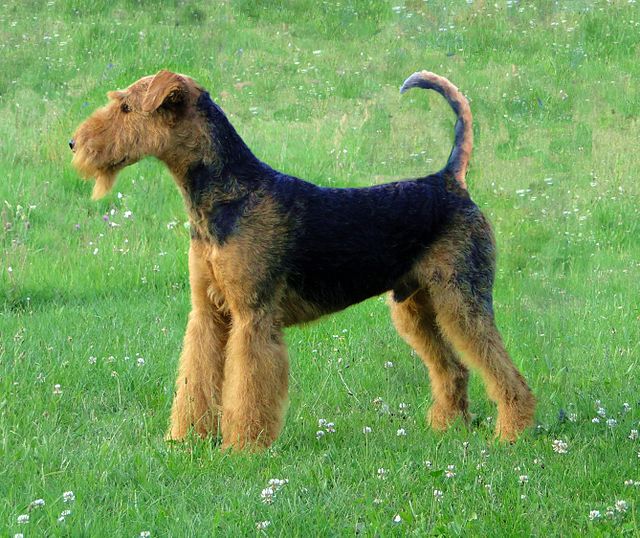
The Airedale Terrier is the largest of the terriers, a tall, square-built working dog from Yorkshire with a harsh wiry coat and a lot of personality. It is clever, energetic and game, happy to turn its hand to almost anything, and it carries the classic terrier traits of boldness, independence and a quick temper if pushed. With its own people it is affectionate, playful and protective, but it can be scrappy with strange dogs and has a strong prey drive toward cats and small animals. This is an active dog that needs real daily exercise and mental work, and it gets bored and destructive without it. It suits owners who enjoy training and outdoor activity, and is a poor match for sedentary or hands-off homes. The coat does not shed much but needs regular brushing and hand-stripping or clipping every few months to keep its texture and shape.
Size
Medium
Lifespan
10-13 years
Group
Group 2 - Terriers
Height
Male: 56-61 cm (22-24 inches), Female: 56-58 cm (22-23 inches)
Weight
Male: 23-29 kg (51-64 lbs), Female: 18-20 kg (40-44 lbs)
Origin
United Kingdom
Compatibility & care
How this breed fits into life with you
Scores are out of 5. Tap the help icon next to any trait to see what it really means.
Personality
How they think and behave
With family
Who they get along with
Care needs
What they ask of you
Origin & history
The Airedale Terrier was developed in the mid-19th century in the Aire Valley of West Yorkshire, England, by working men who crossed old black-and-tan terriers with the Otterhound to produce a larger dog that could hunt and swim. The result was a versatile worker used on rats, otters and other vermin along the rivers, and later on larger game. Its size, nerve and trainability soon saw it put to wider use as a guard, a police dog and a messenger and sentry dog in the trenches of World War I, where the breed earned a strong reputation. It became known as the King of Terriers for its stature and adaptability. Airedales have also worked as gundogs and were popular early in the 20th century before more specialised breeds took over many of their jobs. Today they remain capable all-rounders kept as companions and seen in obedience, agility and tracking.
Temperament
The Airedale is confident, outgoing and full of energy, with the independent streak and self-belief typical of the terriers. It bonds strongly with its family, is usually good and patient with children it has grown up with, and makes an alert, protective watchdog without being a natural biter. With strangers it is friendly but watchful. Same-sex dog aggression and a keen prey drive are real considerations, so early socialisation and a secure yard matter, particularly around cats and small pets. Airedales are very intelligent and learn quickly, but they bore easily and will think for themselves, so training needs to be interesting, firm and reward-based rather than repetitive drilling. A bored or under-exercised Airedale digs, chews and barks, so it needs both a job for its brain and a good outlet for its body.
Appearance
A medium to large terrier, with males standing about 58 to 61 cm and females slightly less, and weights typically around 20 to 30 kg. The build is square and athletic, with a long flat head, a strong muzzle, small dark eyes and neatly folded V-shaped ears. The double coat is the defining feature: a hard, dense, wiry outer coat over a softer undercoat, with the longer furnishings on the muzzle forming the characteristic beard. The colour is a tan body and legs with a black or dark grizzle saddle over the back and sides. The tail is carried high and the whole dog looks alert, upstanding and ready for work.
Suitability
The Airedale is best in an active house with a securely fenced yard, owned by people who want to walk, train and play with their dog every day. It can manage suburban life given enough exercise, but it is not an apartment dog or a breed for those wanting a quiet, low-effort companion. A motivated first-time owner can do well with one provided they commit to training and socialisation and can handle a strong, busy terrier. It tolerates moderate time alone if properly exercised, but long lonely days lead to boredom and mischief. The harsh double coat gives reasonable weather protection, though in the Australian summer Airedales still need shade, water and exercise in the cooler hours, and the beard and coat need regular attention to stay comfortable.
Health
Airedales generally live around 11 to 14 years and are a reasonably sturdy breed. Hip dysplasia occurs and is worth screening for, and the breed can be affected by skin problems, including allergic and itchy conditions that suit its harsh coat poorly when neglected. Hypothyroidism is reported. Eye conditions such as progressive retinal atrophy are seen in some lines, and as a deep-chested dog the Airedale carries some risk of gastric dilatation-volvulus (bloat). Certain bleeding disorders, including von Willebrand disease, and umbilical hernias also turn up. Buy from breeders who hip score, eye test and where relevant DNA test their stock, and who are open about any skin, thyroid or bloat issues in their lines. Keeping the coat properly maintained and the ears clean helps head off common skin and ear trouble.
Find your Airedale Terrier
Browse trusted Airedale Terrier breeders across Australia and read genuine reviews from real owners, or take the quiz to be sure of the fit.