
Alaskan Malamute
Mal, Mally
The Alaskan Malamute is a large, powerful Arctic sled dog built for hauling heavy loads over long distances, not for speed. It is friendly, affectionate and sociable, typically good-natured even with strangers, which makes it a poor guard dog but a warm family companion. Behind that friendliness sits a strong, independent working dog with a high prey drive, a love of digging and a real stubborn streak, so it needs an owner who enjoys training and can stay consistent. Exercise needs are high: this is a dog bred to work all day and it gets destructive and noisy when under-exercised or bored. The thick double coat sheds year-round and blows out heavily twice a year, demanding frequent brushing. Malamutes suit active, experienced owners with space and time. They do not suit sedentary households, very hot homes, or anyone wanting an off-lead reliable or low-maintenance dog.
Size
Large
Lifespan
12-15 years
Group
Group 6 - Utility
Height
Male: 61-66 cm (24-26 inches), Female: 56-61 cm (22-24 inches)
Weight
Male: 36-43 kg (80-95 lbs), Female: 32-38 kg (70-85 lbs)
Origin
United States
Compatibility & care
How this breed fits into life with you
Scores are out of 5. Tap the help icon next to any trait to see what it really means.
Personality
How they think and behave
With family
Who they get along with
Care needs
What they ask of you
Origin & history
The Alaskan Malamute is one of the oldest Arctic sled dogs, developed by the Mahlemut people (an Inuit group) of the Kotzebue Sound region in north-western Alaska, after whom the breed is named. For generations these dogs hauled heavy freight, helped with hunting and lived closely with the people who depended on them, bred for strength, endurance and a sound temperament rather than racing speed. The Klondike gold rush of the late 1890s brought a surge of demand for sled dogs and a good deal of crossbreeding that threatened the original type. Dedicated breeders in the United States worked to preserve it through the early 20th century, and the breed gained formal recognition in 1935. Malamutes served as freight haulers, search dogs and pack animals on polar expeditions and during wartime. The ANKC recognises the breed in the Utility Group, and it is kept in Australia by sledding and weight-pull enthusiasts as well as pet owners.
Temperament
The Malamute is affectionate, playful and people-oriented, a true pack animal that wants to be part of family life and does not cope well with isolation. It is generally friendly with everyone, including strangers, so while its size can deter, it is not a guarding breed. It is intelligent but independent and was bred to make decisions on the trail, which shows up as stubbornness and selective listening, so training needs to be patient, motivating and consistent from puppyhood. Prey drive is high, making cats, poultry and small animals a real risk, and same-sex dog aggression is not unusual, so careful socialisation is important. Malamutes are notorious diggers and many are vocal, howling and talking rather than barking. They are big, strong and exuberant, so they need an owner who can manage that physically and give them enough work, company and exercise to stay content.
Appearance
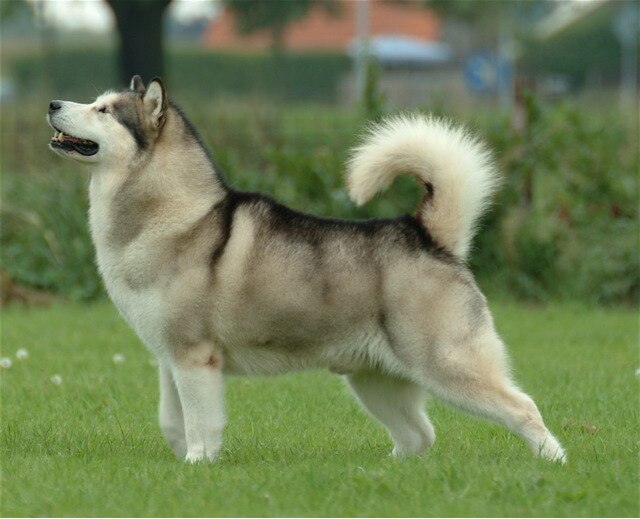
A large, heavy-boned, substantially built dog standing roughly 58 to 64 cm at the shoulder, with males around 38 kg and females around 34 kg, though many are larger. The build is deep-chested and powerful, designed for pulling, with a broad head, erect triangular ears, a plumed tail carried over the back and almond-shaped brown eyes (blue eyes are a fault in this breed, unlike the Siberian Husky). The dense double coat has a coarse outer layer and a thick, oily, woolly undercoat. Colours run through shades of grey, black, sable and red, all with white, plus solid white, usually with a cap or mask and distinctive facial markings. The overall picture is one of strength, balance and endurance.
Suitability
This is a dog for an active household with a house and a very secure, dig-proof yard, owned by someone who enjoys outdoor exercise and consistent training. It is not suited to apartments, to first-time owners who underestimate its strength and independence, or to people away from home all day, as it craves company and becomes destructive and noisy when bored or lonely. Reliable off-lead work is difficult given the prey drive, so secure fencing and lead walking are the norm. The biggest welfare issue in Australia is heat: a dog bred for the Arctic with a heavy double coat overheats easily, so Malamutes need shade, constant fresh water, cool resting areas and exercise limited to the early morning or evening through the warmer months, and the coat should never be shaved.
Health
Malamutes generally live around 10 to 14 years. Hip dysplasia is a recognised concern and the breed should be hip scored. Inherited eye conditions occur, including cataracts and progressive retinal atrophy, so eye testing matters. The breed carries breed-specific genetic conditions for which DNA tests exist, notably polyneuropathy and a form of chondrodysplasia (dwarfism), and hypothyroidism is also seen. As a deep-chested dog there is some risk of gastric dilatation-volvulus (bloat). A zinc-responsive skin condition is reported in the breed. Buy from breeders who hip score, eye test and DNA test for polyneuropathy and chondrodysplasia, and who are honest about any thyroid, eye or bloat history in their lines. Because Malamutes were bred for cold and lean working condition, owners should guard against overfeeding and overheating.
Find your Alaskan Malamute
Browse trusted Alaskan Malamute breeders across Australia and read genuine reviews from real owners, or take the quiz to be sure of the fit.