
American Staffordshire Terrier
Amstaff, Stafford, Staffy
The American Staffordshire Terrier, or AmStaff, is a powerfully built, medium-sized terrier that combines real physical strength with a famously affectionate, people-focused nature. Well-bred and well-raised, an AmStaff is confident, playful, devoted to its family and notably gentle with the people it loves, which is why so many become couch companions and therapy dogs. The strength and tenacity are real, though, so this breed needs an owner who will socialise and train properly from day one and stay on top of it. They suit active homes that want a close, involved dog. They are less ideal for people who want an aloof, low-maintenance pet or who cannot commit to firm, kind handling and supervision around unfamiliar dogs. The short, glossy coat is about as easy as grooming gets, needing only a weekly brush.
Size
Medium
Lifespan
12-14 years
Group
Group 2 - Terriers
Height
Male: 43-48 cm (17-19 inches), Female: 41-46 cm (16-18 inches)
Weight
Male: ~25-30 kg (~55-66 lbs), Female: ~23-27 kg (~50-60 lbs)
Origin
United States
Compatibility & care
How this breed fits into life with you
Scores are out of 5. Tap the help icon next to any trait to see what it really means.
Personality
How they think and behave
With family
Who they get along with
Care needs
What they ask of you
Origin & history
The breed traces back to 19th-century England, where bulldogs were crossed with terriers to make agile, game dogs for the blood sports of the era. These dogs came to the United States in the second half of the 1800s, where breeders developed a larger, heavier dog than the English Staffordshire Bull Terrier. The American Kennel Club recognised the breed in 1936, and in 1972 the name was settled as American Staffordshire Terrier to distinguish the show and companion lines from the dogs still bred for the pit. Once the cruel sports were outlawed, the breed found its place as a farm dog, guardian and family companion. In Australia, intending owners should be aware that AmStaffs sit in a grey area around restricted-breed and dangerous-dog laws in some states and councils, so check your local rules before buying.
Temperament
With its family the AmStaff is warm, affectionate and often comically devoted, thriving on attention and physical closeness. It is generally good with children it has grown up with, though its strength means play with small kids should always be supervised. Towards strangers a well-socialised AmStaff is usually friendly and outgoing rather than guard-like, but it will notice and respond to a genuine threat. The real consideration is other dogs: the breed can be selective or scrappy with unfamiliar dogs, particularly same-sex pairings, so early, ongoing socialisation and sensible management are essential. They are intelligent, eager to please and respond superbly to positive, reward-based training, but they are also strong and persistent, so consistency matters. They are not natural loners and dislike being isolated.
Appearance
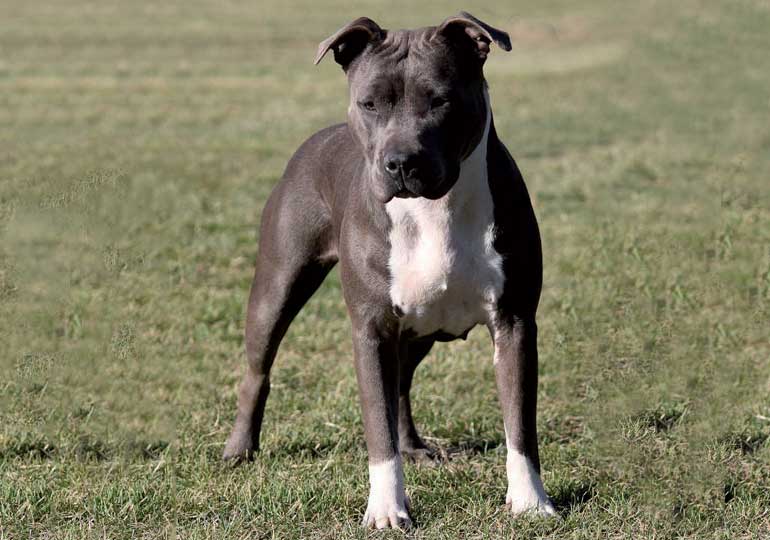
A stocky, athletic dog of great substance for its size, standing roughly 43 to 48 cm at the shoulder and usually weighing about 25 to 32 kg. The body is broad and well-muscled, with a deep chest, a broad skull, pronounced cheek muscles and strong jaws. The coat is short, stiff to the touch and glossy, and comes in almost any colour or pattern, including brindle, fawn, black, blue and white markings, though all-white or heavily patched dogs are less favoured in the show ring. The eyes are round and dark, set well apart. Ears may be natural (cropping is illegal in Australia). The overall impression is one of compact, balanced power.
Suitability
Best suited to an experienced, hands-on owner in a house with a securely fenced yard, though they can do well in smaller homes if properly exercised. They want around an hour of real activity a day plus training and mental work. This is a people-oriented breed that does not cope well with long periods alone and may become destructive or anxious if regularly left for hours. First-time owners can succeed with commitment, good training support and realistic expectations about strength and dog-to-dog management. The short coat offers little insulation, so in hot Australian summers provide shade and water and walk in the cooler parts of the day, and never leave any dog in a parked car. Check state and council breed-restriction laws before committing.
Health
AmStaffs typically live around 12 to 16 years. The most important inherited condition to ask about is cerebellar ataxia (also called NCL-A), a serious neurodegenerative disease with a reliable DNA test, so both parents must be tested clear or clear-by-parentage. Hip dysplasia occurs and should be screened by hip scoring. The breed is also prone to skin and contact allergies (atopy) and to heart conditions, so cardiac evaluation of breeding dogs is worthwhile. A reputable breeder will show you DNA results for cerebellar ataxia, hip scores and a cardiac check on the parents, and will be open about what runs in their lines. Avoid breeders who dismiss health testing or who breed extreme, overdone body types. Keep your dog at a sensible weight and on top of any skin issues.
Find your American Staffordshire Terrier
Browse trusted American Staffordshire Terrier breeders across Australia and read genuine reviews from real owners, or take the quiz to be sure of the fit.