
Anatolian Shepherd Dog
Coban Kopegi, Karabash Dog, Kara Bas, Kangal Dog
The Anatolian Shepherd Dog is a very large, independent livestock guardian bred to live with flocks and see off predators on its own judgement. This is not a pet for most households. It is calm, watchful and deeply protective, devoted to its family and territory, but it is also strong-willed, territorial and inclined to make its own decisions, which is exactly what a guardian is meant to do. Anatolians suit rural properties, hobby farms and people who genuinely understand guardian breeds. They are a poor fit for apartments, busy suburban streets, novice owners or anyone wanting an obedient, biddable companion. The short to medium double coat is low-maintenance day to day but sheds heavily in seasonal moults, when daily brushing helps. Expect a dog that barks at night and patrols its boundaries.
Size
Giant
Lifespan
10-13 years
Group
Group 6 - Utility
Height
Male: 71-76 cm (28-30 inches), Female: 66-71 cm (26-28 inches)
Weight
Male: 45-68 kg (100-150 lbs), Female: 41-59 kg (90-130 lbs)
Origin
Turkey
Compatibility & care
How this breed fits into life with you
Scores are out of 5. Tap the help icon next to any trait to see what it really means.
Personality
How they think and behave
With family
Who they get along with
Care needs
What they ask of you
Origin & history
The Anatolian Shepherd comes from the Anatolian plateau of Turkey, where dogs of this type have guarded sheep and goats against wolves, bears and jackals for thousands of years. Rather than herding stock, these dogs were bred to live among the flock, blend in and defend it, working independently of the shepherd for days at a time. They were selected purely for guarding ability, stamina and the sense to act alone, not for biddability. The breed reached the United States and the wider world in the 20th century and is still used as a working livestock guardian, including in conservation programmes that protect both livestock and predators by reducing conflict. In Australia, Anatolians and related guardian breeds are increasingly used on farms to protect stock from foxes and wild dogs.
Temperament
This is a confident, calm and intensely loyal dog that treats its family and its property as a flock to be protected. It is affectionate and steady with its own people, typically tolerant and gentle with children it has been raised alongside, though its size alone means supervision is wise. With strangers it is reserved, suspicious and slow to accept newcomers, and it will challenge anything it reads as a threat. The guarding instinct extends to other animals on the property, which it may protect, but unfamiliar dogs and people can trigger a serious territorial response, so secure fencing and careful introductions are non-negotiable. Anatolians are highly intelligent but independent and self-directed by design, so they do not offer the eager obedience of a working sheepdog. Early, thorough socialisation and calm, consistent leadership are essential, ideally from someone who respects what the breed is.
Appearance
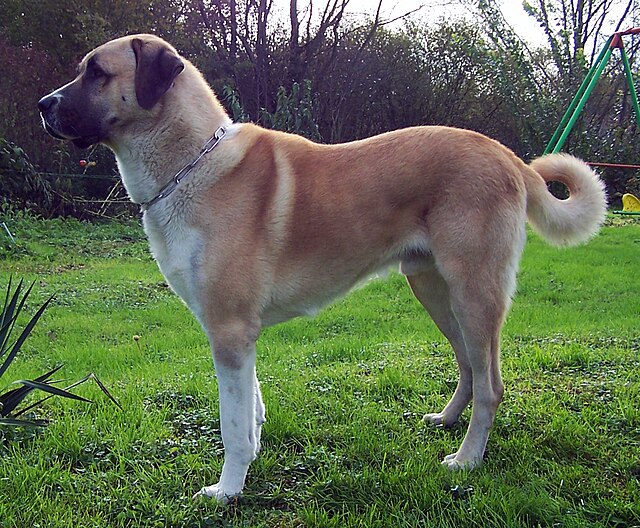
A genuinely big, powerful dog. Males stand roughly 74 to 81 cm at the shoulder and can weigh 50 to 65 kg, with females smaller. The build is strong and slightly longer than tall, with heavy bone, a broad head and a deep chest, yet still able to move with surprising speed and endurance. The double coat is short to medium in length and dense, giving protection in both heat and cold. Fawn with a black mask is the best-known colour, but the breed also comes in brindle, white, pinto and various other shades. The ears are medium, triangular and drop, and the tail is long and carried in a curl when alert.
Suitability
This breed belongs on a property with space and a real job, ideally guarding livestock or at least patrolling a large, very securely fenced rural block. It is wholly unsuited to apartments or small suburban yards, and it is not a breed for first-time dog owners. Anatolians can be left alone outdoors more readily than most breeds, since independence is part of their make-up, but they need a secure boundary and will bark and patrol. Their dense coat and desert heritage mean they handle the Australian climate, including heat, reasonably well, but they still require constant shade, fresh water and the option to dig a cool hollow. Strong fencing is essential, as they roam to expand their territory.
Health
Anatolians are generally a hardy, long-lived giant breed for their size, often reaching 11 to 13 years. As with all large, deep-chested dogs, gastric dilatation-volvulus (bloat) is a serious risk, so owners should learn the warning signs and feeding precautions. Hip and elbow dysplasia occur and should be screened by formal scoring in breeding dogs. Entropion, where the eyelid rolls inward, is also seen and warrants an eye check. Like many large breeds they can be sensitive to anaesthesia, which is worth flagging with your vet. Buy from a breeder who provides hip and elbow scores and an eye examination on the parents and who breeds working-sound, functional dogs rather than exaggerated ones. Keep growing pups lean and avoid over-exercising them while their joints develop.
Find your Anatolian Shepherd Dog
Browse trusted Anatolian Shepherd Dog breeders across Australia and read genuine reviews from real owners, or take the quiz to be sure of the fit.