
American Bulldog
AmBulldog, AM Bulldog
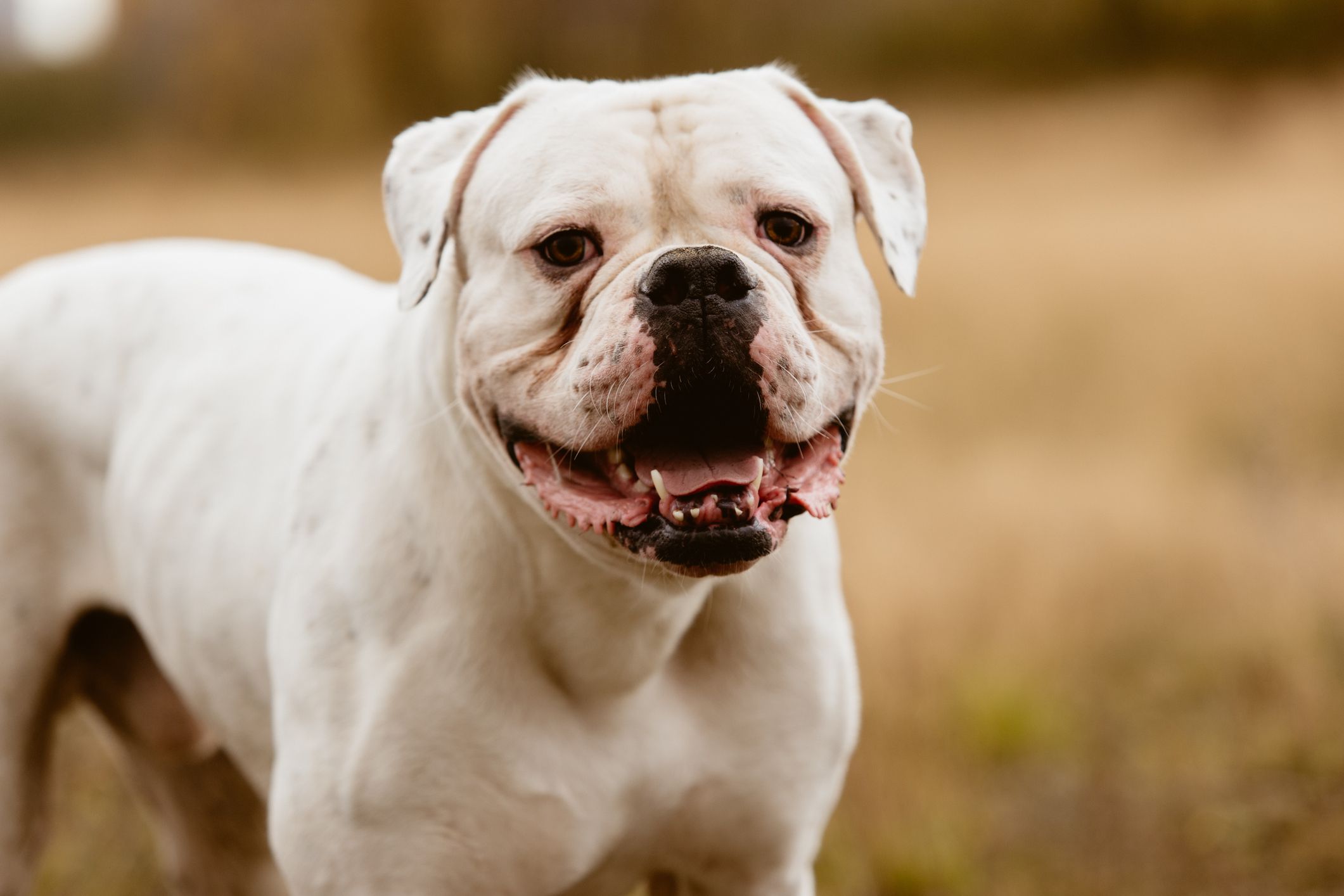
The American Bulldog is a large, athletic working breed from the southern United States, descended from the old farm bulldogs kept for stock work, guarding and catching. It is powerful and agile, more leggy and active than the English Bulldog, with a confident, courageous nature and deep loyalty to its family. Well-bred and well-raised, it is affectionate, playful and notably good with its own children, but it has real guarding instinct and can be assertive with strange dogs, so socialisation and training are not optional. This is a strong, energetic dog that needs daily exercise and a job for its mind, and it is too much dog for a passive or inexperienced home. The short coat is easy to look after, needing only occasional brushing. It suits active, capable owners who will train and socialise it properly. It does not suit first-time owners after an easy pet or anyone unable to manage a large, determined dog.
Size
Large
Lifespan
10-12 years
Group
Not ANKC Recognised
Height
Male: 50-65 cm (20-26 inches), Female: 51-61 cm (20-24 inches)
Weight
Male: 34-52 kg (75-115 lbs), Female: 27-41 kg (60-90 lbs)
Origin
United States
Compatibility & care
How this breed fits into life with you
Scores are out of 5. Tap the help icon next to any trait to see what it really means.
Personality
How they think and behave
With family
Who they get along with
Care needs
What they ask of you
Origin & history
The American Bulldog descends from the working bulldogs brought to North America by British settlers from the 17th century onward. While the bulldog was being bred into a shorter, heavier show dog in England, working farmers across the American South kept the older athletic type as an all-purpose farm dog, used to catch and hold cattle and feral hogs, guard property and tackle vermin. The breed nearly died out by the mid-20th century, surviving largely on isolated southern farms, and was brought back through the determined efforts of a handful of breeders after World War II, most notably John D. Johnson and Alan Scott, whose lines underpin the heavier and the more athletic types seen today. It remains primarily a working and companion breed. The ANKC does not currently recognise the American Bulldog, so Australian buyers should research breeders, type and temperament with particular care.
Temperament
The American Bulldog is confident, courageous and strongly bonded to its family, combining a guarding instinct with genuine affection and a playful, sometimes goofy streak at home. It is typically gentle and tolerant with children it has grown up with, which is part of its appeal as a family dog, though its size and exuberance mean interactions with small children need supervision. With strangers it is naturally watchful and protective, so steady early socialisation is vital to produce a confident, discerning adult rather than a suspicious or over-reactive one. It can be assertive or aggressive toward unfamiliar dogs, particularly of the same sex, and may have a prey drive toward smaller animals, so it must be well managed. It is intelligent and willing to work but also strong-willed, so it needs consistent, fair, reward-based training and an owner it respects. A bored or poorly led American Bulldog is a serious management problem given its power.
Appearance
A large, powerfully muscled dog, with males standing roughly 55 to 70 cm and females about 50 to 65 cm, and weights commonly from around 30 kg in smaller females to 50 kg or more in large males. The build is strong and athletic with a broad chest, heavy bone and a large square head with strong jaws. There are heavier bully types and leaner standard types, and many dogs fall between. The coat is short, close and easy to care for. White is the most common colour, usually with patches of brindle, red, fawn, brown or black. The muzzle may be short or moderate, the eyes are usually dark and the expression is alert and determined. The overall impression is one of strength, agility and substance.
Suitability
The American Bulldog is best in a house with a securely fenced yard, owned by an active, experienced person who will commit to training, socialisation and daily exercise. It is not an apartment dog in practical terms and is a poor choice for first-time owners or anyone who cannot confidently handle a large, powerful, protective breed. It thrives when given a job, whether structured exercise, training or canine sports, and it forms a close bond that means it does not do well left isolated in a yard or alone for long stretches. Prospective owners should also check local and state legislation and any rental or insurance restrictions, as bull-type breeds can face limits in parts of Australia. In the heat, the muscular build and sometimes shorter muzzle mean it needs shade, water and cooler-hour exercise through summer.
Health
American Bulldogs generally live around 10 to 14 years. Hip and elbow dysplasia are recognised concerns and the breed should be screened for both. The breed has a well-documented predisposition to neuronal ceroid lipofuscinosis (NCL), a fatal inherited neurological disease for which a DNA test exists, and to ichthyosis, an inherited skin condition also DNA testable. Eye conditions such as cherry eye, entropion and ectropion occur, and skin allergies and demodectic mange are not unusual. Heart conditions and, in heavier or shorter-muzzled dogs, some breathing difficulty are also seen. Buy from breeders who hip and elbow score, DNA test for NCL and ichthyosis, carry out eye and cardiac checks, and are open about any skin, joint or breathing issues in their lines. Avoiding the most extreme, exaggerated body types helps with long-term soundness.
Find your American Bulldog
Browse trusted American Bulldog breeders across Australia and read genuine reviews from real owners, or take the quiz to be sure of the fit.