
Beagle
English Beagle
The Beagle is a small, sturdy scent hound with a cheerful, easygoing nature and a nose that runs the show. Bred to hunt in packs, it is sociable to its bones and generally gets on well with people, children and other dogs. Energy levels are higher than the size suggests, so a Beagle needs a good hour of walking and sniffing every day, plus a securely fenced yard, because a fresh scent will pull it straight under a gap in the fence. This is a vocal breed that bays and howls, and a bored, under-exercised Beagle will dig, chew and escape. It is food-obsessed, which makes training easier but weight harder to manage. Not the best pick for anyone wanting a quiet, low-maintenance dog or reliable off-lead recall. The short, dense coat needs little more than a weekly brush, though it sheds steadily year round.
Size
Small to Medium
Lifespan
12-15 years
Group
Group 4 - Hounds
Height
Male: 36-41 cm (14-16 inches), Female: 33-38 cm (13-15 inches)
Weight
Male: 10-11 kg (22-24 lbs), Female: 9-10 kg (20-22 lbs)
Origin
United Kingdom
Compatibility & care
How this breed fits into life with you
Scores are out of 5. Tap the help icon next to any trait to see what it really means.
Personality
How they think and behave
With family
Who they get along with
Care needs
What they ask of you
Origin & history
The Beagle comes from England, where small pack hounds used to hunt hare and rabbit were recorded as far back as the 1500s, though the modern breed took its recognisable shape in the 1800s. Hunters wanted a hound small enough to follow on foot rather than horseback, with the stamina to work all day and the voice to be tracked across country. Careful breeding in southern England through the Victorian era settled the type, and the breed reached North America soon after, where it became hugely popular. The Beagle's superb nose has since put it to work well beyond the field, including detection roles in airports and quarantine, and Australia uses beagles in its biosecurity teams sniffing baggage at international airports. It remains one of the most popular family dogs in Australia and around the world.
Temperament
Few breeds are as relentlessly friendly as a Beagle. They were developed to live and hunt in packs, so they crave company, do well with children, and usually accept other dogs and household pets happily, though small pets like rabbits may trigger the prey drive. They tend to greet strangers as new friends, which makes them poor guard dogs even if they will bark and bay at noises. Trainable but stubborn is the honest summary, since a Beagle that catches an interesting smell will simply stop listening, so reward-based training and a lot of patience pay off. They have an independent streak and hate being left alone for long, which can tip into howling and destructive boredom. The standing rule with a Beagle is to keep it on lead or in a fully fenced area, because the nose will always win.
Appearance
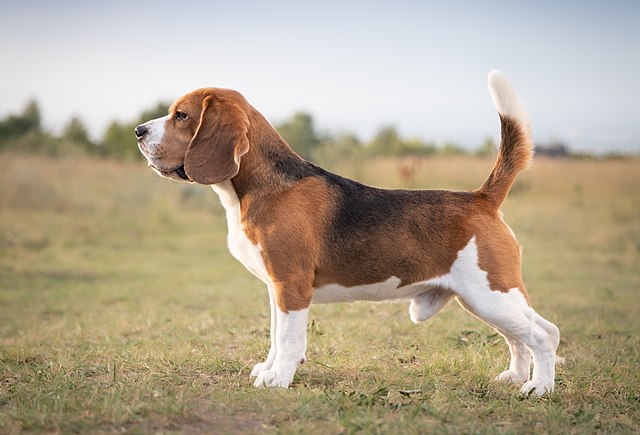
A small hound, usually 33 to 41 cm at the shoulder and roughly 9 to 14 kg, built solid and square rather than dainty. The head is gentle in expression, with large hazel or brown eyes and long, low-set ears that hang close to the cheeks. The coat is short, dense and weatherproof. Tricolour (black, white and tan) is the classic pattern, but you will also see tan and white, lemon and white, and various hound colours, almost always with a white-tipped tail that was bred in so the dog stays visible in long grass.
Suitability
A Beagle suits an active household that enjoys daily walks and does not mind a dog with opinions and a voice. They can live in an apartment if properly exercised, but neighbours may object to the howling, and a house with a secure yard is the easier fit. They are reasonably forgiving for a first-time owner thanks to their good nature, provided that owner is ready for the food-driven mischief and the recall challenge. Beagles are sociable and dislike long stretches alone, so a home where someone is around for much of the day works best. The short coat copes well with the Australian climate, though like any dog they need shade and water in summer and should never be exercised hard in the heat of the day.
Health
Beagles typically live 12 to 15 years and are a hardy breed, but a few problems show up often enough to watch for. The big one is obesity, because they will eat anything and everything, and excess weight then loads the joints and the back. Those long ears trap moisture and lead to recurring ear infections without regular cleaning. The breed has a known predisposition to intervertebral disc disease, epilepsy, hypothyroidism, and an inherited eye condition called glaucoma, and a small number carry the gene for Musladin-Lueke syndrome and for an enzyme deficiency. Buy from a breeder who eye-tests their dogs and screens or DNA-tests for the relevant inherited conditions, and ask to see the results rather than taking it on trust.
Find your Beagle
Browse trusted Beagle breeders across Australia and read genuine reviews from real owners, or take the quiz to be sure of the fit.