
Belgian Malinois
Malinois, Chien De Berger Belge, Mechelaar
The Belgian Malinois is one of four Belgian Shepherd varieties, the short-coated fawn type, and it is among the most driven working dogs in the world. Intensely intelligent, athletic and quick, the Malinois is the dog of choice for police and military forces internationally, which tells you exactly how much it needs to do. This is not a pet for a quiet home. It demands hours of physical exercise and mental work every day, thrives on training and dog sport, and will become destructive, anxious and difficult if under-stimulated. Well raised, it is devoted, biddable and deeply bonded to its handler, watchful with strangers and protective of its family. The short coat needs only weekly brushing. The Malinois suits experienced, very active owners with the time and skill for a high-drive dog, and it is genuinely unsuitable for first-timers or anyone wanting a relaxed companion.
Size
Large
Lifespan
12-14 years
Group
Group 5 - Working Dogs
Height
Male: 61-66 cm (24–26 inches), Female: 56-61 cm (22–24 inches)
Weight
Male: 25–30 kg (55–66 lbs), Female: 20–25 kg (44–55 lbs)
Origin
Belgium
Compatibility & care
How this breed fits into life with you
Scores are out of 5. Tap the help icon next to any trait to see what it really means.
Personality
How they think and behave
With family
Who they get along with
Care needs
What they ask of you
Origin & history
The Malinois is one of the four varieties of the Belgian Shepherd Dog, all developed in Belgium in the late 1800s and named for the regions and towns associated with them, the Malinois taking its name from the city of Malines, or Mechelen. Belgian farmers and breeders set out to standardise their hardy herding dogs, and the short-haired fawn variety became the Malinois. Prized for its herding ability, it quickly proved an outstanding all-round working dog, and over the 1900s it came to dominate police, military and protection work around the globe, valued for its drive, trainability and athleticism over even the German Shepherd in many programs. In Australia the Malinois works in police and defence roles and is increasingly popular in dog sports such as IGP, agility and obedience, though it remains very much a working enthusiast's dog rather than a common family pet.
Temperament
The Malinois is brilliant, sensitive and relentlessly driven, a dog that lives to work and to be with its person. With its family it is affectionate, loyal and intensely bonded, often attaching strongly to one handler. It can be good with children it is raised with, but its intensity, speed and habit of nipping at moving things, a leftover of the herding instinct, mean it needs careful management around young kids. It is naturally watchful and aloof or suspicious with strangers, which makes it an effective guardian but demands thorough early socialisation. It can be assertive with other dogs. Trainability is exceptional, among the very best of any breed, but that intelligence cuts both ways, since a Malinois learns bad habits as fast as good ones and will run rings around an inexperienced owner. The defining need is work, both physical and mental, every single day, without which this dog cannot be content.
Appearance
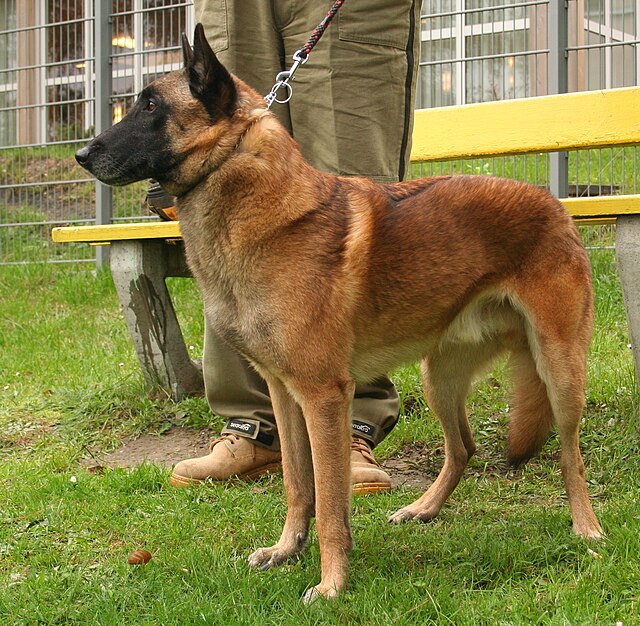
A medium-to-large, square-built dog of elegant, athletic proportion, generally 56 to 66 cm at the shoulder and around 20 to 30 kg, with bitches notably finer than dogs. The coat is short, straight and weather-resistant over a dense undercoat. The colour is a rich fawn to mahogany with black tipping over the body and a characteristic black mask on the face, and black ears. The head is clean and chiselled, the dark eyes alert and questioning, and the ears are stiff, triangular and erect. The whole impression is of a light, powerful, ready-for-anything dog that moves with tireless, ground-covering ease and a notable tendency to circle rather than stand still.
Suitability
This breed is strictly for experienced, highly active owners who will commit to daily training, exercise and a real outlet such as dog sport, working trials or detection work. It needs a house with a secure yard and ideally a rural or semi-rural setting, and it is wholly unsuited to apartment life, sedentary households or first-time owners. A Malinois left alone and idle becomes destructive, noisy and neurotic, so it must be part of an active daily life, not left in a yard. Early, ongoing socialisation is essential given its guarding nature. The short coat handles the Australian climate well, but this is a dog that will run itself into heatstroke given the chance, so provide shade and water and schedule hard work for the cool of the morning or evening.
Health
Belgian Malinois generally live 12 to 14 years and are one of the sounder working breeds, helped by a relatively diverse gene pool. Even so, some inherited conditions occur. Hip and elbow dysplasia are present in the breed, so breeding dogs should be hip and elbow scored. Eye conditions including progressive retinal atrophy and cataracts are seen, and the breed can be affected by epilepsy. There are also occasional reports of certain anaesthetic sensitivities and thyroid issues. Choose a breeder who hip and elbow scores both parents and has them eye-tested, and who breeds for stable temperament as well as health, since temperament faults in such a high-drive dog are a welfare issue in the wrong home. Ask to see the certificates and to meet the parents where possible.
Find your Belgian Malinois
Browse trusted Belgian Malinois breeders across Australia and read genuine reviews from real owners, or take the quiz to be sure of the fit.