
Bullmastiff
Bully, Bullie
The Bullmastiff is a big, square, powerful dog bred to guard, and it still carries that quiet, watchful confidence. At home it is calm, affectionate and surprisingly low-key, often content to lie about the house, but it has a strong protective instinct and will put itself between its family and a perceived threat. It is devoted and gentle with its own people, including children, though its sheer size means it can knock a toddler flat without meaning to. Exercise needs are moderate, a daily walk and a bit of space rather than hours of running. This is a serious dog that needs early socialisation, consistent handling and a confident owner, so it is not ideal for the faint-hearted or the first-timer. The short coat is easy to care for, but be ready for drool and a fair amount of shedding.
Size
Giant
Lifespan
8-10 years
Group
Group 6 - Utility
Height
Male: 63–69 cm (25-27 inches), Female: 61–66 cm (24-26 inches)
Weight
Male: 50-60 kg (110-133 lbs), Female: 45-55 kg (100-120 lbs)
Origin
United Kingdom
Compatibility & care
How this breed fits into life with you
Scores are out of 5. Tap the help icon next to any trait to see what it really means.
Personality
How they think and behave
With family
Who they get along with
Care needs
What they ask of you
Origin & history
The Bullmastiff was developed in England in the nineteenth century, mainly by gamekeepers who needed a dog to tackle poachers on large estates. They crossed the Mastiff with the Bulldog, aiming for a dog roughly sixty per cent Mastiff and forty per cent Bulldog, big and powerful enough to knock a man down and hold him, but fast, quiet and biddable enough to work close to handlers at night. The result was nicknamed the gamekeeper's night dog. The dogs were trained to pin and hold rather than maul, which shaped the breed's steady, controlled temperament. As estate poaching declined, the Bullmastiff moved into general guarding and family life, and it was recognised as a distinct breed by the English Kennel Club in 1924. It is kept in Australia today mostly as a guardian and companion.
Temperament
Bullmastiffs are loyal, steady and naturally protective without being constantly on edge. They form intense bonds with their family and are typically gentle and tolerant with children they have grown up alongside, though play should be supervised given the size difference. With strangers they are reserved and assessing rather than friendly, and a well-bred one is confident rather than nervy or sharp. Same-sex dog aggression can be an issue, particularly between males, and they have a fairly strong instinct to see off other animals on their turf, so early, thorough socialisation matters a great deal. They are intelligent but also independent and a touch stubborn, so training needs to be calm, firm and consistent from puppyhood, well before they reach their adult weight. They are not high-energy, but they do need a job in the sense of clear leadership and a settled home.
Appearance
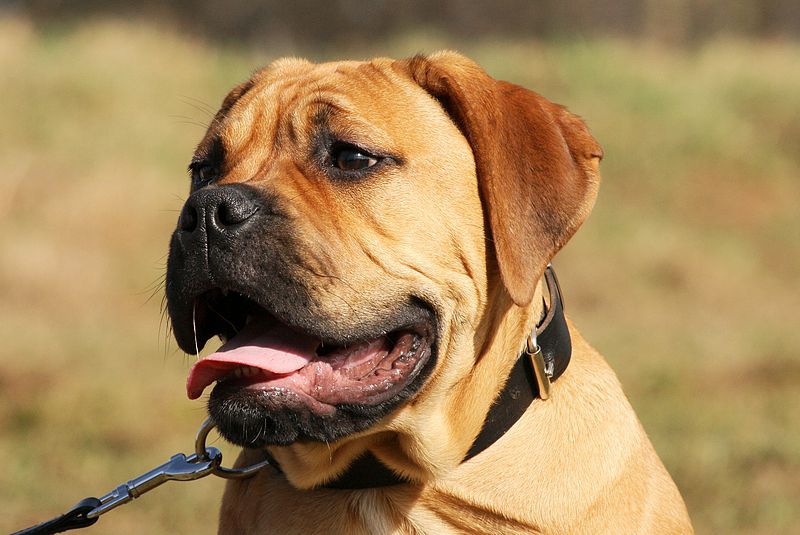
This is a large, heavily built dog. Males stand about 64 to 69cm at the shoulder and weigh roughly 50 to 59kg, with females a little smaller. The body is compact and muscular, with a broad, deep chest and a large, square head carrying a short muzzle and some wrinkling, especially when alert. The ears are V-shaped and fold close to the head, and the dark eyes give a calm, intelligent look. The coat is short, dense and weather-resistant, and comes in fawn, red or brindle, almost always with a black mask over the muzzle and dark ears.
Suitability
A house with a securely fenced yard suits the Bullmastiff far better than an apartment, simply because of its size and presence. It needs an owner who is comfortable handling a large, strong, protective dog and who will commit to early training and socialisation, so it is not a good first dog. It is fairly calm indoors and can cope with being left for moderate periods if well exercised and settled, but it would rather be near its people. In the Australian climate, the short coat and large body mean it can overheat, so provide shade and water, exercise it in the cooler parts of the day through summer, and never leave it in a hot car or closed yard without shelter.
Health
Lifespan is usually around 8 to 10 years, which is fairly typical for a giant breed. Hip and elbow dysplasia are common, so breeding dogs should be hip and elbow scored before mating. As a deep-chested dog the Bullmastiff is at real risk of gastric dilatation-volvulus, or bloat, a sudden, life-threatening twisting of the stomach that needs emergency surgery, so learn the warning signs and avoid heavy exercise right after meals. The breed also has an above-average rate of several cancers, including lymphoma and mast cell tumours, and some heart conditions occur, so cardiac checks of breeding stock are worthwhile. Entropion and other eye faults also turn up. Choose a breeder who hip and elbow scores, screens eyes and hearts, and is open about what has affected their lines.
Find your Bullmastiff
Browse trusted Bullmastiff breeders across Australia and read genuine reviews from real owners, or take the quiz to be sure of the fit.