
Bull Terrier
English Bull Terrier, Bully, Gladiator
The Bull Terrier is unmistakable, a muscular, medium-sized dog with a long egg-shaped head, small triangular eyes and a swaggering, playful character. Bred from bulldog and terrier stock, it is affectionate, comical and intensely attached to its people, often described as a three-year-old child in a dog suit for its boundless energy and mischief. Bull Terriers are loyal and good-natured with their families but they are strong, stubborn and can be boisterous, so they need an owner who is confident, patient and consistent with training and socialisation. They have a fair prey drive and are not always tolerant of strange dogs, so they are not the easiest fit for multi-pet homes. The short coat is very low-maintenance. Funny, devoted and full of beans, the Bull Terrier needs plenty of exercise and company, and a bored or under-exercised one can be destructive and hard to handle.
Size
Medium
Lifespan
10-12 years
Group
Group 2 - Terriers
Height
Male: 51-61 cm (20-24 inches), Female: 51-61 cm (20-24 inches)
Weight
Male: 20-36 kg (45-80 lbs), Female: 20-36 kg (45-80 lbs)
Origin
United Kingdom
Compatibility & care
How this breed fits into life with you
Scores are out of 5. Tap the help icon next to any trait to see what it really means.
Personality
How they think and behave
With family
Who they get along with
Care needs
What they ask of you
Origin & history
The Bull Terrier was developed in England in the 1800s, originally from crosses between the now-extinct Old English Bulldog and various terriers, at a time when such dogs were used for the cruel sports of bull-baiting and ratting. Once those activities were banned, breeders, most famously James Hinks of Birmingham, refined the dog into a cleaner, all-white companion and show dog known as the white cavalier, prized as a gentleman's companion rather than a fighting dog. The distinctive egg-shaped head with no stop was developed over later decades through selective breeding. Coloured Bull Terriers were established later by crossing back to Staffordshire stock. A smaller variety, the Miniature Bull Terrier, was also recognised. In Australia the Bull Terrier is a familiar and popular breed, well known as a characterful family dog, though prospective owners should check local and state regulations, as some areas have restrictions affecting bull-type breeds.
Temperament
Bull Terriers are affectionate, playful and famously clownish, and they bond very closely with their families, wanting to be involved in everything. With children they can be good-natured and tolerant, especially when raised together, but they are powerful and boisterous, so supervision around small kids is wise. They are usually friendly or confident with people they meet rather than aggressive, though their build means socialisation to keep them well-mannered is important. The bigger consideration is other animals: many Bull Terriers have a strong prey drive and can be intolerant of strange dogs, particularly of the same sex, and may not be safe with cats or small pets, so careful management is needed. They are intelligent but independent and stubborn, and they bore easily, so training should be firm, consistent, upbeat and reward-based. Above all they need exercise, company and mental stimulation, as a bored Bull Terrier becomes destructive and can develop obsessive habits.
Appearance
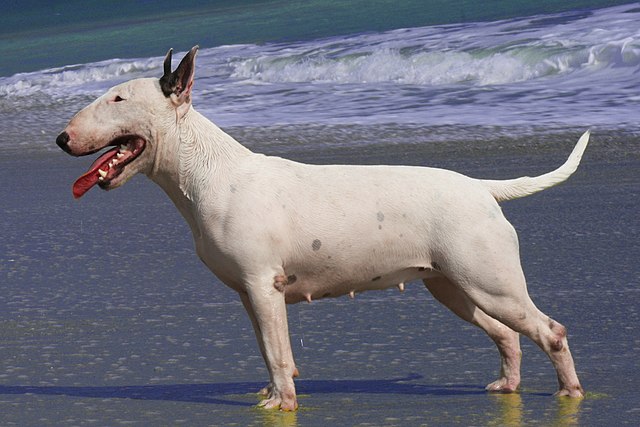
The Bull Terrier is a strongly built, muscular, medium-sized dog, typically standing roughly 45 to 55 cm at the shoulder and weighing around 22 to 38 kg, with a good range depending on the individual. The breed's signature is the head: long, deep and curved gently from the top of the skull to the nose in an egg shape, with no stop, set off by small, triangular, deep-set dark eyes and small erect ears. The body is rounded and well-muscled with a deep chest. The coat is short, flat, harsh and glossy, needing very little grooming. Colours include pure white (sometimes with markings on the head) and coloured dogs such as brindle, black, red and fawn, often with white.
Suitability
The Bull Terrier suits an active, confident owner who can commit to firm, consistent training and plenty of exercise and company, ideally in a house with a securely fenced yard. Because of their strength, stubbornness and prey drive, they are better suited to owners with some dog experience than to a casual first-timer, and households with cats or small pets should think carefully. They are very people-oriented and do not cope well with being left alone for long stretches, so they need a home where they will have company much of the day. The short coat gives little protection from the sun, and white dogs in particular can sunburn, so in the Australian heat exercise in the cooler parts of the day, provide shade and water, and watch for overheating.
Health
A well-bred Bull Terrier typically lives around 11 to 14 years. The breed has some well-documented predispositions, so health testing of the parents is important. Inherited kidney disease, including hereditary nephritis and other kidney problems, is a recognised concern, and a urine protein-to-creatinine test plus screening for the parents is sensible. Deafness is associated with the breed, particularly in white dogs, so pups should have a BAER hearing test. Heart conditions, especially problems with the mitral and aortic valves, occur and warrant a cardiac check. The breed is also known for a compulsive spinning or tail-chasing behaviour. Patellar luxation and skin allergies are seen too. Buy from a breeder who does kidney testing, cardiac screening, patella checks and BAER hearing tests, and who is upfront about any health or behavioural issues in their line.
Find your Bull Terrier
Browse trusted Bull Terrier breeders across Australia and read genuine reviews from real owners, or take the quiz to be sure of the fit.