
Basenji
Congo Terrier, African Bush Dog, African Barkless Dog
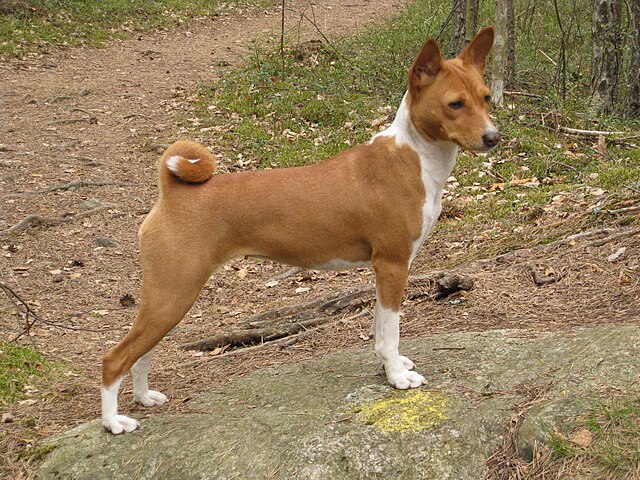
The Basenji is an ancient, catlike hound from Central Africa, best known for not barking. Instead it makes a distinctive yodel, sometimes called a baroo, along with a range of other sounds. It is a small, elegant, athletic dog with a tightly curled tail and a permanently faintly worried, wrinkled brow. Basenjis are intelligent, independent and famously self-possessed; they groom themselves like cats, are fastidiously clean, and have a strong streak of doing what they please. Energy and prey drive are both high, so they need good daily exercise and a securely fenced space. They suit experienced, patient owners who enjoy a clever, challenging dog and have a sense of humour about it. They are a poor fit for people wanting an obedient, eager-to-please companion, and the chase drive makes them risky around small pets. The short coat needs almost no grooming.
Size
Small to Medium
Lifespan
12-15 years
Group
Group 4 - Hounds
Height
Male: 41-43 cm (16-17 inches), Female: 38-41 cm (15-16 inches)
Weight
Male: 10-12 kg (22-26 lbs), Female: 9-11 kg (20-25 lbs)
Origin
Congo
Compatibility & care
How this breed fits into life with you
Scores are out of 5. Tap the help icon next to any trait to see what it really means.
Personality
How they think and behave
With family
Who they get along with
Care needs
What they ask of you
Origin & history
The Basenji is one of the oldest dog types in existence, with roots in Central Africa and a long history along the Congo basin, where it was used by local peoples to hunt small game, drive quarry into nets and control vermin in villages. Dogs of this type appear in very old African and ancient Egyptian imagery, reflecting how long the form has existed. Hunters valued the breed's silence, speed and keen senses, and the dogs often wore wooden bells so they could be located in dense bush. Attempts to bring Basenjis to Europe began in the late nineteenth and early twentieth centuries but were repeatedly set back by disease, and the breed only became properly established in the West from the mid-twentieth century. Later imports of fresh African stock were used to widen the gene pool and to bring in the brindle colour. It remains an uncommon breed, kept mostly by enthusiasts who value its primitive nature.
Temperament
Basenjis are independent, clever and often compared to cats in the way they think and behave. With their family they are affectionate on their own terms and form strong bonds, and they can be good with children they are raised with, though they are not endlessly tolerant of rough handling and prefer respectful kids. They tend to be reserved and aloof with strangers rather than friendly to all. With other dogs they are often sociable, particularly other Basenjis, but the very high prey drive means cats, rodents, rabbits and birds are usually not safe, and anything that runs will be chased. They are intelligent but only selectively obedient; training works best as short, motivating, reward-based sessions, and even then a Basenji decides for itself whether to comply. They are not big barkers but are far from quiet, using yodels and other sounds, and they are notorious escape artists and climbers, so secure fencing is essential. They can be mischievous and destructive when bored.
Appearance
A small, finely built and squarely proportioned hound that looks alert and poised. Most stand about 40 to 43 cm at the shoulder and weigh roughly 9 to 11 kg, with males a little larger than females. The coat is short, fine and tight, sitting close to the skin and giving a sleek look. Recognised colours are chestnut red, black, tricolour (black and tan) and brindle (black stripes on red), always with white feet, chest and tail tip, and often white legs and a blaze. The most recognisable features are the tightly curled tail carried over to one side, the wrinkled forehead that gives a quizzical expression, the small upright ears and the almond-shaped dark eyes.
Suitability
Basenjis can live in apartments or houses, but either way they need a securely fenced area and plenty of daily exercise, as they are athletic, curious and prone to escaping. They suit active, experienced owners who find an independent, clever dog entertaining rather than frustrating, and they are not an easy first dog. They dislike being left alone for long stretches and can be destructive when bored or lonely, so they do best where someone is around a good part of the day. The short coat and African origins mean they handle warm Australian weather well, but they hate rain and cold and will need a coat on chilly days. Their fastidious, self-cleaning habits and minimal doggy odour are a genuine plus for house living.
Health
Basenjis usually live around 12 to 15 years. The breed has a few important, well-documented health issues. Fanconi syndrome, a serious inherited kidney tubule disorder, is strongly associated with the breed, and there is a DNA test for it that every breeder should use. Inherited eye disease occurs, including progressive retinal atrophy and persistent pupillary membranes, so eye testing matters. Pyruvate kinase deficiency, an inherited anaemia, is also present in the breed and can be DNA tested. Hip dysplasia and some thyroid and immune-mediated problems are seen as well. Because several of these conditions are inherited and testable, it is especially important to buy from a breeder who DNA tests for Fanconi syndrome and pyruvate kinase deficiency, has breeding dogs eye tested annually, and hip scores where appropriate.
Find your Basenji
Browse trusted Basenji breeders across Australia and read genuine reviews from real owners, or take the quiz to be sure of the fit.