
Bouvier des Flandres
Belgian Cattle Dog, Flanders Cattle Dog, Vlaamse Koehond
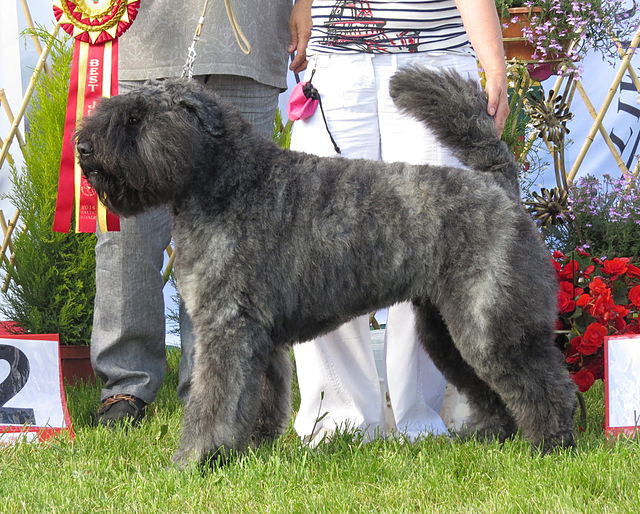
The Bouvier des Flandres is a big, powerful herding dog with a rough, tousled coat and a famous beard that gives it a serious, watchful look. Under all that hair sits a calm, steady, deeply loyal dog that bonds hard to its people and takes guarding the home as its job. Bouviers are intelligent and willing to work, but they think for themselves and need an owner who is consistent and fair rather than heavy-handed. This is not a breed for the inactive or the first-time owner. They want real daily exercise and a sense of purpose, and a bored Bouvier can become destructive or pushy. The harsh double coat needs regular brushing and a few clips a year, and it sheds less than many breeds but mats easily if neglected. Early, thorough socialisation is the single most important thing you can give one.
Size
Large
Lifespan
10-12 years
Group
Group 5 - Working Dogs
Height
Male: 58-71 cm (23-28 inches), Female: 56-69 cm (22-27 inches)
Weight
Male: 34-50 kg (75-110 lbs), Female: 27-36 kg (60-80 lbs)
Origin
Belgium
Compatibility & care
How this breed fits into life with you
Scores are out of 5. Tap the help icon next to any trait to see what it really means.
Personality
How they think and behave
With family
Who they get along with
Care needs
What they ask of you
Origin & history
The breed comes from the farming country of Flanders, the region straddling northern France and Belgium, where it took shape in the 1800s as an all-purpose farm dog. Bouviers drove cattle, pulled carts, turned butter churns and guarded the property, so they were bred for strength, stamina and a level head rather than looks. The First World War nearly wiped them out, as their home turf became a battlefield and surviving dogs were pressed into service carrying messages and helping medical teams. Dedicated breeders rebuilt the breed afterwards from a small number of dogs, and a written standard was set in the 1920s. They went on to prove themselves in police and military work, as guide dogs and in obedience and herding trials. In Australia the Bouvier is fairly uncommon and kept mostly by enthusiasts who want a serious working or guarding dog.
Temperament
At home the Bouvier is calm, affectionate and content to be near its family, and well-raised dogs are patient and gentle with children they have grown up with, though their size means small kids should always be supervised. They are naturally reserved and protective with strangers and make genuine watchdogs, which is exactly why early and ongoing socialisation matters so much. With other dogs and pets they generally do well if introduced young, but some can be bossy with unfamiliar dogs of the same sex. They are clever and trainable but independent, and they respond best to firm, consistent, reward-based handling from someone they respect. A Bouvier needs a job, mental challenge and a clear place in the household, or that intelligence turns into stubbornness and mischief.
Appearance
This is a large, compact, powerfully built dog. Males stand roughly 62 to 68 cm at the shoulder and females a little less, with weight commonly between 35 and 40 kg. The body is roughly square and heavily muscled, carried on solid bone. The standout feature is the weatherproof double coat: a coarse, dry, tousled outer coat over a fine undercoat, with the thick beard, moustache and heavy eyebrows that frame the face. Ears may be left natural or, where it is still permitted, cropped, and the tail is often short. Colours run from black through various greys to fawn and brindle, sometimes with a small white chest patch.
Suitability
This breed suits an active household with a house and a securely fenced yard, ideally with an owner who has handled large, strong-willed dogs before. It is a poor match for apartment living or for someone away from home all day, as Bouviers want company and can struggle when left alone for long stretches. They cope reasonably with cold thanks to that heavy coat, but the same coat makes Australian summers hard work, so exercise in the cool of the morning or evening, always provide shade and water, and never leave one in a hot car or yard without shelter. A committed, experienced owner gets a devoted, dependable companion.
Health
A well-bred Bouvier usually lives around 10 to 12 years. Being a large, deep-chested breed, it carries a real risk of gastric dilatation-volvulus (bloat), a sudden twisting of the stomach that is a true emergency, so learn the warning signs and discuss feeding and prevention with your vet. Hip and elbow dysplasia occur in the breed and can lead to arthritis, and some lines have had subaortic stenosis, a heart defect. Eye conditions including cataracts and glaucoma also turn up, and the breed is among those affected by an inherited form of laryngeal paralysis. Ask any breeder for hip and elbow scores, a recent eye certificate and a cardiac check on the parents, and look for evidence they breed away from these problems rather than just claiming the line is clear.
Find your Bouvier des Flandres
Browse trusted Bouvier des Flandres breeders across Australia and read genuine reviews from real owners, or take the quiz to be sure of the fit.