
Border Terrier
Russian Bear Schnauzer, Munich Schnauzer, Munchener
The Border Terrier is a small, hardy working terrier from the hill country of the English-Scottish border, bred to run with foxhounds and go to ground after foxes. It keeps the cheerful, gritty character of a real working terrier: tough, game and full of energy, yet noticeably more even-tempered and biddable than many other terriers, which is part of its lasting appeal. It is affectionate and friendly with its family, good with children, and usually sociable with people and other dogs. It does have a strong prey drive and will chase cats, rabbits and other small animals, so a secure yard and a sensible lead policy matter. It needs a good daily walk plus play and some mental work, and it is happiest with active owners. The wiry double coat is fairly low-maintenance but needs regular brushing and hand-stripping a couple of times a year. It is a poor fit for very sedentary homes or anyone wanting a purely ornamental lapdog.
Size
Small
Lifespan
12-15 years
Group
Group 2 - Terriers
Height
Male: 71 cm (28 inches), Female: 66 cm (26 inches)
Weight
Male: 6-7 kg (13-16 lbs), Female: 5-6 kg (11-14 lbs)
Origin
United Kingdom
Compatibility & care
How this breed fits into life with you
Scores are out of 5. Tap the help icon next to any trait to see what it really means.
Personality
How they think and behave
With family
Who they get along with
Care needs
What they ask of you
Origin & history
The Border Terrier comes from the hilly border country between England and Scotland, around Northumberland and the Cheviot Hills, where it was developed by farmers and fox hunters from the early days of the breed as a no-nonsense working terrier. Its job was to keep up with the hunt on foot or behind the horses and hounds, then go to ground and bolt or face the fox that was raiding lambs and poultry, which is why it has relatively long legs for a terrier, a flexible build and great stamina. The breed shares roots with other terriers of the region, and it was bred strictly for work and gameness long before it was standardised, gaining formal Kennel Club recognition in Britain in 1920. It has stayed close to its original type, avoiding exaggeration. In Australia it is a recognised but fairly uncommon breed, kept both as a family companion and by people who value its earthy working-terrier character.
Temperament
The Border Terrier is friendly, affectionate and good-natured, generally easier-going and more trainable than the average terrier while still keeping plenty of terrier spark. It bonds closely with its family, enjoys being involved in everything, and is usually very good with children, making it a popular family terrier. It tends to be sociable rather than scrappy with other dogs and is reasonably welcoming to people, while still being alert enough to bark and make a decent little watchdog. The big caveat is prey drive: bred to hunt, it will chase and can kill small fleeing animals, so it is not always trustworthy with cats, rabbits, guinea pigs or backyard poultry, and recall around wildlife can be unreliable. It is intelligent and responds well to upbeat, reward-based training, though it has an independent streak and can dig and bark if bored. It needs daily exercise, company and something to do, and it dislikes being left alone for long stretches.
Appearance
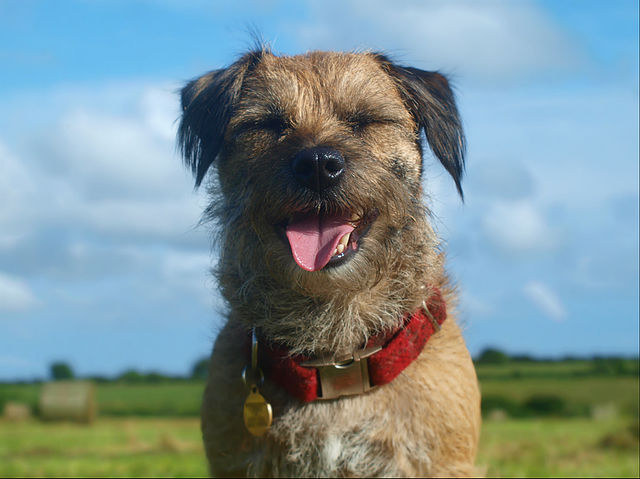
A small but workmanlike terrier with a lithe, narrow body designed to follow a fox underground, standing roughly 28 to 40 cm at the shoulder and weighing about 5 to 7 kg, with dogs slightly larger than bitches. The most distinctive feature is the head, often described as otter-like: broad in skull with a short, strong muzzle and a keen, alert expression. The coat is a harsh, wiry double coat over a thick, loose-fitting hide, weatherproof and practical. Typical colours are grizzle and tan, red, wheaten, and blue and tan. The ears are small, V-shaped and drop forward against the cheek, and the tail is moderately short, thicker at the base and carried up but not curled. The overall dog looks plain, sturdy and ready for a hard day's work rather than glamorous.
Suitability
The Border Terrier is adaptable and can live happily in a house with a yard or in an apartment, provided it gets proper daily exercise and mental stimulation; a securely fenced yard is important because it can dig and likes to explore. It suits active individuals and families, including those with children, and it is a reasonable choice for a sensible first-time owner who is prepared for a busy, energetic little dog rather than a placid one. It is a sociable breed that prefers company and does not love long days home alone, where boredom can turn into barking and digging. Homes with cats or small pets need to think carefully about its hunting instincts. The harsh weatherproof coat copes well with cold and reasonably with the Australian climate, but like any dog it needs shade, water and walks timed away from the hottest part of summer days.
Health
The Border Terrier is one of the sturdier, longer-lived small breeds, commonly reaching around 12 to 15 years. It is generally healthy, but a few conditions are worth knowing about. Hip dysplasia and patellar luxation (a slipping kneecap) can occur, and some lines carry inherited eye conditions, so eye testing of breeding dogs is sensible. The breed has a recognised, though uncommon, neurological condition known as canine epileptoid cramping syndrome, sometimes called Spike's disease, which causes episodes of cramping and is thought to be linked in some dogs to gluten sensitivity. Heart murmurs and occasional skin allergies are also seen. As an enthusiastic eater it gains weight easily, so portion control matters. Buy from breeders who hip score where appropriate, eye test their dogs, are open about any history of epilepsy or cramping in their lines, and breed for sound temperament and the breed's natural hardiness.
Find your Border Terrier
Browse trusted Border Terrier breeders across Australia and read genuine reviews from real owners, or take the quiz to be sure of the fit.