
Borzoi
Russian Wolfhound, Barzoï, Russkaya Psovaya Borzaya, Psovoi
The Borzoi, once known as the Russian Wolfhound, is a large, elegant sighthound bred by the Russian aristocracy to course and hold wolves across open country. It is built for speed and has the typical sighthound temperament: calm, quiet and rather catlike indoors, gentle and affectionate with its own people, yet independent, sensitive and often aloof with strangers. It is surprisingly undemanding at home and content to spend much of the day lounging, but it needs regular chances to stretch out and gallop in a safe, enclosed space. The big caveat is a powerful prey drive and a strong instinct to chase anything that runs, which makes off-lead freedom in open areas risky and recall unreliable. The long, silky coat needs regular brushing to prevent tangles. It suits calm, patient owners with room to run a big dog, and it is a poor fit for households wanting an eager-to-please, highly obedient or rough-and-tumble dog.
Size
Large to Giant
Lifespan
10-12 years
Group
Group 4 - Hounds
Height
Male: 71-85 cm (28-33 inches), Female: 68-81 cm (27-32 inches)
Weight
Male: 34-48 kg (75-105 lbs), Female: 27-41 kg (60-90 lbs)
Origin
Russia Belarus
Compatibility & care
How this breed fits into life with you
Scores are out of 5. Tap the help icon next to any trait to see what it really means.
Personality
How they think and behave
With family
Who they get along with
Care needs
What they ask of you
Origin & history
The Borzoi was developed in Russia, where for centuries it was the prized hunting dog of the nobility, used in the dramatic sport of coursing wolves, hares and foxes across the vast estates. Teams of Borzois would be slipped to chase down and pin a wolf until the hunters arrived, work that demanded great speed, courage and agility. The breed was carefully maintained by aristocratic kennels, and elaborate hunts were a feature of imperial Russian life, which shaped the dog's combination of grace, reserve and athleticism. Its fortunes were tied to that world, and the breed suffered badly around the time of the Russian Revolution as the estates that bred it were broken up, surviving largely because dogs had already been exported to Western Europe and elsewhere. The old name Russian Wolfhound reflects its original purpose. In Australia it is recognised by the ANKC in the Hounds Group and is kept mainly as an elegant companion and occasional lure-coursing and show dog.
Temperament
The Borzoi is gentle, calm and dignified, a quiet companion that is affectionate with its family in an understated, undemanding way rather than being clingy or boisterous. It is intelligent but independent, a trait bred into a dog expected to make its own split-second decisions while hunting, so it is not naturally obedient in the way a herding or gundog is, and training needs patience, gentleness and reward rather than force, to which this sensitive breed reacts badly. It is typically reserved or indifferent with strangers and is not a guard dog, though its size alone can be a deterrent. With children it tends to be tolerant but is best in calm homes with older, considerate children who will not pester it, and its size means care around small kids. The defining behavioural trait is its sighthound prey drive: it will chase cats, small dogs and any running animal, often at high speed and with sudden focus, so it cannot be trusted off lead in open areas and needs careful management around smaller pets.
Appearance
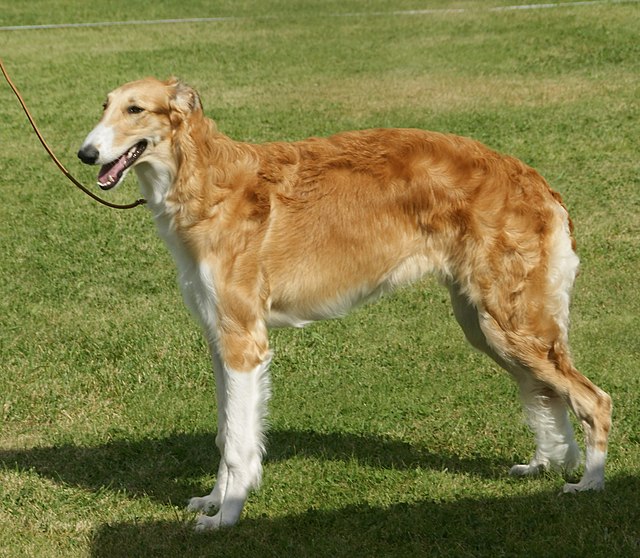
A tall, slim, aristocratic sighthound built on greyhound lines but clothed in a long coat, standing from roughly 68 cm at the shoulder in females to 75 cm or more in males, and weighing about 25 to 48 kg depending on sex and type. The body is long and narrow with a deep, rather narrow chest, an arched loin and the tucked-up waist typical of running hounds. The head is long, lean and refined with a slight rise over the muzzle and dark, gentle, almond-shaped eyes. The coat is the defining feature: long, silky and either flat, wavy or curly, with heavier feathering on the neck, chest, tail and legs. It comes in almost any colour and pattern, including white with markings, gold, sable, brindle and black. The small ears fold back against the neck, and the long tail hangs in a graceful curve.
Suitability
The Borzoi suits a calm household with plenty of space, ideally a house with a large, very securely fenced yard, since it needs room to gallop and a tall fence to contain a fast, athletic jumper. It is genuinely a quiet, clean housedog despite its size and can settle into a relaxed home, but it is not well suited to small apartments and it is a demanding first dog because of its independence and strong chase instinct. It can tolerate being alone for moderate periods better than some breeds, but it still wants company and a soft place to rest. Homes with cats or small pets need to weigh its prey drive carefully. In the Australian climate the long coat means it should be given shade and water and exercised in the cooler parts of hot days, and as a lean, low-fat sighthound it feels temperature extremes and appreciates a warm, padded spot in cold weather.
Health
Borzois are reasonably healthy for a giant sighthound and usually live around 9 to 12 years. The single most important concern is gastric dilatation-volvulus (bloat), a sudden, life-threatening twisting of the deep chest and stomach; every owner must know the early signs and have an emergency plan, and feeding routines should be managed to lower the risk. As a sighthound the breed is sensitive to anaesthetics and some drugs and carries little body fat, so vets should be told it is a sighthound before any procedure. Cardiac conditions, including some breed-relevant heart disease, are worth screening for, and the breed can be affected by eye conditions such as progressive retinal atrophy. Bone and joint issues, including hip problems and the bone cancer osteosarcoma seen in large breeds, also occur. Buy from breeders who screen hearts and eyes, are frank about bloat and any cancer or heart history in their lines, and rear pups with sound temperament in mind.
Find your Borzoi
Browse trusted Borzoi breeders across Australia and read genuine reviews from real owners, or take the quiz to be sure of the fit.