
Black Russian Terrier
Chornyi, Terrier Noir Russem, Schwarzer Russicher Terrier
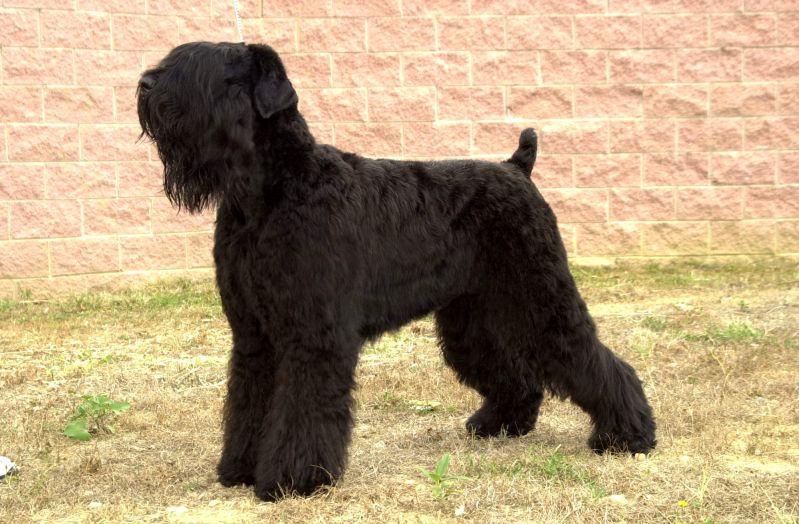
The Black Russian Terrier is a large, powerful working breed developed in the Soviet Union as a guard and military dog. Despite the name it is not a true terrier, and its build and temperament are closer to those of a giant working dog. These are confident, protective, intelligent animals that bond intensely with their family and are naturally wary of outsiders. They need a fair amount of exercise and, just as importantly, a job for the mind and firm, consistent leadership from someone who knows large guarding breeds. They suit experienced owners with space who want a devoted protector and are committed to thorough training and socialisation. They are not a breed for first-time owners, apartments or anyone unable to handle a strong, territorial dog. The harsh black double coat needs regular brushing and professional clipping every couple of months to stay in order.
Size
Large to Giant
Lifespan
10-14 years
Group
Not ANKC Recognised
Height
Male: 63-69 cm (25-27 inches), Female: 58-63 cm (23-25 inches)
Weight
Male: 36-65 kg (80-143 lbs), Female: 36-65 kg (80-143 lbs)
Origin
Russia
Compatibility & care
How this breed fits into life with you
Scores are out of 5. Tap the help icon next to any trait to see what it really means.
Personality
How they think and behave
With family
Who they get along with
Care needs
What they ask of you
Origin & history
The Black Russian Terrier was created in the Soviet Union in the mid-twentieth century at the Red Star military kennel near Moscow. With many working dogs lost during the Second World War, Soviet breeders set out to develop a large, hardy dog suited to the cold and capable of guarding, patrolling and military duties. They crossed a number of breeds, with the Giant Schnauzer, Rottweiler, Airedale Terrier and Newfoundland among the main contributors, selecting hard for working ability, robustness and a weatherproof coat. The result was a versatile service dog that worked across the Soviet military and security forces. The breed was opened up to civilian owners over time and is now kept worldwide as a guardian and companion. It remains uncommon in Australia, where it is owned mainly by enthusiasts of working breeds.
Temperament
This is a courageous, self-assured guardian that is deeply devoted to its own people. Within the family the Black Russian is affectionate, loyal and often surprisingly gentle, and it generally does well with children it has been raised with, though its size and protectiveness mean supervision around young kids and their visiting friends is sensible. It is naturally aloof and watchful with strangers and has a strong territorial streak, which makes early and thorough socialisation absolutely essential to produce a stable, discerning adult rather than a suspicious one. With other dogs it can be assertive, particularly same-sex, and it needs proper introductions. It is highly intelligent and trainable but also strong-willed, and it needs an experienced owner who can provide calm, consistent leadership and reward-based training from puppyhood. Its core needs are a confident handler, a job to do, daily exercise and steady socialisation throughout life.
Appearance
A large, robust, heavily boned dog with an imposing, square outline. Males stand about 70 to 78 cm at the shoulder and females 66 to 74 cm, with weight commonly 45 to 60 kg, males being substantially heavier. The coat is a coarse, weatherproof black double coat, sometimes with a scattering of grey hairs, and the breed's hallmark is the abundant beard, moustache and eyebrows that give it a serious, characterful face. The body is muscular and powerful, the head large and blocky, the eyes dark and the ears set high and dropped. The coat needs trimming to shape and grows long if left, particularly around the head and legs.
Suitability
A house with a securely fenced yard and an experienced owner is the only sensible setup for this breed. It is emphatically not a first dog, nor one for apartment living, casual owners or anyone unprepared to commit to serious training and lifelong socialisation. It bonds hard to its family and prefers to be with them, so it should not be left alone for long stretches and is unsuited to being kept as an outdoor-only dog. Its protective instincts make secure fencing and careful management of visitors important. The dense black coat is built for a Russian climate and the breed feels the heat, so it must have shade, water and cool resting spots in an Australian summer, with exercise kept to the cooler hours. This is a big commitment in every sense.
Health
Black Russian Terriers generally live around 10 to 12 years. As a large, fast-grown breed the chief concerns are hip and elbow dysplasia, and the breed also has recognised eye conditions including progressive retinal atrophy and hereditary cataracts. As a deep-chested giant it carries a real risk of bloat (gastric torsion), so feed measured meals and avoid vigorous exercise straight after eating. Some lines are affected by the neurological condition juvenile laryngeal paralysis and polyneuropathy, for which DNA testing is available. Choose a breeder who hip and elbow scores their dogs, has eyes tested by a veterinary ophthalmologist, and uses the available DNA test for the laryngeal paralysis condition. Given the breed's size and guarding nature, a breeder who also breeds for stable temperament is just as important as one who tests for health. Ask to meet the parents.
Find your Black Russian Terrier
Browse trusted Black Russian Terrier breeders across Australia and read genuine reviews from real owners, or take the quiz to be sure of the fit.