
Briard
Berger De Brie, Berger Briard
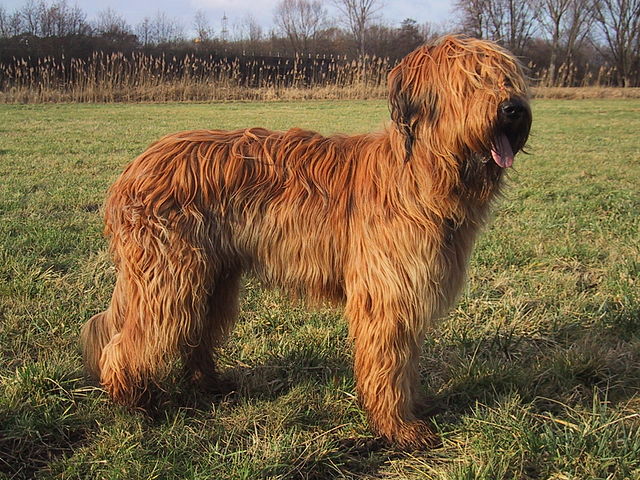
The Briard is a large French herding dog under a long, flowing coat, with a shaggy face, big eyebrows and a beard that hide a sharp, watchful intelligence. Bred to move and guard flocks, the Briard is loyal, confident and protective, devoted to its own people while naturally reserved with outsiders. It is affectionate and playful at home but has a strong independent streak and a memory for anyone who treats it unfairly, so it needs an owner who is patient, consistent and willing to put in the socialisation. These are active dogs that want daily exercise and a job for their minds, and they are not suited to inactive homes or to being left alone all day. The big coat is the other commitment: it needs thorough brushing several times a week to prevent matting. Bright, characterful and devoted, the Briard rewards the effort it demands.
Size
Large
Lifespan
10-12 years
Group
Group 5 - Working Dogs
Height
Male: 62-68 cm (24-27 inches), Female: 56-64 cm (22-25 inches)
Weight
Male: 35 kg (75 lbs), Female: 35 kg (75 lbs)
Origin
France
Compatibility & care
How this breed fits into life with you
Scores are out of 5. Tap the help icon next to any trait to see what it really means.
Personality
How they think and behave
With family
Who they get along with
Care needs
What they ask of you
Origin & history
The Briard is an old French breed, recorded in France for centuries and named for the Brie region, developed as an all-round farm dog that both herded sheep and guarded them from predators and thieves. That dual role shaped the temperament: a dog independent enough to make decisions in the field but fiercely loyal and protective of its flock and family. Briards were used as army dogs in France, carrying messages, finding wounded soldiers and acting as sentries, and heavy wartime losses dented their numbers. The breed was promoted by French agricultural societies in the nineteenth century and a standard was drawn up, helping fix the type we know today. It later spread to North America and beyond, and there is a persistent tale, hard to verify, linking the breed to Thomas Jefferson bringing dogs back from France. In Australia the Briard is uncommon and mostly kept by enthusiasts.
Temperament
The Briard is loyal, confident and devoted, forming intense bonds with its family and happiest when it is with them. Well-raised Briards are good with children, often gentle and protective, though their size and herding instinct mean they may try to shepherd running kids, so supervision helps. They are naturally wary of strangers and have a strong guarding instinct, which makes them effective watchdogs but also makes early, broad socialisation essential so the caution does not tip into suspicion. With other dogs and pets they generally settle in well when raised together, though some can be assertive. They are highly intelligent but independent thinkers with a stubborn side, and they have long memories, so training needs to be patient, consistent and fair, never harsh. A Briard needs both physical exercise and mental challenge, or that clever mind finds its own, often inconvenient, outlets.
Appearance
This is a large, muscular, well-balanced dog standing slightly longer than tall. Males stand roughly 62 to 68 cm at the shoulder and females about 56 to 64 cm, with weight commonly between 30 and 40 kg. The defining feature is the long, coarse, slightly wavy double coat that drapes the body and forms the heavy brows, beard and moustache over the face. A breed quirk is the double dewclaws required on each hind leg. Ears may be natural or, where still permitted, cropped, and the tail is long with a distinctive upward hook at the tip. Colours include solid black, various shades of grey, and tawny, sometimes with darker shading.
Suitability
The Briard suits an active household with a house and a securely fenced yard, and an owner prepared to commit to training, socialisation and serious grooming. It is happiest with someone who can give it a job, whether herding, obedience, agility or simply demanding daily activity, and it is a poor match for apartment living or for people away from home all day, as it hates being left alone. It is better suited to an owner with some dog experience than to an absolute beginner. The heavy coat copes with cold but makes Australian summers a challenge, so exercise in the cool of the day, keep the coat well groomed so it can insulate properly, and always provide shade and water.
Health
A well-bred Briard typically lives around 11 to 13 years. As a large breed it is prone to hip and elbow dysplasia, which can lead to arthritis, so parents should be hip and elbow scored. Being deep-chested it also carries a risk of gastric dilatation-volvulus (bloat), a sudden twisting of the stomach that is an emergency, so learn the warning signs. The breed has a well-known eye condition in congenital stationary night blindness, an inherited disorder for which a DNA test exists, and other eye problems including progressive retinal atrophy occur, so eye testing matters. Hypothyroidism and some bleeding disorders have also been seen. Buy from a breeder who provides hip and elbow scores, a recent eye certificate and the DNA test for night blindness on the parents, and who breeds away from these issues.
Find your Briard
Browse trusted Briard breeders across Australia and read genuine reviews from real owners, or take the quiz to be sure of the fit.