
Bracco Italiano
Italian Pointer, Italian Pointing Dog, Bracco
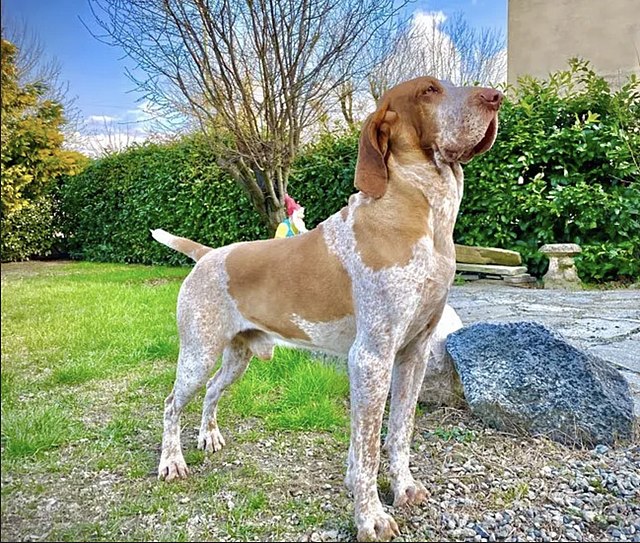
The Bracco Italiano is a large Italian pointing breed, an old-style gundog with a noble head, long pendulous ears and a loose, almost houndy look about it. Despite the dignified appearance it is a soft, sweet-natured dog that is gentle and affectionate at home and famously good with children. Braccos were bred to range and hunt all day, so they need substantial daily exercise and ideally a real outlet for that nose and stamina, whether that is gundog work, long walks or dog sports. They are sensitive and do not respond to harsh handling, but they can also be a little stubborn and slow to mature. The short, glossy coat is low-maintenance, though the long ears need checking and the loose lips mean some drool. This is a lot of dog for an inactive household and not really a breed to leave home alone all day.
Size
Large
Lifespan
11-13 years
Group
Group 3 - Gundogs
Height
Male: 58-67 cm (23–26 inches), Female: 55–62 cm (22–24 inches)
Weight
Male: 25-40 kg (55-88 lbs), Female: 25-40 kg (55-88 lbs)
Origin
Italy
Compatibility & care
How this breed fits into life with you
Scores are out of 5. Tap the help icon next to any trait to see what it really means.
Personality
How they think and behave
With family
Who they get along with
Care needs
What they ask of you
Origin & history
The Bracco Italiano is one of the oldest pointing breeds in Europe, with roots in Italy going back centuries and depictions of similar dogs in Renaissance art. It was developed to find and point game birds and then retrieve them, working closely with the hunter at a steady, deliberate pace rather than the flat-out gallop of some pointers. Two regional types existed historically, a heavier Piedmontese dog and a leaner Lombard one, and these were eventually brought together into the single breed recognised today. The breed declined badly by the early twentieth century and was rebuilt by dedicated Italian breeders, with a modern standard set in the 1940s. It remains primarily a working gundog in Italy and is still fairly uncommon in Australia, kept by hunting enthusiasts and a small number of devotees who value its gentle temperament.
Temperament
At home the Bracco is gentle, calm and devoted, an affectionate dog that bonds closely with its family and is generally excellent and patient with children. It tends to be friendly or politely reserved with strangers rather than sharp, and while it may bark to announce someone it is not a guard dog. Braccos are usually sociable with other dogs and, having a moderate prey drive aimed at birds, often live happily with other household pets, though sensible introductions to small animals are wise. They are intelligent and keen to work with their handler, but they are sensitive souls and can also be stubborn, so training must be patient, consistent and kind, as harsh corrections will shut them down. This is an affectionate, biddable breed that nonetheless needs real exercise and mental work to be content.
Appearance
This is a large, substantial, athletic dog. Males stand roughly 58 to 67 cm at the shoulder and females about 55 to 62 cm, with weight commonly between 25 and 40 kg. The build is powerful but not heavy, with a distinctive sculpted head carrying a slight downward slope to the muzzle, long low-set pendulous ears and loose skin that forms gentle folds at the throat and lips. The coat is short, dense and glossy and needs little grooming. Colours are white, white with orange markings, or white heavily flecked or roaned with chestnut, the chestnut-and-white pattern often called roano-marrone.
Suitability
The Bracco suits an active owner with a house and plenty of room, ideally someone who hunts, walks long distances or competes in dog sports and can give the breed the exercise and engagement it was built for. It is not a fit for apartment life or for a quiet, low-activity household, and it dislikes being left alone for long stretches, preferring to be with its people. A patient first-time owner who is committed to plenty of exercise can do well with one, given the breed's soft nature. The short coat gives limited protection from the sun, so in the Australian heat exercise in the cooler parts of the day and always provide shade and fresh water, and keep the ears dry after swimming to head off infections.
Health
A well-bred Bracco Italiano usually lives around 12 to 14 years. As a large, deep-chested breed it is at risk of gastric dilatation-volvulus (bloat), a sudden twisting of the stomach that is a life-threatening emergency, so learn the signs and talk to your vet about prevention. Hip and elbow dysplasia occur in the breed and responsible breeders screen for them. Those long, heavy ears trap moisture and are prone to infection, so they need regular checking and cleaning. The breed has also been associated with an inherited kidney condition and with some eye disorders. Ask any breeder for hip and elbow scores and a recent eye certificate on the parents, ask about kidney health in the line, and choose someone who openly discusses the health of their dogs rather than glossing over it.
Find your Bracco Italiano
Browse trusted Bracco Italiano breeders across Australia and read genuine reviews from real owners, or take the quiz to be sure of the fit.