
Beaglier
The Beaglier is a cross between a Beagle and a Cavalier King Charles Spaniel, bred as a small, affectionate companion dog. It is not a recognised pedigree breed, and the ANKC does not register it, so litters vary a fair bit depending on which parent a pup takes after. Most are gentle, sociable and people-focused, happy with children and other pets, and a bit calmer than a pure Beagle while still keen on a walk and a sniff. Expect a dog that wants to be with you, not one that copes well alone. Some inherit the Beagle nose and stubbornness, others the softer, more biddable Cavalier temperament. The coat is usually short to medium and needs a brush a couple of times a week. A good choice for someone wanting a friendly lapdog with a bit of energy, less so for anyone after a predictable, standardised breed.
Size
Small
Lifespan
13-15 years
Group
Not ANKC Recognised
Height
Male: 30.5-40 cm (12-16 inches), Female: 30.5-40 cm (12-16 inches)
Weight
Male: 4.5-12 kg (10-25 lbs), Female: 4.5-12 kg (10-25 lbs)
Origin
Australia
Compatibility & care
How this breed fits into life with you
Scores are out of 5. Tap the help icon next to any trait to see what it really means.
Personality
How they think and behave
With family
Who they get along with
Care needs
What they ask of you
Origin & history
The Beaglier is a modern designer cross that emerged from Australia in the 1990s, part of the wave of deliberate small-dog crosses that followed the Cavoodle and similar mixes. The aim was to pair the Beagle's robust, cheerful nature with the Cavalier King Charles Spaniel's gentleness and convenient size, ideally producing a sound family companion. Because it is a first-cross or multi-generational hybrid rather than a true breed, there is no breed standard and no ANKC recognition, and outcomes depend entirely on the two parents used. The Beagle itself is an old English scent hound, while the Cavalier descends from the small toy spaniels long kept as companions by English nobility. Anyone considering a Beaglier should research both parent breeds honestly, since a pup can lean strongly toward either side.
Temperament
Beagliers are bred to be companions, and it shows. They are typically warm, sociable and affectionate, bond closely with their household, and usually do well with children and other dogs. Strangers are more likely to be greeted than challenged, so this is not a guard dog. Trainability depends on which parent dominates, since the Cavalier side is soft and eager to please while the Beagle side brings a stubborn streak and a strong nose that can switch off the ears mid-walk. Reward-based training works best either way. The trait nearly all Beagliers share is a dislike of being left alone, a tendency that runs strongly in both parent breeds, so separation anxiety, barking and chewing can develop in a dog left on its own too much. They want to be part of daily life, not left in the yard.
Appearance
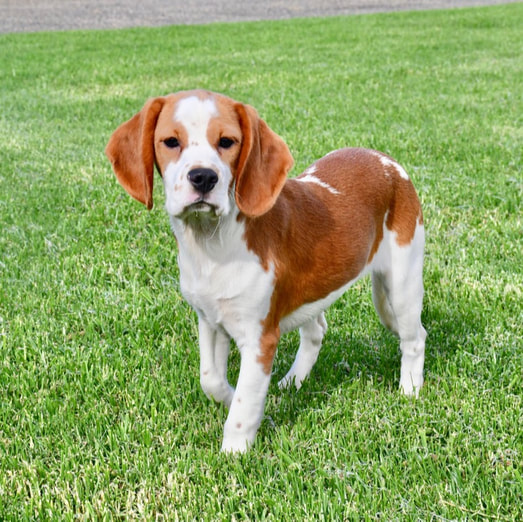
A small dog, very roughly 30 to 40 cm tall and around 5 to 12 kg, with a build that falls somewhere between its two parents and varies litter to litter. Most have a fairly compact body, a rounded head, large dark expressive eyes and long, low-set drop ears. The coat is typically short to medium and smooth or slightly silky. Colours follow the parent breeds and include tricolour, tan and white, ruby (rich chestnut), black and tan, and various combinations. Because this is a cross rather than a fixed breed, no two Beagliers look exactly alike, and size and coat can be hard to predict from the puppy.
Suitability
A Beaglier suits a home where someone is around most of the day and wants a small, affectionate dog to share the couch and a daily walk. They adapt well to apartments or houses as long as they get a decent walk and some company, and their easygoing nature makes them reasonable for a first-time owner who has done their homework on both parent breeds. The key caution is time alone, because these dogs genuinely struggle with isolation and do best in households that are not empty all day. The short to medium coat handles the Australian climate fairly well, but watch dogs that take after the shorter-muzzled Cavalier side in hot weather, give plenty of shade and water, and avoid exercise during the heat of the day.
Health
A Beaglier generally lives around 12 to 15 years. As a cross it can inherit health problems from either side, so honest buyers look at both parent breeds. From the Cavalier comes the most serious concern, mitral valve disease (an early-onset heart condition), along with syringomyelia, a painful neurological problem linked to skull shape. From the Beagle side come hip issues, eye conditions and a tendency to put on weight, and the drop ears from both parents mean recurring ear infections are common. Hybrid vigour is often promised but not guaranteed. Only buy from a breeder who heart-tests the Cavalier parent (a current cardiac clearance from a specialist) and eye-tests both parents, and who can show the results. Keep the dog lean and clean the ears regularly.
Find your Beaglier
Browse trusted Beaglier breeders across Australia and read genuine reviews from real owners, or take the quiz to be sure of the fit.