
Chihuahua
Chihuahueño
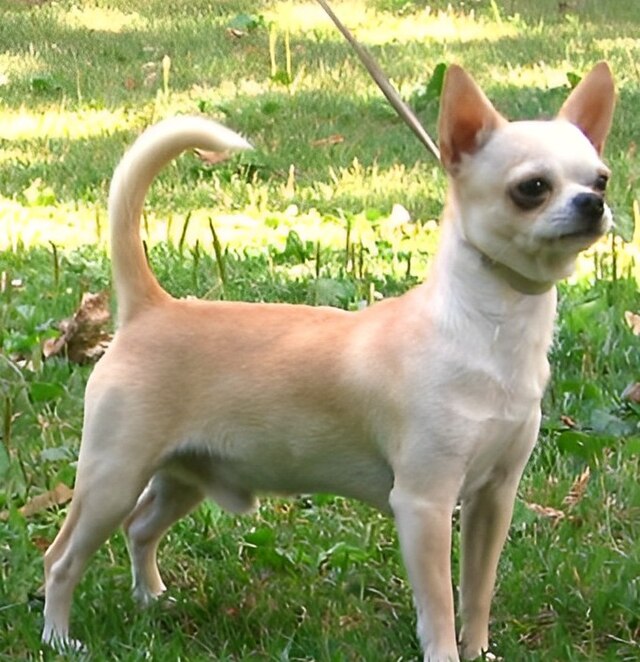
The Chihuahua is the smallest dog breed, a tiny companion from Mexico with a famously large personality. Bold, alert and devoted, it typically attaches very strongly to one or two people and likes to be with them constantly. Despite weighing only a couple of kilos it is confident to the point of cheekiness and will happily challenge much bigger dogs, so it needs proper socialisation and an owner who does not let bad habits slide just because the dog is small. Exercise needs are modest, easily met with short walks and indoor play, which makes it well suited to apartments. It comes in a smooth coat and a long coat, both easy to groom. It can be wary or snappy with strangers and is fragile, so it is not the best choice for homes with very young or boisterous children, and it dislikes the cold.
Size
Smallest
Lifespan
14-18 years
Group
Group 1 - Toys
Height
Male: 15-23 cm (6-9 inches), Female: 15-23 cm (6-9 inches)
Weight
Male: 1-3 kg (2-6 lbs), Female: 1-3 kg (2-6 lbs)
Origin
Mexico
Compatibility & care
How this breed fits into life with you
Scores are out of 5. Tap the help icon next to any trait to see what it really means.
Personality
How they think and behave
With family
Who they get along with
Care needs
What they ask of you
Origin & history
The Chihuahua takes its name from the Mexican state of Chihuahua, where examples were discovered in the mid-19th century, and it is generally thought to descend from a small companion dog of ancient Mexico called the Techichi, kept by the Toltec and later Aztec peoples. The modern breed was developed largely after specimens were brought into the United States from Mexico in the late 1800s, and it has since become one of the most recognisable toy dogs in the world. It was bred from the start as a companion rather than a worker, which is reflected in its devotion to its people and its taste for comfort. The Chihuahua is well established in Australia as a popular toy and lap dog. The ANKC recognises both the smooth coat and long coat varieties in the Toy Group.
Temperament
The Chihuahua has an outsized character packed into a tiny frame: confident, lively, alert and intensely loyal, usually fixing on one or two favourite people and wanting to be with them all the time, often tucked against them or under a blanket. It is naturally suspicious of strangers and quick to sound the alarm, which makes it a surprisingly effective little watchdog, but without early socialisation that wariness can tip into nervous snapping. It can be possessive of its person and is often touchy with other dogs, sometimes squaring up to ones many times its size with no sense of the danger, so owners must protect it from itself. It is clever and can learn well with gentle, reward-based training, though it has a stubborn streak and house-training can take patience. The most common behavioural problem is owners treating it as a baby and accidentally encouraging fearful, yappy or bossy behaviour.
Appearance
The smallest of all breeds, typically weighing about 1.5 to 3 kg, with no formal height standard but generally standing around 15 to 23 cm at the shoulder. The hallmark is the rounded apple-shaped skull with large, upright ears, big round eyes and a short pointed muzzle. Some pups are born with a moleras, a soft spot on the skull, which often closes with age. There are two coat types: the smooth coat, short and glossy and close to the body, and the long coat, soft with feathering on the ears, legs and tail. Almost any colour or pattern is accepted, from solid fawn, black, chocolate and white through to brindle and spotted markings.
Suitability
The Chihuahua is one of the best breeds for apartment living, needing little space and only light exercise, and it suits singles, couples and older owners who want a devoted lap dog and are home often enough to give it company. It bonds so closely that it dislikes being left alone for long and can become anxious or vocal. Its fragility and quickness to react mean it is generally not ideal for families with very young or rough children, and any contact with toddlers needs close supervision to protect the dog. First-time owners can manage one well as long as they socialise it properly and resist spoiling it into bad habits. In the Australian climate the main issue is cold rather than heat: this little dog feels the chill badly and appreciates a coat and a warm bed in winter, while still needing shade and water in summer.
Health
Chihuahuas are long-lived for dogs, commonly reaching 14 to 18 years with good care. Their tiny size brings particular risks. Patellar luxation, where the kneecap slips out of place, is common, so responsible breeders check the knees of their stock. Dental disease is a major issue because so many teeth are crowded into a small mouth, making regular tooth care important throughout life. The breed is prone to a collapsing trachea, which causes a honking cough, and small or very young dogs can suffer hypoglycaemia (low blood sugar) if they go too long without food. Some lines carry hydrocephalus and certain heart conditions, including patent ductus arteriosus and mitral valve disease, so cardiac checks are worthwhile. Choose a breeder who screens for patella and heart problems and rears robust, well-fed pups rather than fragile teacup-sized ones.
Find your Chihuahua
Browse trusted Chihuahua breeders across Australia and read genuine reviews from real owners, or take the quiz to be sure of the fit.