
Chesapeake Bay Retriever
Chessie, CBR, Chesapeake
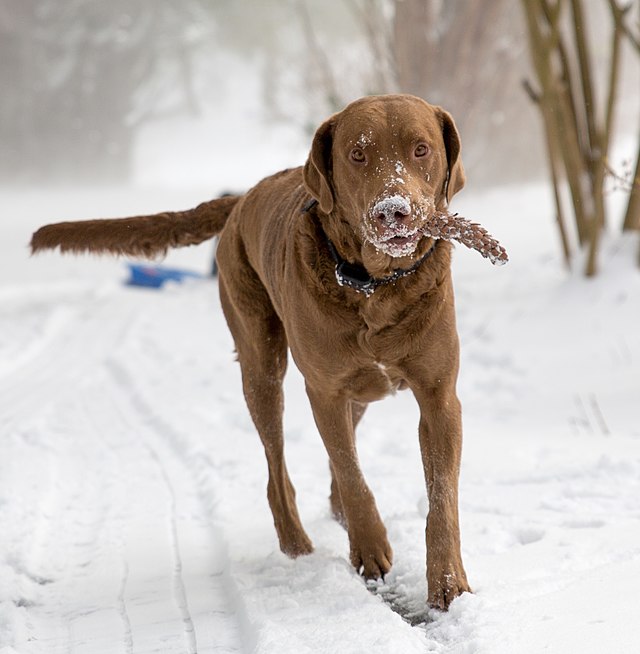
The Chesapeake Bay Retriever is a tough, medium to large gundog developed in the United States to retrieve waterfowl from the cold, rough waters of Chesapeake Bay. It is the most powerful and the most strong-minded of the popular retrievers, built for endurance and bred to keep working in conditions that would stop other dogs. With its own people it is loyal, affectionate and protective, but it is more reserved with strangers and more independent than a Labrador or Golden, which gives it a real guarding streak few retrievers have. This is a high-energy working dog that needs serious daily exercise, ideally including swimming and retrieving, plus a job for its mind. The harsh, oily double coat is fairly low-maintenance but has a strong odour when wet and sheds heavily. It suits active, experienced owners and is not a soft, easygoing family pet for the inexperienced.
Size
Large
Lifespan
10-13 years
Group
Group 3 - Gundogs
Height
Male: 58-66 cm (23-26 inches), Female: 53-61 cm (21-24 inches)
Weight
Male: 29-36 kg (65-80 lbs), Female: 25-32 kg (55-70 lbs)
Origin
United States
Compatibility & care
How this breed fits into life with you
Scores are out of 5. Tap the help icon next to any trait to see what it really means.
Personality
How they think and behave
With family
Who they get along with
Care needs
What they ask of you
Origin & history
The Chessie traces to the early 19th century on the eastern seaboard of the United States. The founding story credits two dogs rescued from a shipwreck off Maryland in 1807, said to be of Newfoundland type, which were bred to local retrieving and hound dogs along Chesapeake Bay. The aim was a dog that could face freezing water and rough seas all day and retrieve large numbers of ducks for market and sport hunters, and the breed that emerged was prized for stamina, a water-shedding coat and a determined, almost stubborn work ethic. It became the recognised retriever of the bay region and is the state dog of Maryland. In Australia the Chessie is uncommon and kept mainly by hunting and working-dog enthusiasts rather than as a mainstream pet. The ANKC recognises it in the Gundog Group.
Temperament
The Chesapeake is bright, loyal and courageous, with a notably more serious and independent character than the cheerful Labrador or Golden. It is devoted and affectionate within its family and is usually good with children it has grown up with, but it is naturally protective and watchful, which makes it reserved with strangers and a genuine watchdog, rare among retrievers. It can be assertive with other dogs, particularly of the same sex, so steady socialisation from puppyhood matters. It is very intelligent and highly trainable for work, yet it has a mind of its own and will test an inconsistent handler, so it responds best to confident, fair, reward-based training rather than heavy-handedness. Bred to work hard and think on the job, it needs plenty of physical exercise and mental challenge, and a bored or under-exercised Chessie can become difficult.
Appearance
A strong, muscular retriever of medium to large size, with males standing roughly 58 to 66 cm at the shoulder and weighing about 29 to 36 kg, and females smaller. The build is powerful and slightly higher at the rump, with a broad head, strong jaws and webbed feet that aid swimming. The defining feature is the coat: a short, harsh, wavy outer coat over a dense, fine, woolly undercoat, carrying a natural oil that sheds water and gives the wet dog its distinctive smell. Colours all blend the dog with its working habitat, running through shades of brown, sedge (a reddish tan) and dead grass (pale fawn to straw). The eyes are typically a clear yellow to amber.
Suitability
This breed is for active, experienced owners who can give it real work and exercise, ideally people who hunt, do dog sports, or live an outdoor life near water. It needs a house with a decent secure yard and is not suited to apartment living or to quiet, sedentary homes. It is not a good first dog, as its strength, drive and independent streak can overwhelm a novice. It tolerates time alone better than the softer retrievers but still needs company and a purpose, and it will find its own trouble if left bored and idle. The oily double coat handles cold and water superbly, so in the Australian summer the main watch-points are heat and the chance to cool off: provide shade, fresh water, swimming where possible, and exercise in the cooler parts of the day.
Health
Chesapeakes are a generally hardy working breed and usually live around 10 to 13 years. The main orthopaedic concerns are hip and elbow dysplasia, faulty joint development that leads to arthritis, so hip and elbow scoring of breeding dogs is important. The breed is also predisposed to progressive retinal atrophy, an inherited eye disease that gradually causes blindness, which can now be DNA-tested in many lines, and breeders should eye-test as well. As a deep-chested dog it carries some risk of gastric dilatation-volvulus (bloat), a sudden twisting of the stomach that is a veterinary emergency. Some lines report a particular type of exercise intolerance and other inherited conditions. Buy from breeders who hip and elbow score, DNA-test or eye-test for PRA, and are open about what runs in their dogs. Keeping the dog lean and fit supports the joints over a long working life.
Find your Chesapeake Bay Retriever
Browse trusted Chesapeake Bay Retriever breeders across Australia and read genuine reviews from real owners, or take the quiz to be sure of the fit.