
Welsh Corgi (Cardigan)
Cardigan, CWC, Cardi
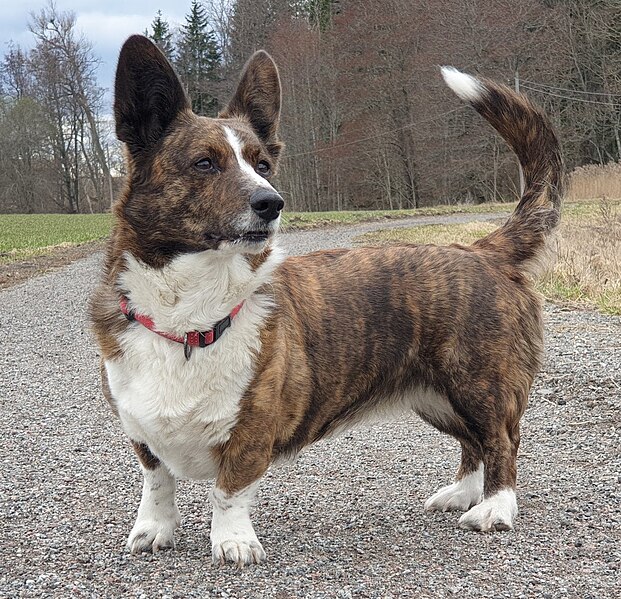
The Cardigan Welsh Corgi is the older and slightly larger of the two corgi breeds, a low-set, long-bodied cattle dog from Wales with a full, foxy brush of a tail (the easiest way to tell it from the tailless Pembroke). It is a sturdy, clever, adaptable herding breed packed into a small frame. Cardigans are affectionate and devoted with their family, level-headed, and naturally a bit reserved with strangers. They have real working energy and need a decent daily walk plus mental stimulation, but their needs are manageable and they settle well indoors. They suit families, singles and older owners who want a smart, characterful dog, and they cope less well with being treated as a purely sedentary lapdog, since boredom brings barking and mischief. Grooming is straightforward, a weekly brush most of the year with heavier shedding seasonally. A key trait is the herding instinct, which can show up as nipping at heels and a strong urge to control movement.
Size
Small to Medium
Lifespan
12-15 years
Group
Group 5 - Working Dogs
Height
Male: 25-33 cm (10-13 inches), Female: 25-33 cm (10-13 inches)
Weight
Male: 14-17 kg (30-38 lbs), Female: 11-15 kg (25-34 lbs)
Origin
United Kingdom
Compatibility & care
How this breed fits into life with you
Scores are out of 5. Tap the help icon next to any trait to see what it really means.
Personality
How they think and behave
With family
Who they get along with
Care needs
What they ask of you
Origin & history
The Cardigan Welsh Corgi comes from Cardiganshire in west Wales and is an old type, used for centuries as a drover's dog that moved cattle by nipping at their heels and was low enough to duck the return kick. It is generally considered the older of the two Welsh corgis, with roots often linked to dogs of the dachshund and broader Teckel family, a different ancestry from the Pembroke. For a long time the two corgis were shown together and even interbred, but they were separated into distinct breeds in the 1930s. The Cardigan has always been the rarer of the pair. It never received the royal spotlight that made the Pembroke famous, and today it remains an uncommon breed in Australia, kept mainly by herding and showing enthusiasts who value its temperament and old working type.
Temperament
Cardigans are intelligent, affectionate and steady, devoted to their families and generally a little more reserved and thoughtful than the outgoing Pembroke. They are good with children they are raised with, though their herding instinct can lead them to nip at running heels, so this needs early redirection. They usually get on well with other dogs and with household pets when socialised young, but they can try to herd anything that moves. With strangers they are watchful and discerning rather than instantly friendly, which combined with a surprisingly deep bark makes them excellent little watchdogs. They are highly trainable and enjoy having their minds engaged, responding well to reward-based methods and to dog sports such as obedience, agility and herding. The main behavioural needs are mental stimulation, early socialisation, and an outlet for the herding drive so it does not turn into nuisance barking or controlling behaviour at home.
Appearance
A long, low, sturdily built dog, standing roughly 27 to 32 cm at the shoulder and weighing about 11 to 17 kg, with a body noticeably longer than it is tall. The bone is heavier and the frame a little larger overall than the Pembroke's. The head is foxy with large, rounded-tipped erect ears, and the breed carries a long, low-set, bushy tail like a fox's brush, which is the clearest distinction from the Pembroke. The coat is a short to medium double coat of harsh texture that lies flat and weatherproof. Cardigans come in a wider range of colours than Pembrokes, including red, sable, brindle, black and tan, and blue merle, usually with white markings, and the merles often have striking blue or partly blue eyes.
Suitability
The Cardigan adapts well to either a house with a yard or apartment living, provided it gets a proper daily walk and some mental work, and its sensible nature and manageable size make it a good choice for many first-time owners willing to provide training. It generally tolerates being left alone for moderate periods better than the more clingy breeds, especially if exercised first and given something to occupy it. The weatherproof double coat handles cold easily and copes with Australian heat reasonably well, but these dogs still need shade, fresh water and walks timed to the cooler parts of summer days. Watch the waistline, as a long-backed breed that runs to overweight is at real risk of back trouble. A robust, clever, loyal companion that fits a wide range of homes.
Health
Typical lifespan is around 12 to 15 years. As a long-backed, short-legged (chondrodystrophic) breed, the Cardigan is predisposed to intervertebral disc disease, so owners should keep the dog lean, discourage repeated jumping on and off furniture, and support the back. Progressive retinal atrophy is the main inherited eye disease and a DNA test is available, so ask whether the parents are tested or clear. Hip dysplasia occurs and hip scoring of breeding stock is worthwhile. Because the blue merle colour is present in the breed, two merles should never be bred together, as merle-to-merle pairings risk deaf and blind puppies, and a responsible breeder will never make that mating. Choose a breeder who does PRA DNA testing and hip scoring, breeds merles only to non-merles, and keeps their dogs at a sensible weight to protect the spine.
Find your Welsh Corgi (Cardigan)
Browse trusted Welsh Corgi (Cardigan) breeders across Australia and read genuine reviews from real owners, or take the quiz to be sure of the fit.