
Curly-Coated Retriever
Curly, CCR
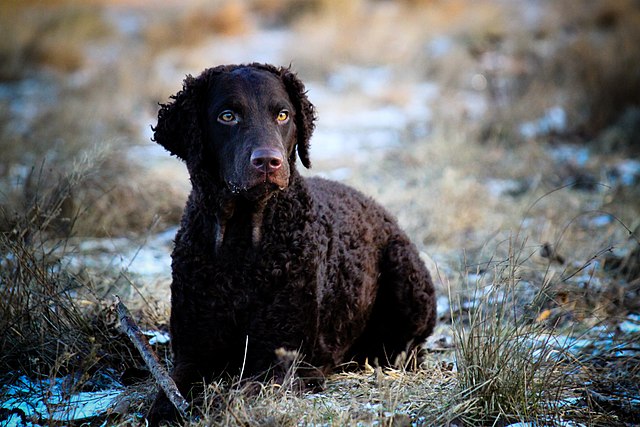
The Curly-Coated Retriever is a tall, athletic gundog wrapped in a coat of tight, water-shedding curls. Curlies are one of the oldest retriever breeds and they keep a working dog''s stamina and drive. They tend to be more independent and more reserved with strangers than the friendlier Labrador or Golden, which suits owners who appreciate a dog with its own mind. With their family they are affectionate, steady and quietly devoted. This is not a breed for a sedentary household. They need real exercise every day, ideally including swimming and retrieving, and they get bored and destructive without a job to do. They mature slowly and stay puppy-brained for a couple of years. The coat is low-fuss compared with most long-coated breeds, needing little more than the occasional check and a wet-down rather than heavy brushing.
Size
Large
Lifespan
8-12 years
Group
Group 3 - Gundogs
Height
Male: 63-69 cm (25-27 inches), Female: 61-66 cm
Weight
Male: 32-41 kg (70-90 lbs), Female: 23-32 kg (50-70 lbs)
Origin
United Kingdom
Compatibility & care
How this breed fits into life with you
Scores are out of 5. Tap the help icon next to any trait to see what it really means.
Personality
How they think and behave
With family
Who they get along with
Care needs
What they ask of you
Origin & history
The Curly-Coated Retriever was developed in England, with the breed recognisable by the early nineteenth century, making it one of the earliest retrievers to be standardised. It was built to retrieve waterfowl and upland game for hunters, and the dense curly jacket gave protection in cold water and through thick cover. The exact mix behind it is debated, but old water dogs, retrieving spaniels and very likely the Poodle and the now-extinct English Water Spaniel all contributed, with some later Irish Water Spaniel influence suggested. Curlies were popular with gamekeepers who valued a hardy, no-nonsense worker. Numbers fell sharply around the two World Wars and the breed has stayed scarce ever since, kept alive by committed enthusiasts. In Australia it remains an uncommon sight, found mostly with people who work or show them rather than as a general pet.
Temperament
Curlies are intelligent, self-possessed dogs that think for themselves, which makes them rewarding but not always easy. With their own people they are loyal and affectionate, and well-socialised dogs are good with children, though their size and bounce mean toddlers need supervision. They are typically aloof rather than effusive with strangers, hanging back to assess a new person, and many have a sensible watchdog streak. With other dogs and pets they are usually fine when raised together, helped along by a working retriever''s biddable side. Trainability is good but they bore quickly with drilling and repetition, so keep sessions varied and rewarding. Their independence means they will switch off if training feels pointless. These are active, water-loving dogs that need both physical exercise and mental work, and a Curly without enough to do will find its own entertainment.
Appearance
A large, upstanding retriever, with males around 65 to 69 cm at the shoulder and females a little smaller, weighing roughly 30 to 40 kg. The build is racy and powerful rather than heavy, giving an impression of endurance and reach. The signature coat is a mass of small, tight, crisp curls covering the body and tail, while the face and front of the legs are smooth. Only two colours are correct, black and liver. The head is long and wedge-shaped, the eyes are dark and almond-shaped, and the ears are fairly small and set rather low. The whole dog looks elegant and athletic.
Suitability
This breed belongs in an active household with space, ideally a house with a secure yard and access to somewhere it can swim and run. It is best suited to owners who enjoy outdoor activity and can commit to daily exercise plus training or canine sport. First-time owners should think carefully, since the breed''s independence and slow maturity can frustrate the inexperienced. Curlies tolerate being left for moderate periods better than the clingier retrievers, but they still need company and a job, and will become destructive if under-exercised and bored. In the Australian heat their dense coat means they feel warm weather, so exercise early or late in summer, always offer water and shade, and let them swim to cool off.
Health
Curly-Coated Retrievers are reasonably robust with a typical lifespan of about 10 to 12 years. The main concerns to ask a breeder about are hip and elbow dysplasia, so look for hip and elbow scores on both parents under a recognised scheme. Eye conditions including progressive retinal atrophy and cataracts occur, so annual eye examinations and any available DNA testing matter. The breed has a higher than average rate of certain cancers, and a glycogen storage disease (GSD IIIa) has been identified with a DNA test that responsible breeders use. Bloat, the rapid and life-threatening twisting of the stomach, is a risk in any deep-chested dog, so learn the warning signs and feed sensibly. Choose a breeder who openly shares hip, elbow, eye and DNA results rather than one who glosses over them.
Find your Curly-Coated Retriever
Browse trusted Curly-Coated Retriever breeders across Australia and read genuine reviews from real owners, or take the quiz to be sure of the fit.