
Dachshund (Toy, Miniature, Standard)
Teckel, Tekkel, Tekkel Doxie, Weenie Dog, Sausage Dog, Bassotto, Worshond
The Dachshund is the long-bodied, short-legged hound from Germany, bred to go to ground after badgers and other burrow-dwelling game. It comes in three coat types (smooth, long-haired and wire-haired) and two sizes in Australia, standard and miniature. Whatever the variety, the character is the same: bold, clever, comical and famously stubborn. These are scent hounds with real drive, so they follow their nose, dig, and bark with conviction. They bond closely to their people and can be quite protective for their size. Exercise needs are moderate, but they need it. A bored Dachshund is a noisy, naughty one. Their biggest welfare issue is their back, so jumping on and off furniture and carrying extra weight must be managed. Grooming depends on coat: smooths are wash-and-go, long-hairs need regular brushing, and wires need hand-stripping or trimming.
Size
Smallest, Small, Medium
Lifespan
12-15 years
Group
Group 4 - Hounds
Height
Toy: 30 cm (12 inches), Miniature: 13-18 cm (5-7 inches), Standard: 20-27 cm (8-11 inches)
Weight
Toy: 3.5-5.0 kg (8-11 lbs), Miniature: 5.5 kg (12 lbs), Standard: 7-15 kg (16-32 lbs)
Origin
Germany
Compatibility & care
How this breed fits into life with you
Scores are out of 5. Tap the help icon next to any trait to see what it really means.
Personality
How they think and behave
With family
Who they get along with
Care needs
What they ask of you
Origin & history
The Dachshund was developed in Germany, with recognisable badger dogs documented from at least the eighteenth century and the type refined through the nineteenth. The name translates literally as badger dog, and the build was purpose-made for the job: a long, low body to follow quarry down a tunnel, a deep chest for lung capacity, and a loud voice so the hunter could locate the dog underground. Sturdy front legs and tough feet suited digging. Smooth-coated dogs came first, with the long and wire coats developed later to handle different terrain and weather, the wires through crosses with terriers. German foresters and hunters prized them, and the breed was scaled down to miniature size for going after rabbits. Dachshunds are popular pets across Australia today, equally at home in city apartments and on rural properties.
Temperament
Dachshunds have outsized personalities. They are lively, brave to the point of recklessness, and devoted to their families, often attaching strongly to one person. With children they can be good companions when raised together and treated with respect, though they will not tolerate rough handling and supervision is wise with little ones. Bred to work alone underground, they are independent and notoriously stubborn, which makes house-training and recall a test of patience; short, fun, reward-based sessions work far better than repetition or force. They are alert and quick to sound off, so they make excellent little watchdogs but can tip into nuisance barking. Many are reserved or suspicious with strangers and need early socialisation to stay confident and friendly. Their strong prey drive means small pets can be at risk, and they will dig given the chance.
Appearance
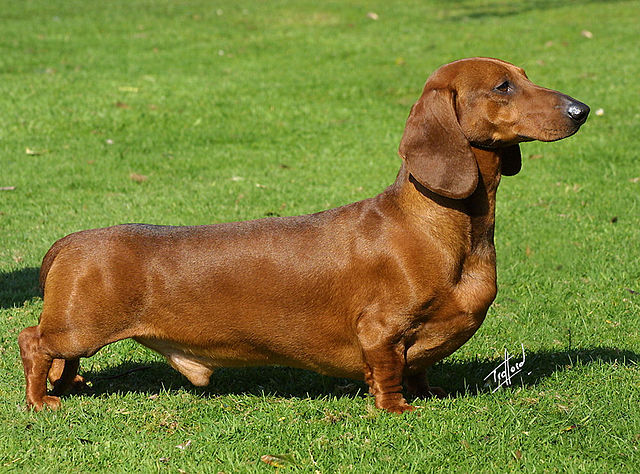
Instantly recognisable: a long body carried close to the ground on short, sturdy legs, with a deep chest, a long muzzle and long ears that hang against the cheeks. Standards generally weigh around 9 to 12 kg, while miniatures sit under about 5 kg, with toy size used in some countries but not separately recognised here. Three coat types occur. Smooth is short, dense and glossy; long-haired is sleek with feathering on the ears, legs and tail; wire-haired is harsh and dense with a beard and bushy eyebrows. Colours are wide-ranging and include red, black and tan, chocolate and tan, cream, and patterns such as dapple, brindle and piebald.
Suitability
Dachshunds adapt well to apartments or houses and suit a wide range of owners, including first-timers who are ready for a strong-willed dog and can stay consistent with training. They are sociable and dislike being left alone for long days, tending to bark or become destructive when lonely. A securely fenced yard is a bonus for a breed that loves to dig and follow scent. The crucial caveat is back care: a home with lots of stairs or high furniture needs ramps and rules. They cope reasonably with the Australian climate, but the deep-chested, short-legged frame means they overheat faster than they look like they should, so avoid exercise in the heat of the day and always have water and shade available.
Health
Dachshunds typically live around 12 to 16 years, but the breed carries one dominant health concern: intervertebral disc disease. Their long spine and the cartilage type common in the breed make slipped and ruptured discs far more likely than in most dogs, and a serious episode can cause pain or paralysis. Keeping a Dachshund lean, discouraging jumping from heights, and supporting the back when lifting all reduce the risk. Beyond the spine, watch for patellar luxation, and in the eyes, progressive retinal atrophy, with DNA tests available for some forms. Dapple-to-dapple matings can produce deaf and blind puppies, which a responsible breeder will never do. Ask breeders about back health in their lines, eye testing and patella checks, and steer well clear of anyone breeding exaggerated, extremely low-slung dogs.
Find your Dachshund (Toy, Miniature, Standard)
Browse trusted Dachshund (Toy, Miniature, Standard) breeders across Australia and read genuine reviews from real owners, or take the quiz to be sure of the fit.