
Doberman Pinscher
Dobie, Dobermann, Dobynm, Doberman
The Dobermann is a sleek, powerful working dog developed in Germany as a personal protector, and that purpose still defines the breed: intelligent, intensely loyal and naturally watchful. Properly bred and raised, a modern Dobermann is affectionate and gentle with its own family, sometimes comically clingy, while remaining alert and discerning with strangers. They are highly trainable and thrive on having a job, whether that is obedience, protection sport, tracking or simply structured daily work with their owner. This is not a dog to leave in the backyard. Dobermanns are people-oriented to the point of suffering when isolated, and a bored or under-exercised one becomes anxious and difficult. They need an experienced, committed owner who will provide firm, fair leadership and plenty of physical and mental exercise. The short coat is very easy to maintain. A weekly brush is plenty.
Size
Large
Lifespan
10-12 years
Group
Group 6 - Utility
Height
Male: 66-71 cm (26-28 inches), Female: 61-66 cm (24-26 inches)
Weight
Male: 40-45 kg (88-99 lbs), Female: 32-35 kg (71-77 lbs)
Origin
Germany
Compatibility & care
How this breed fits into life with you
Scores are out of 5. Tap the help icon next to any trait to see what it really means.
Personality
How they think and behave
With family
Who they get along with
Care needs
What they ask of you
Origin & history
The Dobermann was created in Germany in the late nineteenth century by Karl Friedrich Louis Dobermann, a tax collector and part-time dog catcher who wanted a sharp, loyal dog to guard him on his rounds. He combined several breeds to get the look and temperament he was after, with the Rottweiler, German Pinscher, and various other working and herding dogs generally credited, producing a fast, fearless, trainable protector. After his death the breed was refined into a more workable companion and quickly proved its worth in police and military service, where it earned a lasting reputation, including notable service as a war dog. Selective breeding over the past century has softened the early sharpness while keeping the courage and loyalty. Dobermanns are well established in Australia as guardians, sporting dogs and, increasingly, devoted family companions.
Temperament
A well-bred Dobermann is loyal, sensitive and strongly bonded, often shadowing its favourite person around the house. With its own family it is affectionate and gentle, and raised with children it is typically a devoted and tolerant companion, though its size and energy warrant supervision with little ones. Towards strangers it is naturally reserved and alert rather than aggressive, sizing people up, which is exactly what makes it such an effective deterrent and watchdog. With other dogs it can be assertive, particularly same-sex pairings, so early socialisation is essential, and it can live well with household pets it is raised alongside. Dobermanns are among the most trainable of breeds, quick to learn and keen to work, but their intelligence and sensitivity mean they need fair, consistent, reward-based handling, not heavy-handed correction. They form intense attachments and genuinely struggle with isolation and boredom.
Appearance
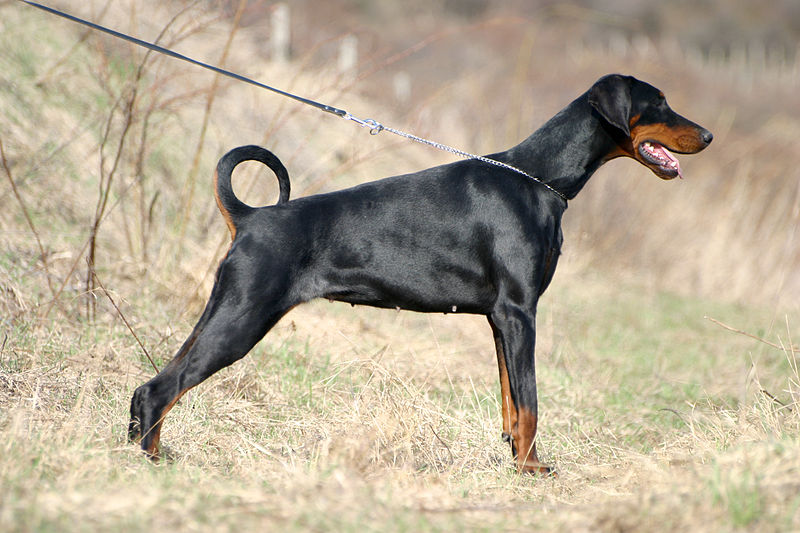
A medium-to-large dog of compact, square and muscular build, combining elegance with real power, standing roughly 63 to 72 cm at the shoulder, with males larger than females, and weighing about 32 to 45 kg. The outline is clean and athletic, the coat short, hard and close-lying. Colours are black, brown (often called red), blue and fawn (isabella), each with sharp rust-coloured markings on the muzzle, chest, legs and over the eyes. The head is long and wedge-shaped and the expression keen and intelligent. Ear cropping and tail docking are now banned or heavily restricted in Australia, so dogs here typically carry natural drop ears and a full tail, which does nothing to diminish their striking appearance.
Suitability
The Dobermann suits an active, experienced owner or family who will keep the dog indoors as part of the household and commit to daily exercise plus training. A house with a secure yard is ideal, and the breed needs room and a fenced area to move, though it is the company and the mental work that matter most. It is not a good choice for first-time owners or for anyone out of the house all day, as it bonds hard and does poorly left alone for long stretches, becoming anxious and destructive. Early socialisation and ongoing training are non-negotiable for such a powerful, intelligent dog. In the Australian climate the short single coat offers little insulation, so Dobermanns feel both heat and cold: provide shade and water and avoid hard exercise in the heat of the day in summer, and give them warmth indoors in winter.
Health
Dobermanns generally live about 10 to 13 years, and the breed has some serious well-documented health predispositions that make breeder choice critical. The most important is dilated cardiomyopathy, a heart-muscle disease that is alarmingly common in the breed and can cause sudden death; reputable breeders carry out annual cardiac screening including echocardiogram and Holter monitoring, and DNA tests for known DCM mutations exist. Von Willebrand''s disease, an inherited bleeding disorder, is also widespread and has a reliable DNA test. The breed can suffer hip dysplasia, hypothyroidism, cervical vertebral instability (wobbler syndrome) and, in the deep chest, bloat. When buying, insist on recent cardiac testing of both parents, von Willebrand DNA results and hip scores, and treat any breeder who cannot provide cardiac history as a serious warning sign.
Find your Doberman Pinscher
Browse trusted Doberman Pinscher breeders across Australia and read genuine reviews from real owners, or take the quiz to be sure of the fit.