
Dalmatian
Dal, Dally, Carriage Dog, Spotted Coach Dog, Firehouse Dog, Plum Pudding Dog
The Dalmatian is the spotted dog everyone recognises, a clean-lined, medium-to-large breed built for trotting tirelessly beside horses. That coaching heritage tells you what they need: a great deal of exercise and an active owner to provide it. Dalmatians are outgoing, playful and intensely people-focused, and they hate being shut out of family life. Underexercised and left alone, they become hyperactive, destructive and hard to live with, which is why so many end up rehomed. Given enough running, training and company, they are loyal, funny and affectionate. They are strong, energetic dogs that need firm, kind, consistent handling, not a soft touch. The short coat looks low-maintenance but sheds constantly all year, and those white hairs get into everything. Two welfare points stand out for buyers: hereditary deafness and a unique urinary chemistry, both of which good breeders manage.
Size
Medium to Large
Lifespan
12-14 years
Group
Group 7 - Non Sporting
Height
Male: 50 – 60 cm (22 - 24 inches), Female: 50 - 55 cm (20 - 22 inches)
Weight
Male: 23-25 kg (50-55 lbs), Female: 20-23 kg (44-50 lbs)
Origin
United Kingdom Croatia
Compatibility & care
How this breed fits into life with you
Scores are out of 5. Tap the help icon next to any trait to see what it really means.
Personality
How they think and behave
With family
Who they get along with
Care needs
What they ask of you
Origin & history
The Dalmatian''s deep history is uncertain, but the breed as we know it became established in the nineteenth century and takes its name from Dalmatia on the Adriatic coast, in modern Croatia. Its defining role was as a coach or carriage dog, running alongside or beneath horse-drawn carriages to guard them and the occupants, clear the way and keep the horses company. That same affinity with horses led to the breed becoming a fixture in horse-drawn fire brigades, especially in the United States, which is the source of the enduring firehouse association. Dalmatians have also worked as guard dogs, ratters and circus performers, the latter showing off their trainability. Two Disney films sent their popularity soaring and, sadly, into the hands of many unsuitable owners. They are well established in Australia, both in the show ring and as active family dogs.
Temperament
Dalmatians are friendly, exuberant and deeply attached to their people, thriving on inclusion and company. They are typically good with children and enjoy boisterous play, though their energy and strength mean supervision around small kids is sensible. Raised with other dogs and household pets they usually get along well, helped by early socialisation. Many are pleasantly sociable with strangers, while some are more reserved and watchful, and they will alert you to visitors. They are intelligent and trainable but also independent and easily bored, so they need engaging, reward-based training and firm, consistent boundaries from the start. A Dalmatian that is left alone too much or denied enough exercise will channel its energy into barking, chewing and general mischief. Mental stimulation matters as much as physical exercise for this clever, busy breed.
Appearance
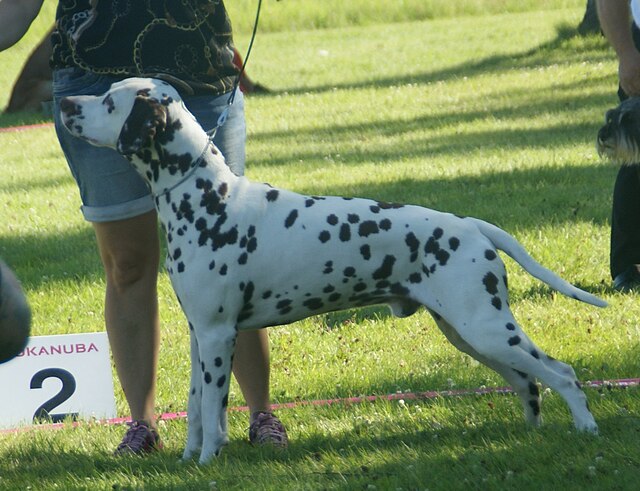
A medium-to-large, athletic dog of clean and balanced outline, standing roughly 54 to 61 cm at the shoulder and weighing about 23 to 32 kg. The build is muscular but never heavy, made for endurance and a free, far-reaching trot. The coat is short, dense and sleek. Puppies are born pure white and the spots develop over the first few weeks. Spots are either dense black or liver brown on a clean white ground, ideally round, well defined and evenly distributed. The head is fairly long, the eyes are round and bright, matching the spot colour, and the ears are set high and carried close to the head, usually spotted.
Suitability
This is a dog for active people with room to move, best suited to a house with a secure yard and an owner who runs, cycles, hikes or competes in dog sport. Apartment life rarely works unless the owner is exceptionally committed to daily exercise. They are not an ideal first dog for someone underestimating the exercise and training commitment, though an energetic, dedicated novice can do well with guidance. Dalmatians strongly dislike being left alone for long stretches and need to live indoors as part of the family. In the Australian climate the short coat offers little protection, so provide shade and water, avoid hard exercise in the heat of the day through summer, and remember that white-coated dogs and pink skin can sunburn.
Health
Dalmatians generally live about 11 to 14 years. Two issues are central to the breed. The first is congenital deafness, which is markedly more common in Dalmatians than in most breeds and can affect one or both ears; responsible breeders BAER-test every puppy and are open about the results, and bilaterally deaf pups should not be bred from. The second is their unusual uric acid metabolism, which predisposes them to urate bladder stones, particularly in males. A DNA test for the high-risk gene exists and good breeders use it, while owners help by feeding appropriately and ensuring constant access to water and frequent toileting. The breed can also be prone to skin allergies and atopy. When buying, insist on BAER hearing results and ask the breeder about urinary stones and skin in their lines.
Find your Dalmatian
Browse trusted Dalmatian breeders across Australia and read genuine reviews from real owners, or take the quiz to be sure of the fit.