
Dogue de Bordeaux
French Mastiff, Bordeaux Mastiff, Bordeauxdog
The Dogue de Bordeaux is a very large French mastiff with a famously enormous, wrinkled head and a deep, brooding expression. Under the muscle and bulk sits a calm, deeply attached dog that wants to be near its people and can be surprisingly sensitive to your mood. They are loyal and naturally protective without being frantic, and most are patient and steady at home. This is not an easy first dog. The size and strength alone demand an owner who can manage a powerful animal on lead, and they need early, thorough socialisation so the guarding instinct stays measured. Exercise needs are moderate rather than extreme, a couple of solid daily walks suit them well, but the short face means heat and hard exertion are genuinely dangerous. The coat is short and easy, though the wrinkles and jowls need regular wiping, and be ready for drool and a fair bit of snoring.
Size
Giant
Lifespan
10-12 years
Group
Group 6 - Utility
Height
Male: 60-68 cm (23.5-27 inches), Female: 58-66 cm (23-26 inches)
Weight
Male: 45-68 kg (100-150 lbs), Female: 41-59 kg (90-130 lbs)
Origin
France
Compatibility & care
How this breed fits into life with you
Scores are out of 5. Tap the help icon next to any trait to see what it really means.
Personality
How they think and behave
With family
Who they get along with
Care needs
What they ask of you
Origin & history
The breed comes from south-west France, taking its name from the city of Bordeaux, and its roots run back centuries through regional mastiff and molosser types. These were working farm and estate dogs put to guarding, droving stock, hauling, and at times the brutal blood sports of the era, which shaped the heavy bone, broad head and tremendous jaw strength. For a long stretch the Dogue was a rough provincial dog rather than a refined show animal, and numbers fell badly around the World Wars before dedicated French breeders pulled it back from the edge. Standardisation came slowly through the twentieth century. The breed was barely known to the wider English-speaking world until the 1989 film Turner and Hooch put a Dogue on screen, after which interest climbed sharply. It remains an uncommon sight in Australia, kept mostly by mastiff enthusiasts rather than as a mainstream pet.
Temperament
At home the Dogue is typically placid, affectionate and very people-focused, often shadowing a favourite person from room to room. With children they are usually tolerant and gentle, but the sheer size means small kids can be bowled over by accident, so supervision is sensible. Towards strangers they tend to be reserved and watchful, and a confident, well-raised Dogue is a serious natural guardian who rarely needs encouragement to take the role on. They can be wary or pushy with strange dogs, and entire males in particular may not welcome other males, so steady socialisation from puppyhood pays off. They are intelligent but somewhat stubborn and slow to mature, responding far better to calm, consistent, reward-based handling than to heavy-handed correction. The core need is early socialisation, firm but fair boundaries, and an owner the dog genuinely respects.
Appearance
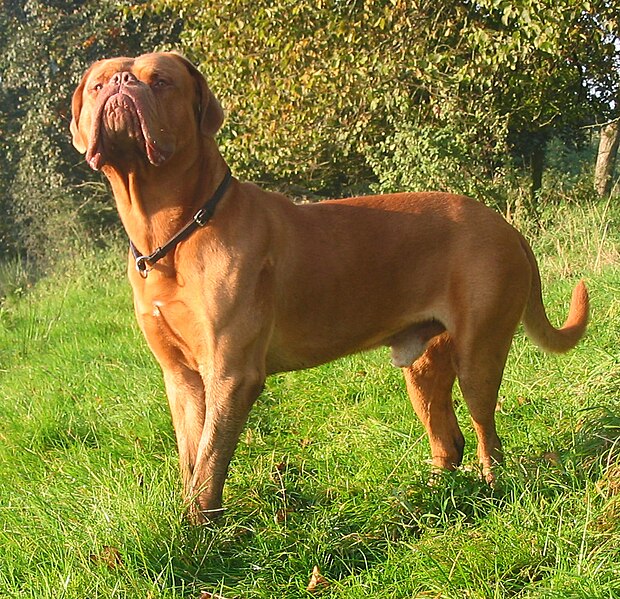
This is one of the most thickset of all breeds, with males commonly standing around 60 to 68 cm and bitches a little less, and weight frequently sitting north of 50 kg. The head is the signature feature, massive, broad and deeply furrowed, with a short muzzle, an undershot bite and loose, hanging flews. The body is low-slung, broad-chested and heavily muscled. The coat is short, fine and soft, and colour runs through shades of fawn, from pale to a rich red, often with a darker mask that may be black or brown. A little white on the chest and toes is acceptable. The eyes are oval and set wide, giving that characteristic furrowed, thoughtful look.
Suitability
This breed needs a house with secure fencing and room to move, not an apartment, and an owner who has the physical capability and ideally prior experience with large guarding breeds. They are best for fairly relaxed households, the exercise demand is moderate, but the management, drool, cost and short lifespan are not for everyone. They form intense bonds and dislike being left alone for long stretches, so a home where someone is around suits them. The Australian climate is a real consideration: as a heavy, short-faced dog the Dogue overheats easily, so exercise belongs in the cool of the morning or evening, never the heat of the day, and constant shade and water are essential through summer.
Health
This is sadly one of the shorter-lived breeds, with many dogs reaching only around five to eight years, so going in with clear eyes matters. The big established concerns are cardiac disease, particularly dilated cardiomyopathy and aortic stenosis, along with a raised risk of several cancers. Hip and elbow dysplasia are common given the bone and bulk, bloat (gastric torsion) is a real danger in a deep-chested dog, and the short muzzle brings some degree of brachycephalic airway trouble plus heat intolerance. Skin-fold dermatitis in the wrinkles is routine to manage. Buy only from breeders who heart-test their stock (ideally with an echo by a cardiologist), hip and elbow score under a recognised scheme, and are honest about longevity in their lines. Keeping the dog lean takes real pressure off the joints and the heart.
Find your Dogue de Bordeaux
Browse trusted Dogue de Bordeaux breeders across Australia and read genuine reviews from real owners, or take the quiz to be sure of the fit.