
Dutch Shepherd
Dutch Shepherd, Hollandse Herder
The Dutch Shepherd is an athletic, switched-on herding breed that has quietly become a favourite in serious working circles for police, detection and protection work. Built much like a Belgian or German Shepherd but typically lighter and quicker, it is intelligent, biddable and tireless, with a strong drive to have a job and a person to do it with. These are wonderfully loyal dogs that bond hard to their family. They are also a lot of dog. The energy, the brain and the working drive mean a bored Dutch Shepherd will invent its own entertainment, usually something you would rather it did not. They suit active, dog-experienced owners who will train, run and engage them daily, and they are a poor match for a quiet household that just wants a dog to potter about. The coat is fairly low-maintenance in the short variety, though the breed does come in short-haired, long-haired and rough-haired forms.
Size
Large
Lifespan
12-15 years
Group
Group 5 - Working Dogs
Height
Male: 57-62 cm (22.5-24.5 inches), Female: 55-60 cm (21.5-23.5 inches)
Weight
Male: 23-32 kg (50-70 lbs), Female: 20-27 kg (45-60 lbs)
Origin
Netherlands
Compatibility & care
How this breed fits into life with you
Scores are out of 5. Tap the help icon next to any trait to see what it really means.
Personality
How they think and behave
With family
Who they get along with
Care needs
What they ask of you
Origin & history
The Dutch Shepherd developed in the rural Netherlands, most likely in the 1800s, as an all-purpose farm dog. Before mechanised farming these dogs did a bit of everything: keeping flocks off the crops, droving stock to market, hauling carts, and guarding the farmstead. They share ancestry with the Belgian and German shepherding breeds, and for a long time the three were not sharply separated. The distinctive brindle coat became the feature that set the Dutch dog apart in the breed standard. Industrialisation and the two World Wars hit numbers hard, and the breed came close to disappearing. Careful rebuilding kept it alive, and over recent decades its outstanding trainability and resilience have made it sought after for police, military and sport work worldwide. It remains relatively uncommon in Australia, found mainly with working-dog and dog-sport people rather than as a pet.
Temperament
With their own family Dutch Shepherds are affectionate, loyal and intensely engaged, happiest when included and given something to think about. Raised well around children they are typically reliable and playful, though their energy and herding instinct mean they need teaching not to chase or nudge. They are alert and naturally watchful, which makes a good watchdog, and they are often somewhat reserved with strangers rather than instantly friendly. Properly socialised they generally get on with other dogs and can live with other pets, but the herding drive means cats and small animals need sensible introductions. These are highly trainable, problem-solving dogs that thrive on reward-based work and tire of mindless repetition. The non-negotiable need is daily physical exercise plus genuine mental work, obedience, scent games, agility, anything that uses the brain, or the drive turns into trouble.
Appearance
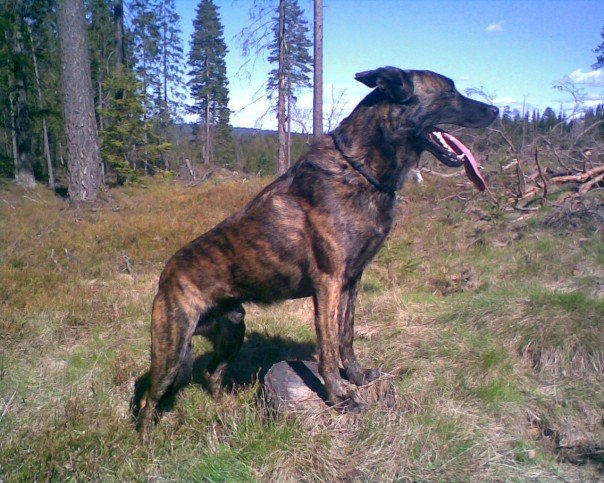
A medium-sized, balanced dog of moderate build, males stand roughly 57 to 62 cm and bitches a little less, with weight usually in the range of about 20 to 30 kg. The frame is muscular and athletic rather than heavy, made for endurance and agility. The defining mark is the brindle coat, gold or silver brindle, where dark striping runs over a lighter base, and this is required in the breed standard. There are three coat types: short-haired, long-haired, and a harsh, tousled rough-haired (or wire-haired) variety. The head is wedge-shaped with erect ears and an alert, intelligent expression. The overall impression is of a quick, capable, no-nonsense working dog.
Suitability
This is a dog for an active owner with a house and a decent yard, ideally someone who enjoys training and dog sport. They can adapt to suburban life provided their exercise and mental needs are properly met, but they are not an apartment dog for a sedentary person and they are not the easiest first breed. They do not cope well with being left alone for long, monotonous days and can become destructive or noisy if under-stimulated. For the Australian climate the short-haired variety manages heat reasonably well with shade and water, while the long-haired and rough-haired dogs feel it more, so save hard exercise for the cooler parts of the day in summer.
Health
This is one of the sounder working breeds, helped by a relatively diverse gene pool and a strong focus on function. Lifespan is commonly around twelve to fourteen years. Even so, a few issues are recognised. Hip and elbow dysplasia occur, so orthopaedic screening matters. The rough-haired variety in particular has been associated with goniodysplasia, a malformation of the eye drainage angle that can raise glaucoma risk, and inherited myopathy and masticatory muscle myositis have been reported in the breed. Buy from breeders who hip and elbow score under a recognised scheme, do eye testing (including a gonioscopy examination where relevant to the coat type), and are open about any neurological or muscular problems in their lines. Given the breed's drive, keeping the dog fit and lean and providing real exercise also protects long-term joint and general health.
Find your Dutch Shepherd
Browse trusted Dutch Shepherd breeders across Australia and read genuine reviews from real owners, or take the quiz to be sure of the fit.