
Double Doodle
North American Retriever, Golden Labradoodle
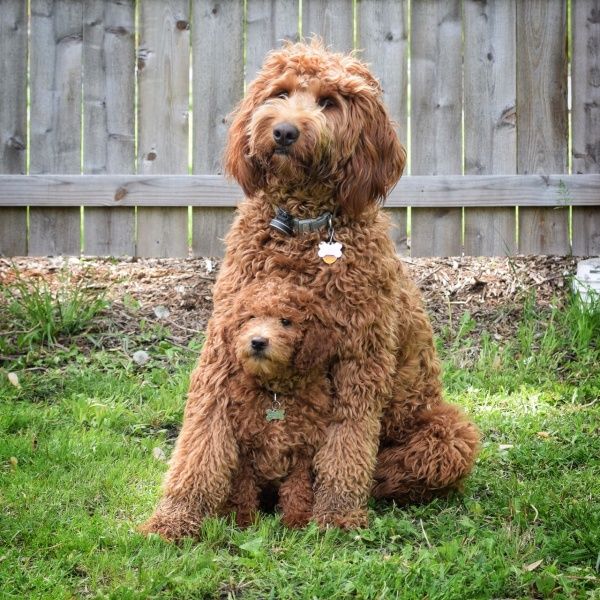
The Double Doodle is a crossbred dog, usually produced by mating two different doodle types together, most often a Goldendoodle (Golden Retriever cross Poodle) with a Labradoodle (Labrador cross Poodle). The aim is a friendly, family-oriented dog with a softer, lower-shedding coat, drawing on the famously good-natured retriever temperament and the Poodle's brains. In practice most are sociable, affectionate and keen to please, and they tend to fit busy family life well. Because they are a mix of mixes, though, you cannot reliably predict size, coat or temperament from one pup to the next, even within a litter. They generally need a good amount of exercise and company, and they do not suit a household that is out all day. Coats vary from wavy to curly and usually need regular brushing and clipping. It is worth knowing the ANKC does not recognise the Double Doodle as a pedigree breed, as it is a deliberate crossbreed rather than an established one.
Size
Medium
Lifespan
12-15 years
Group
Not ANKC Recognised
Height
Male: 50-61 cm (20-24 inches), Female: 50-61 cm (20-24 inches)
Weight
Male: 14-32 kg (30-70 lbs), Female: 14-32 kg (30-70 lbs)
Origin
N/A
Compatibility & care
How this breed fits into life with you
Scores are out of 5. Tap the help icon next to any trait to see what it really means.
Personality
How they think and behave
With family
Who they get along with
Care needs
What they ask of you
Origin & history
The Double Doodle is a modern designer crossbreed with no long history of its own, emerging out of the broader doodle craze that took off from the 1990s onwards. That craze traces back to the original Labradoodle, popularised in Australia when Wally Conron crossed a Labrador with a Poodle in the late 1980s while working for the Royal Guide Dogs association, hoping to combine a guide dog's temperament with a coat that might suit allergy sufferers. The commercial success of first-generation doodles led breeders to experiment further, including crossing one doodle type with another, which is where the Double Doodle comes from. The label covers a range of crosses rather than a fixed recipe, and there is no single breed standard or pedigree registry behind it. The parent breeds, the Labrador, Golden Retriever and Poodle, all have long and well-documented histories as working gundogs.
Temperament
Most Double Doodles take after their retriever and Poodle parents and are friendly, outgoing and people-oriented, which is the whole point of the cross. They are typically excellent with children and tend to get on with other dogs and pets, especially when socialised young, and they are rarely natural guardians, so they make poor watchdogs but lovely companions. They are clever and generally easy to train with reward-based methods, often picking things up quickly. The flip side is that they bond closely and can struggle with being left alone, sometimes developing separation anxiety or destructive habits if isolated too much. Temperament is not guaranteed in any crossbreed, so meeting both parents and assessing their nature is the best guide. The main behavioural needs are company, consistent training and enough daily activity to keep an active, intelligent dog satisfied.
Appearance
There is no fixed standard, so appearance varies a lot. Most are medium to large dogs, very roughly 45 to 65 cm tall and around 20 to 35 kg, though size depends heavily on the Poodle ancestry behind the litter. The coat is the main selling point, usually soft and wavy to curly, and shedding is generally lower than a retriever's though no coat is truly non-shedding. Colours cover a wide range including cream, gold, apricot, red, chocolate, black, and parti-colours. Build tends towards a sturdy, athletic retriever frame with a fairly square muzzle and floppy ears. Because two crossbred parents are involved, littermates can differ noticeably from one another.
Suitability
This is a dog for an active household that wants a sociable family companion and can offer plenty of time, exercise and attention. They do well in a house with a yard, though a committed owner can manage a smaller home if the dog is properly exercised. They are reasonably forgiving for a first-time owner thanks to their trainability and easy nature, but the grooming commitment and need for company should not be underestimated. They do not tolerate being left alone all day. In the Australian climate the thicker, curlier coats can trap heat, so keep them well groomed, provide shade and water, and exercise in the cooler hours through summer.
Health
As a cross of the Labrador, Golden Retriever and Poodle, a Double Doodle can inherit health conditions from any of those breeds, so responsible health testing of both parents really matters. The well-established concerns to ask about are hip and elbow dysplasia, several inherited eye disorders including progressive retinal atrophy, and heart conditions. From the retriever side there is a raised cancer risk, particularly with Golden lines, while the Poodle and the breed generally can carry skin and ear problems, and floppy ears need routine cleaning. Lifespan is commonly around ten to thirteen years. Ask to see hip and elbow scores, a recent eye certificate, and relevant DNA test results (PRA among them) for both parents, plus a cardiac check. Hybrid vigour is sometimes promised but it is not a substitute for proper testing of the actual parents.
Find your Double Doodle
Browse trusted Double Doodle breeders across Australia and read genuine reviews from real owners, or take the quiz to be sure of the fit.