
French Bulldog
Frenchie, Bouledogue Français
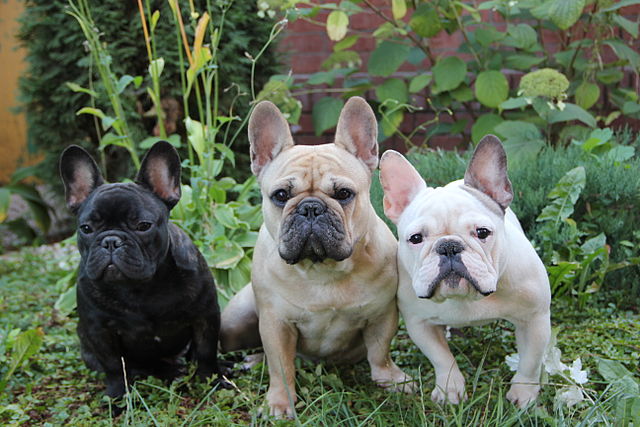
The French Bulldog, or Frenchie, is a small, heavy-boned companion dog you can pick out instantly by its upright bat ears and flat, wrinkled face. It is affectionate, people-focused and often comical, forming strong attachments and disliking long stretches alone. Energy needs are modest. Short daily walks and a bit of play indoors suit it well, and it is not built for jogging, long hikes or repeated hard exercise. This is a poor choice for anyone wanting an athletic, outdoorsy dog, or for a household that is out all day. It also suits people who can absorb higher-than-average vet costs. The short coat is easy to groom, but the facial folds need regular wiping to prevent skin infections, and the breed sheds a little year round. The standout trait is sociability: most Frenchies are relaxed around people and happy as lap-side company rather than working partners.
Size
Small to Medium
Lifespan
10-12 years
Group
Group 7 - Non Sporting
Height
Male: 28-31 cm (11-12 inches), Female: 28-31 cm (11-12 inches)
Weight
Male: 7-13 kg (16-28 lbs), Female: 7-13 kg (16-28 lbs)
Origin
France United Kingdom
Compatibility & care
How this breed fits into life with you
Scores are out of 5. Tap the help icon next to any trait to see what it really means.
Personality
How they think and behave
With family
Who they get along with
Care needs
What they ask of you
Origin & history
The French Bulldog descends from small bulldogs taken from England to France in the 1800s, particularly by Nottingham lace workers who moved across the Channel during the Industrial Revolution. Crossed with local dogs in and around Paris, these compact bulldogs caught on with city dwellers, shopkeepers and, later, fashionable society, where the upright bat ear became the favoured type. The breed was shaped mainly as a companion rather than a worker, though early dogs were also set on rats. By the late 19th century the Frenchie had spread to Britain and the United States, and breed clubs formed to settle the standard, including those distinctive ears. It is recognised by the ANKC and the major kennel clubs. In recent years it has become one of the most popular and most heavily bred companion dogs in Australia and worldwide, which has sharpened concerns about breeding for exaggerated flat faces.
Temperament
French Bulldogs are typically affectionate, even-tempered and strongly attached to their people, and they thrive on close company and play. Most are good with children and tolerant of strangers, which makes them poor guard dogs, though some will give a small alert bark. With other dogs and pets they are usually sociable when raised together, though the odd male can be pushy. They are moderately trainable: clever but a touch stubborn, so short reward-based sessions work best, and food motivation is high (watch the waistline). They are not an independent breed and can develop separation-related distress if regularly left alone for long periods. The key behavioural needs are companionship, gentle daily activity and a bit of mental engagement. Because of their airways, training and play should never push them into overheating or overexertion. Expect some snoring, snorting and flatulence as part of life with one.
Appearance
A small but substantial dog, the French Bulldog usually stands around 27 to 35 cm at the shoulder and weighs roughly 8 to 14 kg, with a compact, muscular, low-slung frame. The head is large and square with a short muzzle, heavy facial wrinkles and the breed's signature large, upright bat ears, rounded at the tips. Eyes are round, dark and set wide and low. The coat is short, fine and smooth. Common colours include brindle, fawn, cream and pied (white with patches). Some non-standard colours such as blue and merle are heavily marketed but fall outside the breed standard. The tail is naturally short, either straight or screwed.
Suitability
The French Bulldog suits apartments, townhouses and homes without big exercise demands, and it fits relaxed owners, families and retirees after a sociable indoor companion. It is reasonably friendly for a first-time owner given the modest exercise needs, provided that owner accepts the health risks and potential vet bills. It does not cope with being left alone all day and is best where someone is usually home. The biggest Australian consideration is heat. As a flat-faced breed it overheats dangerously easily, so it needs air conditioning or cool indoor space in summer, walks only in the cool of the morning or evening, and must never be left in a warm car or yard. It is not the dog for a very active, outdoorsy owner.
Health
Typical lifespan is around 10 to 12 years. As a brachycephalic (flat-faced) breed, the French Bulldog is predisposed to Brachycephalic Obstructive Airway Syndrome, which causes laboured breathing, snoring and serious heat intolerance. Affected dogs can collapse in hot or humid conditions, a real risk across much of Australia. The breed is also prone to spinal malformations linked to the screw tail (including hemivertebrae), intervertebral disc disease, patellar luxation, hip dysplasia, and several eye and skin-fold problems, plus difficulty whelping naturally. Buy only from breeders who select for more open nostrils and better airways, and who screen their breeding stock. Ask for hip scoring, patella checks, an eye examination and, where relevant, DNA tests and a BOAS assessment. Keep the dog lean and avoid exercise in the heat.
Find your French Bulldog
Browse trusted French Bulldog breeders across Australia and read genuine reviews from real owners, or take the quiz to be sure of the fit.