
Flat-Coated Retriever
Flatcoat, Flattie, Flatte
The Flat-Coated Retriever is a medium to large gundog with a famously sunny, outgoing nature. People who know the breed often call it the Peter Pan of retrievers because it stays playful and puppyish well into adulthood. It is athletic and built to retrieve from land and water, so it needs real daily exercise: long walks, free running, swimming and retrieving games, plus training to occupy a quick mind. A bored Flat-Coat gets mouthy and bouncy, so this is not a dog for a sedentary household or someone out all day. It suits active families and owners who enjoy training and time outdoors. The feathered coat needs a brush once or twice a week and sheds seasonally. The standout trait is how genuinely friendly it is, which makes it a poor guard dog but wonderful company.
Size
Medium to Large
Lifespan
10-13 years
Group
Group 3 - Gundogs
Height
Male: 59-61 cm (23-24 inches), Female: 56-59 cm (22-23 inches)
Weight
Male: 29-39 kg (65-85 lbs), Female: 25-32 kg (55-70 lbs)
Origin
United Kingdom
Compatibility & care
How this breed fits into life with you
Scores are out of 5. Tap the help icon next to any trait to see what it really means.
Personality
How they think and behave
With family
Who they get along with
Care needs
What they ask of you
Origin & history
The Flat-Coated Retriever was developed in England through the middle and later 1800s as a gamekeeper's and sportsman's retriever, bred to collect shot game cleanly from both land and water. Its background draws on the St John's water dog from Newfoundland, along with setter and collie-type dogs, which helped fix the flat, glossy coat and the trademark feathering. For a time around 1900 it was the leading retriever in Britain, before the rise of the Labrador and the Golden pushed it into the background, where it has remained a relatively uncommon but devoted choice. The breed kept its working ability rather than splitting sharply into show and field lines, so most Flat-Coats today still carry strong retrieving instinct. It is recognised by the ANKC and is seen in Australia mainly with active owners and in obedience, agility and gundog circles.
Temperament
Flat-Coated Retrievers are optimistic, sociable and affectionate, and they want to be part of everything the family does. They are usually excellent with children, friendly with strangers and good with other dogs and pets, particularly when socialised young. That open friendliness means they make hopeless guard dogs, though they will happily announce visitors. They are intelligent and keen to please, which makes them trainable, but they mature slowly and stay boisterous for years, so a wagging tail can clear a coffee table without meaning any harm. They are not especially independent and dislike being shut away from their people. The key behavioural needs are plenty of physical exercise, ongoing training and mental work, and genuine companionship. Channel the energy and you get a delightful, biddable dog; ignore it and you get jumping, mouthing and mischief.
Appearance
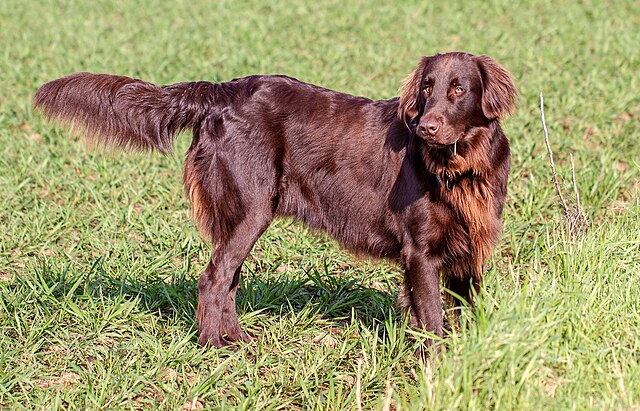
This is a well-balanced, athletic retriever with a smooth, racy outline rather than a heavy one. Males typically stand around 59 to 62 cm and females around 57 to 59 cm, with weight usually in the range of 25 to 34 kg. The head is long and clean with a gentle, intelligent expression, dark almond-shaped eyes and small ears lying close to the head. The coat is the defining feature: moderately long, dense, flat-lying and shining, with feathering on the legs, chest, underside and tail. It comes in solid black or solid liver. The tail is carried roughly level with the back and adds to the flowing look when the dog moves.
Suitability
This breed belongs in an active home, ideally a house with a securely fenced yard and easy access to walks, water and open space. It suits energetic owners and families who enjoy training, dog sports or time outdoors and who will include the dog in daily life. It can work for a committed first-time owner who has done the homework, since it is willing and good-natured, but the energy, slow maturity and exercise needs should not be underestimated. It does not tolerate being left alone all day and can become destructive or noisy if isolated. In the Australian climate its dense black or liver coat means it feels the heat, so exercise belongs in the cooler parts of the day, with shade, water and a chance to swim in summer.
Health
Typical lifespan is around 9 to 11 years, shorter than many breeds of its size, and the main reason is cancer. Flat-Coated Retrievers have a well-documented, breed-wide predisposition to several cancers, especially histiocytic sarcoma, along with haemangiosarcoma and other malignancies, so any persistent lump, lameness or unexplained illness deserves prompt veterinary attention. They are also prone to hip and elbow dysplasia, patellar luxation, and eye conditions including glaucoma and progressive retinal atrophy. Buy from breeders who hip and elbow score under a recognised scheme, who have current eye testing done by a veterinary ophthalmologist, and who are open about cancer and longevity in their lines. Keeping the dog lean, fit and well exercised supports its joints and general health, but no diet or care routine removes the breed's cancer risk.
Find your Flat-Coated Retriever
Browse trusted Flat-Coated Retriever breeders across Australia and read genuine reviews from real owners, or take the quiz to be sure of the fit.