
Finnish Spitz
Barking Bird Dog, Finnish Hunting Dog, Finnish Spets
The Finnish Spitz is a fox-like, golden-red spitz and the national dog of Finland, bred to hunt game birds by scent and sound and then bark to hold them and guide the hunter in. That heritage explains the breed's defining feature: it is a barker, bred to be one, and it will use its voice freely. It is lively, intelligent and devoted to its family, bold and alert without being aggressive, and usually good with children. It needs a good daily walk and free running, plus mental work, but it is not a frantic breed. It suits active owners who can cope with a vocal, somewhat independent dog and who have understanding neighbours; it is a poor fit for close-packed housing or anyone wanting a quiet, biddable pushover. The harsh double coat is surprisingly easy to keep, needing only regular brushing, but it sheds heavily in season.
Size
Small to Medium
Lifespan
12-15 years
Group
Group 4 - Hounds
Height
Male: 44-50 cm (17.5-19.5 inches), Female: 39-45 cm (15.5-17.5 inches)
Weight
Male: 14-16 kg (31-35 lbs), Female: 14-16 kg (31-35 lbs)
Origin
Finland
Compatibility & care
How this breed fits into life with you
Scores are out of 5. Tap the help icon next to any trait to see what it really means.
Personality
How they think and behave
With family
Who they get along with
Care needs
What they ask of you
Origin & history
The Finnish Spitz is an ancient northern breed, descended from the spitz-type hunting dogs of Finnish and Karelian peoples, and it was developed specifically as a bark pointer for game birds such as grouse and capercaillie. The dog ranges ahead, finds birds in the trees, and then barks steadily beneath them, fixing the quarry's attention while the hunter approaches, so a tuneful, persistent voice was a prized working trait. By the late 1800s the native type was being interbred with other dogs and was nearly lost, before Finnish enthusiasts gathered and standardised it, and it was later named the national dog of Finland. The breed remains a working bird dog at home, where barking trials are still held. It is recognised by the ANKC but is uncommon in Australia, kept mainly by dedicated owners who appreciate its looks and character.
Temperament
Finnish Spitz are lively, bold and intelligent, affectionate with their own family and usually very good with children, while tending to be reserved with strangers without being aggressive. They are typically fine with dogs they know, though some can be assertive with strange dogs, and the strong hunting drive means small pets and birds may be seen as quarry. The defining behaviour is vocalness: they were bred to bark and they enjoy it, so without guidance the barking can become a real issue for neighbours. They are clever but independent and a touch wilful, having been bred to work well away from the hunter, so training needs patience, consistency and reward rather than force. The key behavioural needs are daily exercise, mental stimulation, early socialisation and calm, consistent training to manage the voice and the prey drive. A well-handled Finnish Spitz is a delightful, characterful companion.
Appearance
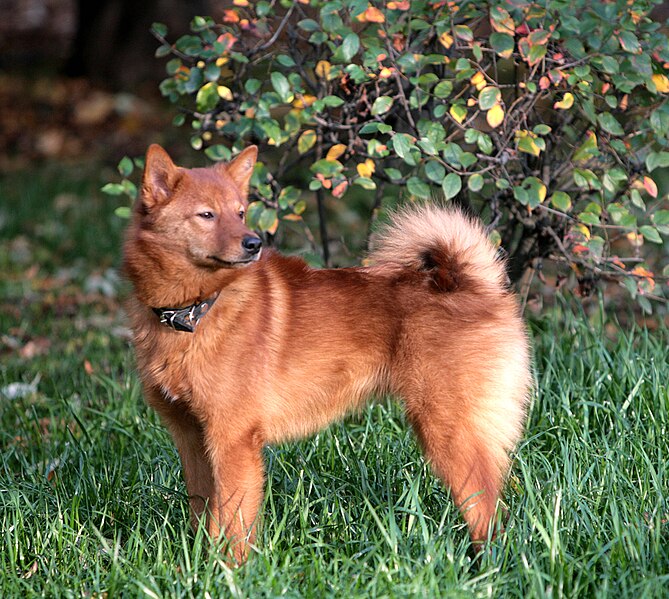
The Finnish Spitz is a square, lightly built spitz with an unmistakable fox-like look. Males stand around 44 to 50 cm and females around 39 to 45 cm, with weight commonly in the 12 to 16 kg range. The head is foxy, with a pointed muzzle, sharp, mobile, erect ears and small, dark, lively eyes that give a keen expression. The coat is a harsh, straight double coat, longer and standing off on the neck and back, with a plumed tail that curls over and against the thigh. The colour is the breed's signature: a glowing reddish-gold, ranging from honey to deep auburn, often a touch paler on the underside, with the harsh outer coat sitting over a softer, dense undercoat. Pups are often born darker and brighten as they grow.
Suitability
The Finnish Spitz suits a house with a securely fenced yard and an active owner who enjoys an alert, characterful dog and will commit to managing its barking and prey drive. It can adapt to less space if properly exercised, but its readiness to bark makes it a difficult choice for apartments or homes with close neighbours. It is better suited to an owner with some dog experience, as its independence and voice can frustrate a first-timer, though a committed novice who trains consistently can do well. It is devoted to its family and dislikes long isolation, so it is happiest where it gets regular company. In the Australian climate its dense double coat means it feels the heat, so it needs shade, water and exercise kept to the cooler parts of hot days.
Health
Typical lifespan is around 12 to 15 years, and the Finnish Spitz is on the whole a healthy, long-lived breed with fewer inherited problems than many. The conditions worth knowing are patellar luxation, hip dysplasia, and hereditary eye disease including progressive retinal atrophy and cataract, with epilepsy and some endocrine issues reported in the wider population. Buy from breeders who hip score under a recognised scheme, who have current eye testing done by a veterinary ophthalmologist, and who check the patellas of their breeding dogs. Because the breed is uncommon, a conscientious breeder who knows the health of their lines and breeds for sound temperament and structure matters a great deal. Keeping the dog lean and well exercised supports its joints, and routine veterinary care will catch most issues early in this generally robust little hunter.
Find your Finnish Spitz
Browse trusted Finnish Spitz breeders across Australia and read genuine reviews from real owners, or take the quiz to be sure of the fit.