
Golden Retriever
Yellow Retriever, Golden Flat Coat
The Golden Retriever is a medium-to-large gundog known for its friendly, biddable nature and dense golden coat. Bred to retrieve game, it is people-oriented, gentle and highly trainable, which is why it succeeds so widely as a family dog, assistance dog and therapy dog. It is an active breed that needs a good hour or more of daily exercise plus mental stimulation, and many stay playful and mouthy well into adulthood and like to carry things. It suits active families and owners who want an involved, sociable companion, and is a poor fit for people wanting an aloof guard dog, a low-shedding pet, or a dog content to be left alone all day. The water-repellent double coat sheds steadily and moults heavily in season, so plan on regular brushing and the occasional bath and blow-dry. A well-bred Golden is famously soft-mouthed, tolerant and eager to please.
Size
Medium to Large
Lifespan
10-12 years
Group
Group 3 - Gundogs
Height
Male: 56-61 cm (22-24 inches), Female: 51-56 cm (20-22 inches)
Weight
Male: 29-34 kg (65-75 lbs), Female: 25-29 kg (55-65 lbs)
Origin
United Kingdom
Compatibility & care
How this breed fits into life with you
Scores are out of 5. Tap the help icon next to any trait to see what it really means.
Personality
How they think and behave
With family
Who they get along with
Care needs
What they ask of you
Origin & history
The Golden Retriever was developed in the Scottish Highlands in the second half of the 19th century, credited to Sir Dudley Marjoribanks (Lord Tweedmouth), whose careful records survive. From the 1860s he crossed a yellow Wavy-Coated Retriever with the now-extinct Tweed Water Spaniel, later adding Irish Setter, Bloodhound and more spaniel blood, aiming for a strong, biddable gundog that could retrieve waterfowl and upland game in cold, wet conditions. The result was a versatile retriever with a soft mouth and a love of water. The breed was recognised in Britain in the early 20th century and spread quickly through the hunting and show worlds. It is recognised by the ANKC and is one of Australia's most popular family breeds, valued as much for its temperament and its work as a guide and assistance dog as for its original gundog role.
Temperament
Golden Retrievers are friendly, gentle and eager to please, typically excellent with children and relaxed with strangers, which makes them poor guard dogs though they may bark to announce visitors. They are highly social and usually get on well with other dogs and pets, especially when socialised young. Trainability is a defining strength: they are intelligent, food-motivated and responsive, which is why they feature so heavily in guide, assistance and detection work, and they shine in obedience and gundog activities. They are not an independent breed; they crave human company and can become bored, vocal or destructive, and may develop separation distress, if regularly left alone. Many retain a playful, mouthy, adolescent streak for years and like to carry objects. Key behavioural needs are daily exercise, plenty of interaction, and consistent reward-based training to channel their energy and enthusiasm.
Appearance
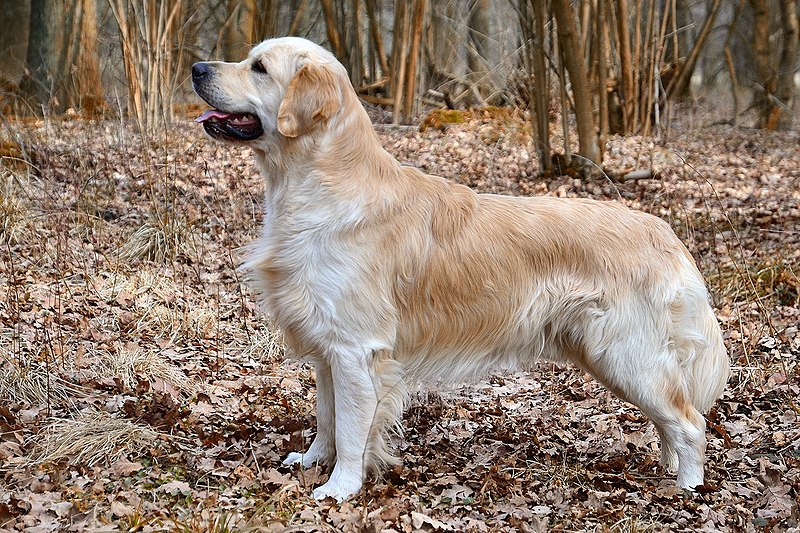
A medium-to-large, well-balanced dog, the Golden Retriever generally stands about 51 to 61 cm at the shoulder and weighs roughly 25 to 34 kg, with males larger than females. The build is athletic and muscular without being heavy. The coat is a dense, water-repellent double coat, straight or wavy, with feathering on the legs, chest, underside and tail. Colour ranges across shades of gold and cream, from pale to rich golden, with the very dark red and the near-white extremes sitting at the edges of the standard. The head is broad with a kind expression, dark eyes and moderate pendant ears, and the breed carries a well-feathered tail level with the back, usually wagging.
Suitability
The Golden Retriever suits a house with a yard and active owners or families who want a sociable dog to include in daily life. Its gentle, trainable nature makes it relatively first-time-owner friendly, provided the owner can meet its needs for exercise, grooming and company. It does not cope well with being left alone for long days and is happiest where someone is around for much of the time. In the Australian climate the dense double coat and love of activity mean heat must be managed: provide shade and fresh water, exercise in the cool of the morning or evening, and offer safe swimming where possible, which most Goldens relish. Expect significant shedding and budget time for regular brushing.
Health
Typical lifespan is around 10 to 12 years. Goldens have a well-documented predisposition to cancer, notably haemangiosarcoma and lymphoma, which is a leading cause of death in the breed, so any unexplained lump, lethargy or swelling warrants prompt veterinary attention. They are also prone to hip and elbow dysplasia, inherited eye conditions such as progressive retinal atrophy and hereditary cataract, and skin problems including allergies and hot spots. Some lines carry subvalvular aortic stenosis, a heart condition. Buy from breeders who hip and elbow score, carry out eye testing (and ideally DNA tests for PRA), and have breeding stock cardiac-checked. Keeping the dog lean, regular ear care given the drop ears, and routine veterinary monitoring all help support a long, healthy life.
Find your Golden Retriever
Browse trusted Golden Retriever breeders across Australia and read genuine reviews from real owners, or take the quiz to be sure of the fit.