
Great Dane
Dane, Gentle Giant, Deutsche Dogge, German Mastiff
The Great Dane is one of the giant breeds, a tall, smooth-coated dog of real presence that is, at heart, a soft and people-focused companion. Despite the imposing size, the temperament most breeders aim for is calm, friendly and affectionate, a dog that wants to lean on you and sleep on the sofa rather than patrol the fence. Energy needs are moderate: a couple of decent walks a day suit an adult, with controlled exercise only while they are growing to protect developing joints. They suit owners with the space, budget and strength to manage a dog that can reach the kitchen bench, and they do not suit anyone after a guard dog or a jogging partner, or anyone on a tight food and vet budget. Grooming is easy thanks to the short coat. The standout, and the heartbreak, is that all this comes in a dog with a sadly short life.
Size
Giant
Lifespan
7-10 years
Group
Group 7 - Non Sporting
Height
Male: 76-86 cm (30-34 inches), Female: 71-81 cm (28-32 inches)
Weight
Male: 54-90 kg (120-200 lbs), Female: 45-59 kg (100-130 lbs)
Origin
Germany
Compatibility & care
How this breed fits into life with you
Scores are out of 5. Tap the help icon next to any trait to see what it really means.
Personality
How they think and behave
With family
Who they get along with
Care needs
What they ask of you
Origin & history
The Great Dane was developed in Germany, where it is still called the Deutsche Dogge, and the name Great Dane is something of a historical misnomer with little to do with Denmark. Its ancestors were large mastiff and sighthound types used from the medieval period to hunt wild boar, a dangerous quarry that demanded a dog with size, courage and speed. By the 17th and 18th centuries German nobles kept refined versions as estate guardians and chamber dogs that slept in their owners rooms. Through the 19th century German breeders standardised the dog and steered it away from boar hunting towards the elegant companion and guardian we know now, and it was declared a national breed of Germany. It reached Australia well established as a show and companion breed, where its size and gentle reputation have kept it quietly popular.
Temperament
A well-bred Great Dane is gentle, steady and deeply attached to its family, the sort of dog that thinks it is a lap dog and acts accordingly. With children they are usually patient and tolerant, but the sheer size means a wagging tail or a turn can knock a small child flat, so supervision and early training to settle and not jump are essential. They are typically polite with strangers and naturally a little reserved or watchful, which makes them an effective deterrent simply by being large, though they are not bred to be aggressive guard dogs. Most are sociable with other dogs and can live happily with other pets, especially when raised together. They are sensitive and learn quickly, but they do not cope with harsh handling, so reward-based training that starts in puppyhood is the way to manage a dog that will soon be too big to physically control. Their key need is to be part of the household; shut away or ignored, a Dane becomes anxious and unhappy.
Appearance
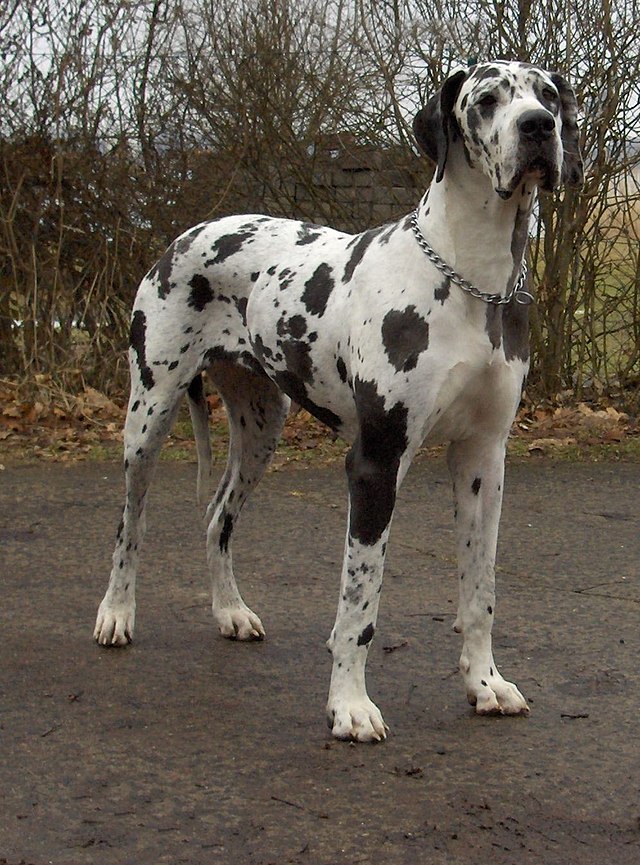
This is a giant breed. Males generally stand at least 76 cm at the shoulder and many are considerably taller, with females from about 71 cm, and weights commonly run from around 50 kg to 70 kg or more. The build should be square and well muscled, powerful but still clean and elegant rather than heavy, with a long neck, deep chest and a long head. Ears are naturally folded; ear cropping is illegal in Australia, so you will only see natural ears here. The coat is short, dense and glossy. Recognised colours include fawn, brindle, black, blue, harlequin (white with torn black patches) and mantle. The overall look is meant to combine size with grace.
Suitability
Great Danes need a house with room to move and a yard with secure fencing, plus owners who have realistically budgeted for giant-sized food, bedding and veterinary bills. They are calm enough indoors to surprise people, but a true apartment is rarely fair on a dog this size. They can suit a first-time owner who has done their homework and is committed to early training, since the temperament is forgiving even if the logistics are not. They form intense bonds and dislike being left alone for long periods, doing best where someone is around much of the day. The short coat offers little insulation, so they feel the cold and need warm bedding in winter, and in Australian summers they need shade, water and exercise kept to the cooler hours, with hard play avoided in the heat of the day.
Health
This is the hard part of owning a Great Dane: lifespan is short for a dog, often only around 7 to 10 years. The most urgent risk is gastric dilatation-volvulus, or bloat, where the stomach swells and twists; it is a life-threatening emergency, and many owners discuss a preventive stomach-tacking procedure (gastropexy) with their vet. Being a giant breed, they are prone to hip and elbow dysplasia and to bone cancer (osteosarcoma). Heart disease, particularly dilated cardiomyopathy, is well documented in the breed. They can also suffer growth-related bone problems as puppies, often linked to overfeeding or over-exercising while young. Buy from a breeder who hip and elbow scores, has hearts checked by a cardiologist, and feeds and rears giant puppies sensibly. Keeping an adult lean and feeding measured meals helps protect joints and may reduce bloat risk.
Find your Great Dane
Browse trusted Great Dane breeders across Australia and read genuine reviews from real owners, or take the quiz to be sure of the fit.