
German Wirehaired Pointer
Deutscher Drahthaariger, Vorstehund, Drahthaar
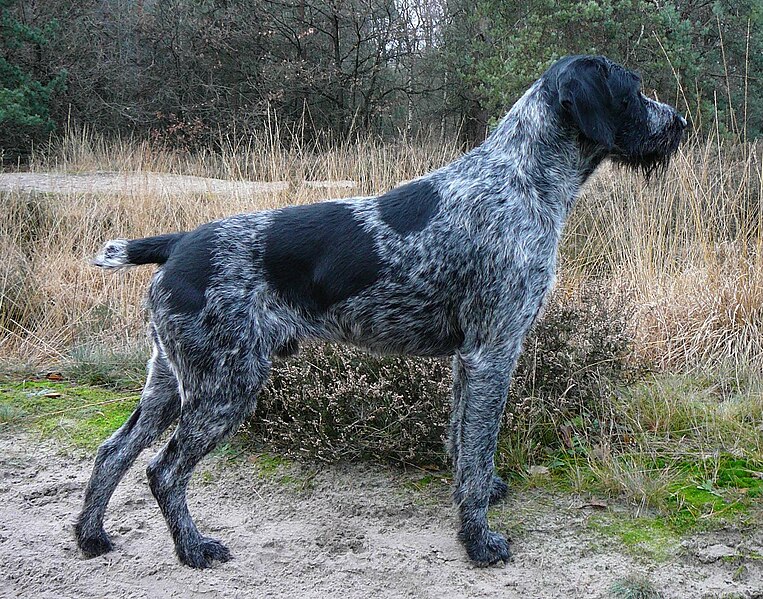
The German Wirehaired Pointer is a medium-to-large, rugged gundog built for versatile hunting in tough conditions. Its weatherproof wiry coat, full beard and bushy eyebrows give it a distinctive, businesslike look. Intelligent, energetic and devoted to its family, it is more reserved with strangers and more naturally protective than its shorthaired cousin. This is a high-energy working dog that needs vigorous daily exercise and a real job, and it becomes bored and destructive without one. It suits active, experienced, outdoorsy owners who will hunt, hike or train with it, and is a poor fit for sedentary homes, owners away all day, or households with small pets given its prey drive. The harsh coat needs only modest grooming, mainly weekly brushing and occasional hand-stripping, but the beard catches dirt and water. A standout trait is its all-weather versatility across land and water.
Size
Large
Lifespan
12-14 years
Group
Group 3 - Gundogs
Height
Male: 60-67 cm (24-26 inches), Female: 56-62 cm (22-24 inches)
Weight
Male: 27-32 kg (60-70 lbs), Female: 27-32 kg (60-70 lbs)
Origin
Germany
Compatibility & care
How this breed fits into life with you
Scores are out of 5. Tap the help icon next to any trait to see what it really means.
Personality
How they think and behave
With family
Who they get along with
Care needs
What they ask of you
Origin & history
The German Wirehaired Pointer (Deutsch Drahthaar) was developed in Germany in the late 19th and early 20th centuries by breeders who wanted a single, hardy gundog suited to the varied German countryside. They combined wirehaired and pointing stock, drawing on dogs such as the Pudelpointer, the Wirehaired Pointing Griffon, the Stichelhaar and the German Shorthaired Pointer, selecting hard for a dense, harsh, protective coat and genuine all-round ability. The goal was a dog that could point, track, retrieve and work willingly in water, thick cover, cold and wet, while remaining a loyal companion and guard at home. It became one of Germany's leading hunting breeds. The breed is recognised by the ANKC, though it remains far less common in Australia than the German Shorthaired Pointer.
Temperament
German Wirehaired Pointers are loyal, affectionate and closely bonded to their families, generally good with children they are raised with, but they are more aloof and watchful with strangers than many gundogs and will guard their home, which gives them a genuine watchdog streak. They can be assertive with unfamiliar dogs, and a strong prey drive means small pets such as cats, poultry and rabbits are at risk unless the dog is raised with them and managed carefully. They are highly intelligent and trainable, but the combination of brains, drive and a degree of independence means they do best with a confident, consistent owner who gives them structure. Without enough physical exercise and mental challenge they grow bored, frustrated and destructive. Their key needs are daily hard work or exercise, early and ongoing socialisation, and a job that uses their nose and stamina.
Appearance
A sturdy, muscular dog of medium to large size, the German Wirehaired Pointer generally stands about 56 to 68 cm at the shoulder and weighs roughly 27 to 32 kg, with males larger than females. The build is powerful and slightly longer than tall, made for endurance. The hallmark is the coat: a harsh, wiry, weather-resistant outer coat about two to four centimetres long over a dense undercoat, with a pronounced beard, moustache and bushy eyebrows that protect the face in cover. Colour is liver and white, often as liver roan or ticked, with a solid liver head, and some dogs are solid liver. The eyes are brown under those heavy brows, the ears are drop and medium, and the tail is traditionally docked where law allows.
Suitability
This breed suits an active rural or outer-suburban home with space, ideally a house with a secure yard and owners who hunt, hike or train seriously. It is not an apartment dog, nor one for relaxed or frequently absent owners, and it is generally better for experienced handlers than for first-time owners because of its drive, independence and protectiveness. The strong prey drive makes it a poor match for homes with small pets. It does not tolerate being left alone for long days and needs company and activity. In the Australian climate the wiry coat copes reasonably with cold and wet but offers limited protection from extreme heat, so provide shade and water and exercise in the cool of the day.
Health
Typical lifespan is around 12 to 14 years. It is a robust breed, but well-documented predispositions include hip dysplasia, gastric dilatation-volvulus (bloat) in this deep-chested dog, and von Willebrand disease, an inherited bleeding disorder found in some lines. Inherited eye conditions occur in the breed, and the harsh beard and drop ears make skin irritation and ear infections more likely, particularly in dogs that work in water. As with related pointers, watch for lumps and cancers in older dogs. Buy from breeders who hip score their breeding stock under the ANKC and AVA schemes, eye test, and DNA test for von Willebrand disease where the line warrants it. Keep the dog lean, split daily meals to reduce bloat risk, and keep the ears and beard clean and dry.
Find your German Wirehaired Pointer
Browse trusted German Wirehaired Pointer breeders across Australia and read genuine reviews from real owners, or take the quiz to be sure of the fit.