
Schnauzer (Giant)
Russian Bear Schnauzer, Munich Schnauzer, Munchener, Riesenschnauzer
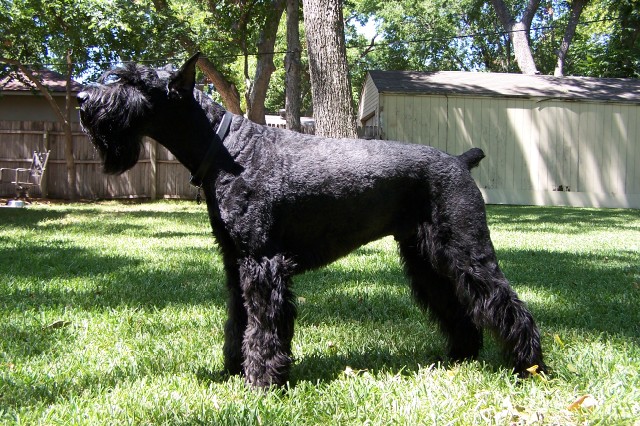
The Giant Schnauzer is a large, powerful working dog from Germany with serious presence and an even more serious need for work. Bred to guard and to drive stock, these dogs are loyal, confident and protective, and they form an intense bond with their family. They are not a breed you buy on looks alone. A Giant needs daily hard exercise, ongoing training and a clear, fair owner, or its size and drive become a real handful. Well raised and well exercised, they are calm and affectionate at home and superb guardians. They suit experienced, active owners who want a committed working partner, and they are a poor choice for a quiet household, a first dog, or anyone short on time. The harsh black or salt and pepper coat sheds little but needs regular brushing and clipping or stripping.
Size
Large
Lifespan
10-12 years
Group
Group 6 - Utility
Height
Male: 66-71 cm (26-28 inches), Female: 58-66 cm (23-26 inches)
Weight
Male: 27-48 kg (60-105 lbs), Female: 25-34 kg (55-75 lbs)
Origin
Germany
Compatibility & care
How this breed fits into life with you
Scores are out of 5. Tap the help icon next to any trait to see what it really means.
Personality
How they think and behave
With family
Who they get along with
Care needs
What they ask of you
Origin & history
The Giant Schnauzer was developed in the Bavarian and Wurttemberg regions of southern Germany, where graziers and brewers wanted a bigger version of the Standard Schnauzer to drive cattle and guard premises. Cattle driving was their early role, but as the railways took over stock movement the breed shifted to guarding breweries, stockyards and butcher shops. Their intelligence and trainability brought them to the attention of German police and military trainers in the early twentieth century, and they have worked in policing, protection and search and rescue ever since. The breed was refined using stock that likely included the Standard Schnauzer, larger herding dogs and rough-coated drovers. In Australia they are uncommon and mostly kept by enthusiasts, working-dog homes and people involved in protection sports rather than as a general pet.
Temperament
Giant Schnauzers are devoted, territorial and strongly protective of their people and property. With their own family, including children they have grown up with, they are loving and playful, but their size and intensity mean small children need supervision around them. They are naturally suspicious of strangers and will guard without being taught to, so thorough early socialisation is not optional, it is what keeps that instinct sound rather than reactive. They are highly intelligent and very trainable, yet they will test an inconsistent handler and can become dominant if no one is clearly in charge. They are not reliably social with strange dogs and have a notable prey drive. This is a working breed that needs a real job and an hour or more of exercise a day. Met those needs and they are stable and dependable. Neglect them and problems follow fast.
Appearance
A big, square, muscular dog. Males stand around 65 to 70 cm at the shoulder and bitches a little less, with weights commonly between 25 and 40 kg. The build is strong and athletic without being bulky. The coat is a dense, harsh, wiry double coat with the breed hallmark beard and heavy eyebrows on a long, powerful head. In Australia the ears are left natural and the tail is kept long, although cropped ears and docked tails are still seen in some other countries. Colour is either solid black or salt and pepper. Everything about the dog reads as power held in reserve.
Suitability
This breed needs a house with a secure, well-fenced yard and an experienced, active owner who will train and exercise the dog properly. It is not a flat dog and it is firmly not a first dog. They want to be with their family and do badly when left alone for long periods, often becoming destructive or noisy. Households with very young children or other animals should think hard before taking one on. In the Australian climate the dense black coat absorbs heat, so exercise belongs in the cooler parts of the day during summer, and constant shade and water are essential. The right home is an active, dog-savvy one that genuinely wants a large guardian and working companion.
Health
Giant Schnauzers typically live around 10 to 13 years. As a large, deep-chested breed they carry a real risk of gastric dilatation and volvulus (bloat), which is a sudden emergency, and owners should learn the signs. Hip and elbow dysplasia occur and should be screened. The breed also has well-documented inherited risks of hypothyroidism and of certain cancers, and some lines carry an eye disease and a form of toe and digit cancer. Buy only from a breeder who hip and elbow scores their dogs, has eyes examined by a veterinary ophthalmologist, and tests thyroid and any breed-relevant DNA markers. Given the size and the bloat risk, sensible feeding, a healthy weight and a good relationship with your vet matter as much as the genetics.
Find your Schnauzer (Giant)
Browse trusted Schnauzer (Giant) breeders across Australia and read genuine reviews from real owners, or take the quiz to be sure of the fit.