
Greyhound
English Greyhound
The Greyhound is a sighthound built for one thing, sprinting, yet the day-to-day reality is one of the laziest, gentlest house dogs you can own. Off the track or away from a chase they are famous couch potatoes, quiet, affectionate and undemanding, happy with a few short walks and a long sleep. Energy needs are genuinely low for such an athletic animal: a couple of walks and the occasional safe gallop are plenty. They suit almost anyone with a warm, soft place to sleep and a securely fenced yard, including calmer households and many first-time owners. They are a poor fit for homes with cats or small fluffy pets unless the individual dog has been tested and proven safe, because of the prey drive. The short coat needs almost no grooming. In Australia, adopting a retired racing or pet Greyhound is common and very rewarding.
Size
Large to Giant
Lifespan
10-13 years
Group
Group 4 - Hounds
Height
Male: 71-76 cm (28-30 inches), Female: 68-71 cm (27-28 inches)
Weight
Male: 29-36 kg (65-80 lbs), Female: 27-31 kg (60-70 lbs)
Origin
United Kingdom
Compatibility & care
How this breed fits into life with you
Scores are out of 5. Tap the help icon next to any trait to see what it really means.
Personality
How they think and behave
With family
Who they get along with
Care needs
What they ask of you
Origin & history
Sighthounds of Greyhound type are ancient, with similar long-legged hunting dogs depicted across the old world, though the modern breed was refined in Britain. For centuries the Greyhound was a coursing dog, used to chase and catch hare by sight and speed across open country, and ownership was at times restricted to the nobility under English law. From the 19th century the sport of organised coursing and then track racing shaped the dog heavily, selecting for explosive pace. Racing brought the Greyhound to Australia in large numbers, where the industry has been significant and, more recently, controversial. The upside for the public has been a steady supply of gentle retired racers needing homes, and dedicated adoption programs across the country have turned thousands of ex-racing Greyhounds into family pets, helping shift the breed image from kennel athlete to lounge-room companion.
Temperament
Greyhounds are quiet, sensitive and surprisingly soft dogs that bond closely and calmly with their people. Indoors they are placid and clean, content to lie around for much of the day, and they rarely make good watchdogs because they are far too polite and seldom bark. With children they are usually gentle and tolerant, though their need for undisturbed rest means children must learn to leave a sleeping dog be. Many are sociable with other dogs, particularly other sighthounds, but the defining behavioural trait is prey drive: a sudden small running animal can trigger an instinctive chase, so a reliable recall is hard to guarantee and off-lead freedom should be limited to fully enclosed areas. Compatibility with cats varies by individual and must be tested honestly. They are intelligent and respond to gentle, reward-based training, but they are also a little independent and bruise easily under pressure. Above all they want company and comfort.
Appearance
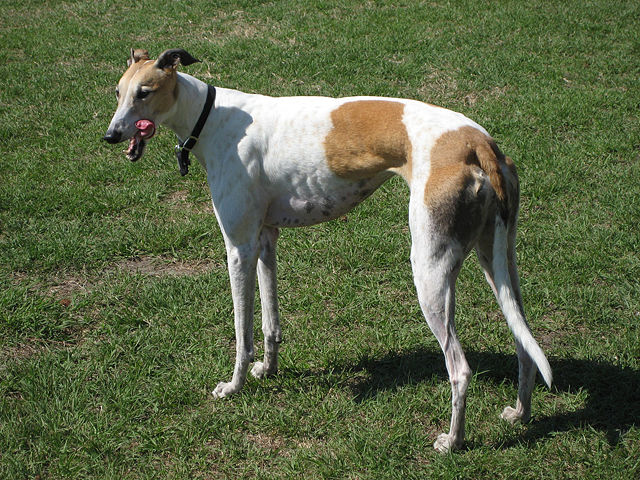
A tall, lean, aerodynamic hound. Males typically stand around 71 to 76 cm at the shoulder with females a little smaller, and weights usually fall between about 25 kg and 40 kg depending on sex and whether the dog is a racing or show type. Everything about the build serves speed: a deep chest for heart and lungs, a long flexible spine, a tucked waist and long, powerful legs, with a long fine tail. The head is long and narrow and the small rose-shaped ears fold back at rest. The coat is short, smooth and fine, offering little padding, which is why Greyhounds feel bony and seek out soft bedding. Colours are many and include black, white, fawn, red, blue, and brindle, often broken with white.
Suitability
Greyhounds are wonderfully adaptable and suit a wide range of homes, from relaxed singles and older owners to families, provided there is a soft bed and a securely fenced yard. They are calm enough for smaller homes and even apartments as long as they get their walks, and their gentle, low-energy nature makes them genuinely first-time-owner friendly. Most settle well and tolerate being left for a normal working day once house-trained, though they prefer company and some do better with a companion. The big caution is small pets, since the prey drive can be strong. On climate, the lack of body fat and coat cuts both ways: they chill quickly and appreciate a coat and warm bedding in winter, and in summer they need shade and water and should not be run hard in the heat of the day.
Health
Greyhounds are generally healthy and many reach 12 to 14 years. They have some breed-specific quirks worth knowing. They are very sensitive to certain anaesthetics and drugs because of their low body fat and unusual physiology, so always use a vet familiar with sighthounds. Their thin skin tears and bruises easily, and they are prone to dental disease, so tooth care matters. Bloat (gastric torsion) can affect a deep-chested dog like this. Bone cancer (osteosarcoma) is seen in the breed. Retired racers may arrive with old toe or muscle injuries and often need a dental. Greyhounds also have naturally high-end results on some routine blood tests, which can mislead a vet who does not know the breed. There is comparatively little formal hip-scoring tradition, but a good breeder or rehoming group will be open about health and temperament, and reputable adoption agencies vet-check and desex before homing.
Find your Greyhound
Browse trusted Greyhound breeders across Australia and read genuine reviews from real owners, or take the quiz to be sure of the fit.