
Glen of Imaal Terrier
Glen, Glennie, Irish Glen Of Imaal Terrier
The Glen of Imaal Terrier is a small but remarkably substantial Irish terrier, low to the ground, broad and powerfully built for its size. Bred to hunt badger and fox and to deal with vermin, it is brave and tenacious at work yet noticeably calmer and quieter at home than many terriers, often described as a gentle, dry-humoured companion. It is affectionate and devoted to its family, less yappy than its relatives, and adaptable in its exercise needs, though it still wants a good daily walk and some terrier-style activity. It suits owners who want a sturdy, characterful small dog and can handle a stubborn streak. The harsh wheaten coat needs regular brushing and some hand-stripping, with the soft undercoat tidied periodically. A standout trait is the contrast between its working grit and its easygoing house manners.
Size
Small to Medium
Lifespan
12-14 years
Group
Group 2 - Terriers
Height
Male: 33-36 cm (13-14 inches), Female: 30-33 cm (12-13 inches)
Weight
Male: 15.5-16.5 kg (34-36 lbs), Female: 15.5-16.5 kg (34-36 lbs)
Origin
Ireland
Compatibility & care
How this breed fits into life with you
Scores are out of 5. Tap the help icon next to any trait to see what it really means.
Personality
How they think and behave
With family
Who they get along with
Care needs
What they ask of you
Origin & history
The Glen of Imaal Terrier takes its name from a remote valley in the Wicklow Mountains of Ireland, where it was bred by working families over centuries as an all-purpose farm and hunting terrier. It was used to go to ground after badger and fox and to control rats and other vermin, work that called for a strong, courageous, low-slung dog with powerful forequarters for digging. Tradition also holds that the breed was put to work on turnspits, running treadmills that turned roasting spits, though this is hard to verify. The breed nearly disappeared more than once but was preserved by dedicated enthusiasts and is one of the four native Irish terrier breeds. It remains rare, in Australia and worldwide, and is recognised by the ANKC.
Temperament
Glen of Imaal Terriers are affectionate, loyal and good-natured at home, typically less excitable and less noisy than most terriers, which makes them easy company indoors. They are usually good with children they are raised with, though their strength and terrier robustness mean play with small kids should be supervised. They can be reserved rather than effusive with strangers and will alert to visitors without being persistent barkers. With other dogs they can be game and may not back down if challenged, and a strong prey drive means cats and small pets are best avoided unless the dog is raised with them. They are intelligent but independent and can be stubborn, so training needs patience, consistency and reward-based methods rather than repetition or harshness. Their needs are modest but real: a daily walk, some digging or sniffing outlet, and steady, fair handling.
Appearance
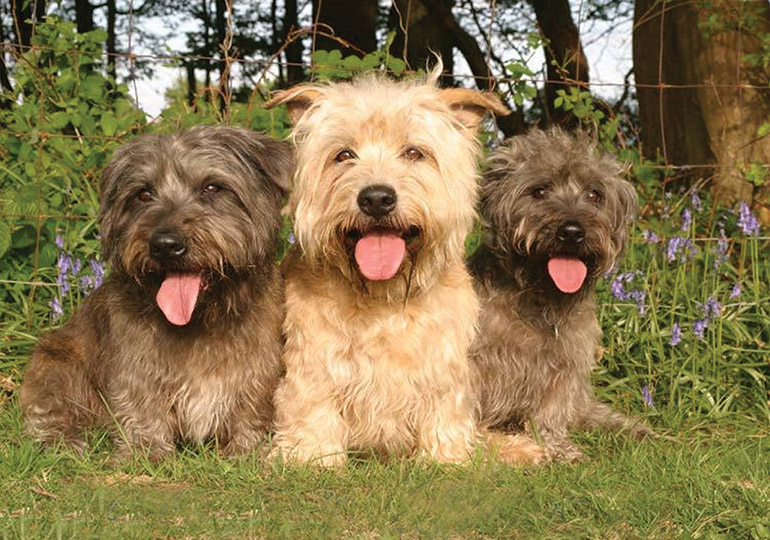
A small, sturdy, big-boned terrier that is distinctly longer than tall, the Glen of Imaal generally stands about 32 to 36 cm at the shoulder and weighs roughly 15 to 16 kg, heavier than its modest height suggests. The build is powerful through the chest and forequarters, with slightly bowed front legs that suit a digging dog. The coat is a medium-length double coat with a soft undercoat and a harsh outer coat, finished with a light topknot. Colour is wheaten in shades from cream to red, blue brindle, or blue, with brindle and blue puppies often clearing to lighter shades with age. The head is broad and powerful, the eyes brown and round, and the ears small and half-pricked or rose. The tail may be docked where law permits, or left natural.
Suitability
The Glen of Imaal is an adaptable small dog that can live happily in a house or a larger apartment, provided it gets a proper daily walk and some mental stimulation. It suits owners who want a tough, low-drama terrier and who can be firm and consistent with a dog that has a mind of its own, including sensible first-time owners willing to learn the breed. It generally copes with moderate periods alone better than more dependent breeds, but it still values company. The prey drive makes it a doubtful match for homes with cats or pocket pets. In the Australian climate the double coat means heat should be managed with shade, water and cooler-hour walks, and the harsh coat needs regular grooming to stay in good order.
Health
Typical lifespan is around 10 to 14 years. The best-known inherited concern is a form of progressive retinal atrophy specific to the breed, often called crd3 PRA, which causes gradual loss of sight and for which a reliable DNA test exists. Patellar luxation (slipping kneecaps) and hip dysplasia also occur, and the breed's long-backed, heavy-fronted build means joints deserve sensible care, especially keeping young dogs from repeated jumping. Only buy from breeders who DNA test their breeding stock for the breed-specific PRA, hip score under the ANKC and AVA schemes, and have eyes examined, ideally also checking patellas. Because the gene pool is small, ask about the breadth of the pedigree as well. Keeping the dog lean protects the joints and back, and routine veterinary care rounds out a generally hardy, long-lived terrier.
Find your Glen of Imaal Terrier
Browse trusted Glen of Imaal Terrier breeders across Australia and read genuine reviews from real owners, or take the quiz to be sure of the fit.