
Havanese
Bichon Habanero, Havanese Cuban Bichon, Bichon Havanais
The Havanese is a little Cuban companion dog, sturdier than it looks under all that hair and far more biddable than most toy breeds. These are people dogs through and through, happy, comical and quick to learn, and they tend to shadow whoever they have decided is theirs. Energy needs are modest, a couple of short walks and some play in the lounge room will do, which makes them realistic for smaller homes and older owners. They suit families, retirees and anyone home most of the day. They do not suit someone out of the house ten hours at a stretch, as the breed frets badly when left and can bark or chew out of loneliness. The long silky double coat is the catch. Whether kept long or clipped short, it needs brushing several times a week to stop matting, plus regular trips to a groomer.
Size
Small
Lifespan
14-16 years
Group
Group 1 - Toys
Height
Male: 20-28 cm (8-11 inches), Female: 20-28 cm (8-11 inches)
Weight
Male: 3-6 kg (7-13 lbs), Female: 3-6 kg (7-13 lbs)
Origin
Cuba
Compatibility & care
How this breed fits into life with you
Scores are out of 5. Tap the help icon next to any trait to see what it really means.
Personality
How they think and behave
With family
Who they get along with
Care needs
What they ask of you
Origin & history
The Havanese is the national dog of Cuba and the only breed native to the island. It descends from small bichon-type dogs brought over by Spanish settlers from the 1500s onward, which over generations adapted to the Cuban climate and developed into a distinct little companion. By the 1800s these dogs were fixtures in the homes of wealthy Havana families, kept purely for company rather than any working job. The breed nearly vanished after the Cuban revolution of 1959, but a handful left the island with families who emigrated to the United States. Nearly every Havanese alive today traces back to that small group of dogs, and dedicated breeders rebuilt the breed from there. It has since become popular worldwide as a small house companion, valued for its sociable nature and its tolerance of apartment life.
Temperament
Havanese are gentle, outgoing and genuinely fond of people, including children, and they usually settle well with other dogs and cats when raised alongside them. They are friendly rather than suspicious with visitors, so while they will sing out when someone arrives, they make poor guard dogs and are better described as alert little watchdogs. Intelligence is a strong point and they take well to reward-based training, doing nicely at tricks, obedience and agility for their size. The flip side of their devotion is a low tolerance for being left, this is a breed that wants company and can become noisy or anxious when isolated for long stretches. Early socialisation and gentle house-training (they can be slow to toilet-train) pay off. Harsh corrections backfire badly with such a soft, sensitive dog.
Appearance
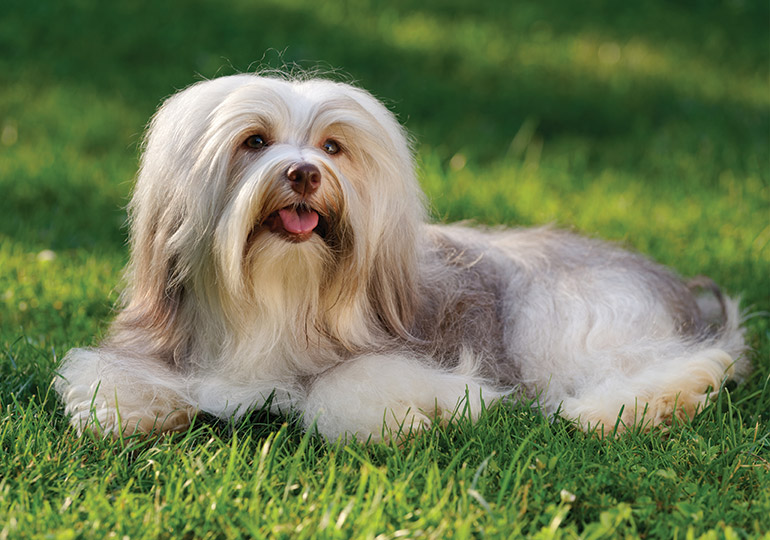
This is a small dog, generally standing around 23 to 27 cm at the shoulder and weighing roughly 4 to 7 kg, slightly longer than it is tall. The build is sturdy rather than fine-boned, with a sound, springy gait. The hallmark is the coat, a long, soft, double coat that is wavy to slightly curled and untrimmed in the show ring, often reaching the ground. Colours run the full range, including white, cream, fawn, gold, black, silver, chocolate and various parti-colours and sable patterns. The ears drop and are well feathered, the dark eyes are large and gentle, and the plumed tail is carried arched over the back.
Suitability
The Havanese is one of the better small breeds for apartment living, given its size and modest exercise needs, and it suits a relaxed owner as readily as an active one. It is a sensible choice for a first-time owner, being friendly and keen to learn, provided that owner is around for much of the day. Time alone is the real limit, this breed does not cope with long, regular absences and is happiest in a home where someone is usually about. In the Australian climate the dense coat can hold heat, so walk in the cooler parts of the day through summer, keep fresh water and shade available, and never leave one in a parked car. Regular clipping in the warmer months keeps a Havanese more comfortable.
Health
Havanese typically live around 14 to 16 years and are a fairly long-lived breed, though several conditions run in the lines. Patellar luxation (slipping kneecaps) is the most common orthopaedic issue. Eye disease shows up too, including cataracts and progressive retinal atrophy. The breed can also carry chondrodysplasia and some have congenital deafness, and Legg-Calve-Perthes disease of the hip is seen occasionally. A liver condition called portosystemic shunt turns up in some lines. Buy from a breeder who eye-tests their dogs annually through a registered scheme, patella-checks their breeding stock, and uses the available DNA tests for the breed. Ask to see current results rather than taking a verbal assurance. Keeping a Havanese lean protects the knees and helps these dogs stay sound into old age.
Find your Havanese
Browse trusted Havanese breeders across Australia and read genuine reviews from real owners, or take the quiz to be sure of the fit.