
Harrier
The English Harrier
The Harrier is an English pack hound that looks like a Foxhound scaled down or a Beagle scaled up, bred to hunt hare in a pack on foot. It is a cheerful, energetic, sociable dog with a powerful nose and bottomless stamina, and a temperament built around being part of a group. With family it is friendly, playful and good with children, but it is first and foremost a working scent hound, not a natural lapdog. Exercise needs are high: this dog wants long walks, running room and ideally a job for its nose, or it will make its own fun. It suits active, experienced or hands-on owners with a securely fenced yard, and it does not suit apartments, sedentary households, or homes with cats and small pets. The short coat is easy, needing only an occasional brush. The standout is its endless, good-humoured energy.
Size
Medium
Lifespan
10-12 years
Group
Group 4 - Hounds
Height
Male: 48-50 cm (19-21 inches), Female: 48-50 cm (19-21 inches)
Weight
Male: 23-29 kg (50-65 lbs), Female: 22-27 kg (48-60 lbs)
Origin
United Kingdom
Compatibility & care
How this breed fits into life with you
Scores are out of 5. Tap the help icon next to any trait to see what it really means.
Personality
How they think and behave
With family
Who they get along with
Care needs
What they ask of you
Origin & history
The Harrier is an old English hound developed to hunt hare, the very name linked to that quarry, with packs recorded in England for many centuries. It was built up from foxhound and other hound blood, and possibly older talbot and beagle-type hounds, to produce a medium pack hound that farmers and country communities could follow on foot rather than on horseback, which made hare hunting accessible to ordinary people as well as the gentry. It worked in packs, trailing hare and sometimes fox by scent with a fine carrying voice. The breed crossed to North America early and has a following there, but it has always been comparatively rare as a pet. In Australia it is very uncommon, seen far less often than its smaller relative the Beagle, and is kept by only a handful of enthusiasts.
Temperament
Harriers are friendly, outgoing pack animals, bred for generations to work and live alongside other dogs and people, and it shows in their easy sociability. With family they are affectionate, playful and patient, and they are usually very good with children, taking the noise and bustle in their stride. They are typically welcoming rather than wary with strangers, so while their voice makes them an alarm, they are no guard dog. They generally love other dogs, again a legacy of the pack, but the strong prey drive means cats and small pets can be chased unless the dog is raised with them and managed. They are intelligent but independent and easily ruled by their nose, so recall is unreliable around scent and training needs patience, consistency and rewards rather than force. The key behavioural point is that a Harrier left under-exercised or isolated becomes bored, vocal and destructive; this is a dog that needs activity and company.
Appearance
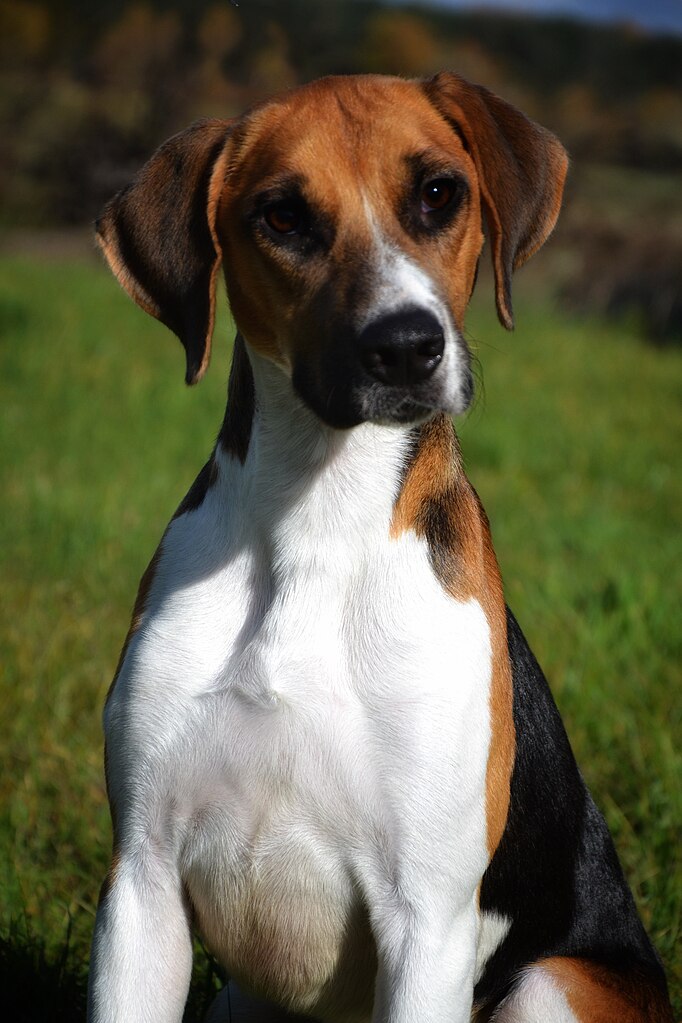
A medium-sized, sturdy, athletic hound, typically standing around 48 to 55 cm at the shoulder and weighing roughly 22 to 27 kg, clearly built for stamina and a day in the field. It looks like a smaller English Foxhound, with a strong neck, deep chest, well-muscled hindquarters and good bone, and a tail carried up. The skull is slightly domed with a long muzzle, the eyes are brown and kind, and the ears are long and drop close to the cheeks. The coat is short, dense and hard, sitting close to weather. Colours are usually hound colours: tricolour (black, white and tan) is most familiar, but red and white, lemon and white and other combinations occur. The overall impression is workmanlike and powerful for the size.
Suitability
The Harrier belongs in an active home with plenty of space, ideally a house with a high, secure yard, since a bored scent hound is an escape artist that will dig or climb to follow a scent. It needs a great deal of daily exercise and mental stimulation, so it is a poor match for apartment living or for a quiet, busy owner with little time. It is better suited to an experienced or genuinely committed owner who understands hounds than to someone expecting effortless obedience. Being a pack dog, it dislikes being left alone for long periods and does best with company, whether human or another dog. On climate, the short coat copes reasonably with both warm and cool weather, but in hot Australian conditions it should be exercised in the cooler parts of the day with shade and water always available, since its drive can push it past sensible limits.
Health
The Harrier is generally a sound, hardy hound and many live around 12 to 15 years. Because it is rare, there is less breed-specific data than for common breeds, so a careful, communicative breeder matters all the more. As a medium hound it can be affected by hip dysplasia, so hip scoring of breeding stock is worthwhile. The breed can also carry eye conditions, which makes eye examination of parents sensible, and as an active, food-driven hound it tends to gain weight readily if under-exercised or overfed, with the joint strain that brings. The long drop ears hold warmth and moisture and are prone to infection, so routine ear checks and cleaning are part of ownership. Look for a breeder who hip-scores, has eyes examined, keeps their dogs fit and lean, and is upfront about the small gene pool and anything seen in their lines.
Find your Harrier
Browse trusted Harrier breeders across Australia and read genuine reviews from real owners, or take the quiz to be sure of the fit.