
Irish Wolfhound
Cú Faoil
The Irish Wolfhound is one of the tallest dog breeds in the world, a giant sighthound bred to course wolves and deer. For all that size, the temperament is famously calm and sweet-natured. These are quiet, easygoing dogs indoors, gentle with their families and tolerant of children, and far too friendly to be guard dogs. They need daily exercise and room to stretch into a gallop, but they are not hyperactive and spend much of the day sleeping. The hard truth buyers must face is the short lifespan that comes with the size. The rough coat is fairly low-maintenance with regular brushing. This breed suits someone with space, a decent budget for food and vet care, and the emotional readiness for a dog that will not be with them for long.
Size
Giant
Lifespan
6-10 years
Group
Group 4 - Hounds
Height
Male: 81-86 cm (32-34 inches), Female: 71-76 cm (28-30 inches)
Weight
Male: 54-82 kg (120-180 lbs), Female: 48-64 kg (105-140 lbs)
Origin
Belgium Ireland
Compatibility & care
How this breed fits into life with you
Scores are out of 5. Tap the help icon next to any trait to see what it really means.
Personality
How they think and behave
With family
Who they get along with
Care needs
What they ask of you
Origin & history
Ireland gave the world this breed, and large rough-coated hounds used for hunting wolves and large game on the island are described in writing going back many centuries. As wolves were wiped out in Ireland and the great deer herds thinned, the hound's job disappeared and numbers crashed, nearly to extinction by the early 19th century. The breed as we know it was rebuilt from the 1860s by Captain George Augustus Graham, who used the remaining stock together with Deerhound and other large breeds to restore the type. They reached Australia well over a century ago and have a steady following here through breed clubs. The Wolfhound today is kept as a companion and show dog, and as a living link to Ireland's hunting past.
Temperament
For such an enormous animal the Wolfhound is remarkably gentle and undemanding company. It is deeply attached to its family, calm and patient in the house, and typically very good with children, though sheer size means it can knock a small child over by accident and play should be supervised. With strangers it is friendly or politely indifferent rather than suspicious, so while the silhouette in a doorway might deter someone, this is not a guard dog and should not be expected to be one. Most are sociable with other dogs and can live happily with other pets, although the coursing instinct means some will chase small animals that bolt outdoors. They are sensitive and dislike harsh handling, responding best to patient, gentle training started early while still a manageable size.
Appearance
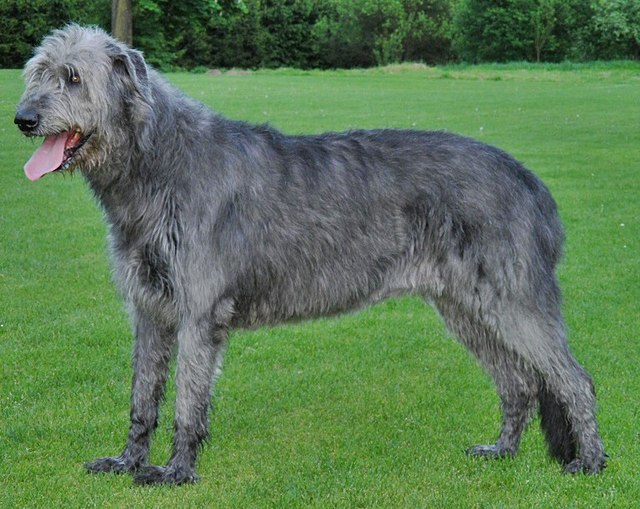
This is a giant breed built on sighthound lines rather than heavy mastiff bulk. Males stand a minimum of around 79 cm at the shoulder and often well over, with mature dogs commonly 50 to 70 kg; bitches are a touch smaller but still very large. The body is long, deep-chested and muscular with the arched loin and tucked-up belly of a galloping hound. The coat is rough and harsh, longest over the eyes and under the jaw, and comes in grey, brindle, red, black, pure white and fawn, with various shades of grey the most familiar. The head is long, the ears small and carried back, and the overall impression is one of size combined with grace.
Suitability
This breed needs a house with a large, securely fenced yard; an apartment is not realistic for a dog of this scale even though they are quiet indoors. The ideal owner has space, a comfortable budget (giant-breed food, beds, medication and vet bills all cost more), and the maturity to accept a short life. They are happiest with their people and tolerate normal time alone, but should not be isolated outside for long periods. Despite the easy temperament, they are not the most beginner-friendly choice simply because the stakes around health, feeding and handling a giant are higher. The rough coat copes reasonably with Australian heat, but provide constant shade and water, exercise in the cool of the day, and watch growing pups closely in summer.
Health
The hardest fact about the breed is its short life, with most Irish Wolfhounds living only around 6 to 8 years. They are strongly predisposed to bone cancer (osteosarcoma) and to heart disease, particularly dilated cardiomyopathy and atrial fibrillation. Bloat, the life-threatening twisting of the stomach, is a real risk in a deep-chested giant and every owner should learn the warning signs. Hip and elbow problems and a liver shunt in puppies also occur. Choose a breeder who carries out annual cardiac checks (ideally including echocardiogram), hip scores, and is honest about the ages and causes of death in their lines. Feeding for slow, steady growth in puppyhood and keeping adults lean takes pressure off the joints and heart.
Find your Irish Wolfhound
Browse trusted Irish Wolfhound breeders across Australia and read genuine reviews from real owners, or take the quiz to be sure of the fit.