
Irish Terrier
Irish Red Terrier, Daredevil
The Irish Terrier is a bold, red-coated terrier from Ireland with the classic terrier mix of dash and devotion. It is affectionate and almost reckless in its loyalty to its own people, while reserved with strangers and often spoiling for a scrap with strange dogs. Medium-sized and athletic, it needs a decent daily walk plus games and training to keep its quick mind busy, or it will invent its own entertainment. This is a breed for owners who like terrier character and will set firm, fair boundaries, not for someone wanting a soft, easygoing pet. The harsh wiry coat does not shed much but needs hand-stripping a few times a year to keep its colour and texture, with regular brushing in between. Early, ongoing socialisation around other dogs makes a real difference.
Size
Small to Medium
Lifespan
12-15 years
Group
Group 2 - Terriers
Height
Male: 46-48 cm (18-19 inches), Female: 46-48 cm (18-19 inches)
Weight
Male: 11-12 kg (25-27 lbs), Female: 11-12 kg (25-27 lbs)
Origin
Ireland
Compatibility & care
How this breed fits into life with you
Scores are out of 5. Tap the help icon next to any trait to see what it really means.
Personality
How they think and behave
With family
Who they get along with
Care needs
What they ask of you
Origin & history
The Irish Terrier is one of the older terrier breeds, taking recognisable shape in Ireland through the 1800s as an all-purpose farm dog, used to kill vermin, guard the homestead and turn its hand to whatever was needed. It was among the first terriers recognised when organised dog showing began in the late 19th century. The breed earned particular fame during the First World War, when Irish Terriers served as messenger and sentry dogs in the trenches and were noted for their nerve under fire. Always a relatively uncommon breed, it has nonetheless kept a steady following of devoted owners. In Australia it is recognised by the ANKC but seen in modest numbers, mostly in the show ring and as a companion rather than as a working farm dog.
Temperament
The Irish Terrier is courageous, lively and intensely loyal, often forming a very close bond with its family and being gentle and patient with children it has grown up around. The trade-off is a classic terrier streak, it can be feisty and quarrelsome with strange dogs, particularly of the same sex, and it has a strong prey drive toward cats and small animals unless raised carefully with them. With strangers it tends to be alert and somewhat reserved, which makes it a genuinely good watchdog that will stand its ground. It is intelligent and capable but also independent and strong-willed, so training calls for firmness, fairness and consistency rather than repetition or heavy-handedness. Daily physical exercise and mental challenge are essential, a bored Irish Terrier digs, barks and finds trouble. Early and continued socialisation is the single most useful investment an owner can make.
Appearance
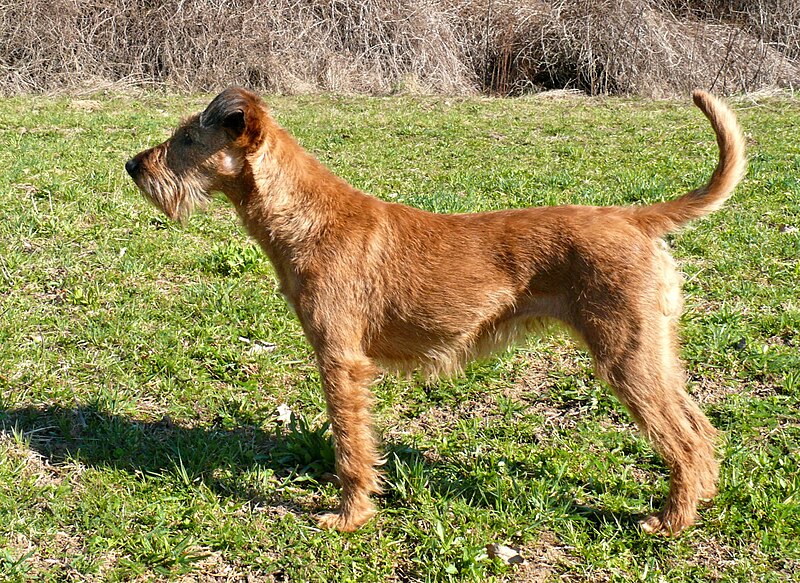
The Irish Terrier is a medium-sized, racy terrier, standing around 46 to 48 cm at the shoulder and weighing roughly 11 to 12 kg, with a build that is more leggy and graceful than the stockier terriers. The coat is harsh and wiry, dense and lying close to the body, with a softer undercoat beneath. Colour is a whole-coloured red, ranging from bright red through golden red to red wheaten, and a small white patch on the chest is permissible. The head is long with a strong muzzle, set off by a modest beard and eyebrows, the eyes are small and dark, and the small V-shaped ears fold forward. The overall look is workmanlike and alert.
Suitability
This is a breed better suited to an owner who understands terriers and will provide structure, exercise and firm, kind leadership, rather than to a complete novice wanting an easy first dog. It adapts to a house with a yard or, with enough daily outings, to smaller living, but the yard must be securely fenced as these are determined diggers and escapers. It can tolerate moderate periods alone if well exercised, though it is happiest with company and a job to do. Its dog-to-dog assertiveness means careful management at parks and on lead. The wiry coat copes reasonably with the Australian climate, but in hot weather exercise in the cooler hours, provide shade and water, and keep an eye on the pads on hot ground.
Health
Irish Terriers are a hardy breed and typically live around 13 to 15 years. They have relatively few serious inherited problems compared with many breeds, which is part of their appeal. One well-recognised concern is hyperkeratosis of the footpads (sometimes called corny feet), a hereditary thickening and cracking of the pads, and a DNA test is available, so ask whether breeding stock has been screened. Hereditary cystinuria, a condition that predisposes to bladder stones, has also been reported in the breed. As with most active dogs, watch for the usual joint wear with age. Buy from a breeder who is open about the health of their lines, uses the available DNA test for hyperkeratosis, and breeds for sound temperament as well as health. A lean weight and good foot care help keep these terriers comfortable.
Find your Irish Terrier
Browse trusted Irish Terrier breeders across Australia and read genuine reviews from real owners, or take the quiz to be sure of the fit.