
Irish Water Spaniel
Whiptail, Shannon Spaniel, Rat Tail Spaniel, Bog Dog
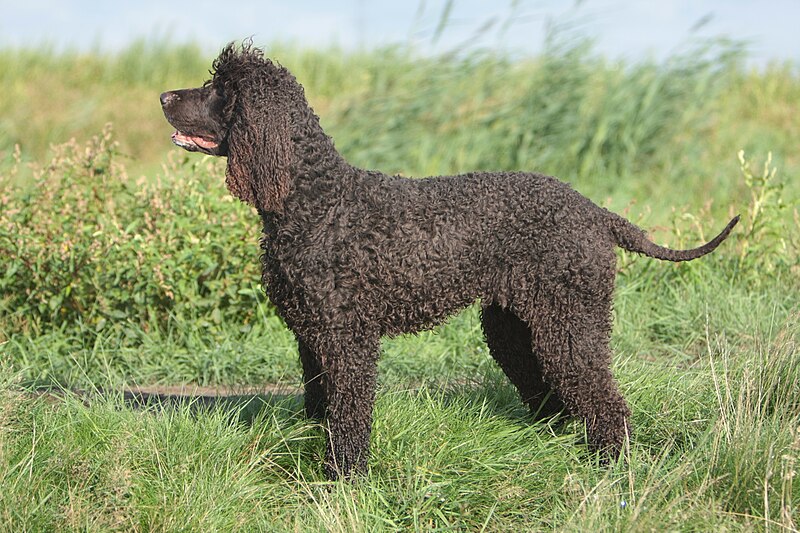
The Irish Water Spaniel is a tall, curly-coated gundog and one of the oldest spaniels still around. The coat is the giveaway: tight liver-coloured ringlets all over, a topknot of loose curls on the head, and a smooth "rat tail" that sets it apart from every other spaniel. These are clever, busy dogs with a streak of independence and a sense of humour, bred to swim hard and retrieve from cold water all day. They need real exercise, ideally including swimming, plus a job for their brain, or they get bored and mischievous. A good fit for an active person or family who likes training and the outdoors, and a poor fit for anyone wanting a calm, low-effort lap dog. The coat sheds very little but needs regular brushing and a trim every couple of months to stay free of mats.
Size
Medium
Lifespan
10-12 years
Group
Group 3 - Gundogs
Height
Male: 53-58 cm (21-23 inches), Female: 51-56 cm (20-22 inches)
Weight
Male: 20-29 kg (45-65 lbs), Female: 18-25 kg (40-55 lbs)
Origin
Ireland
Compatibility & care
How this breed fits into life with you
Scores are out of 5. Tap the help icon next to any trait to see what it really means.
Personality
How they think and behave
With family
Who they get along with
Care needs
What they ask of you
Origin & history
Ireland is the home of this breed, with the modern dog credited largely to Justin McCarthy of Dublin, whose dog Boatswain in the 1830s is regarded as the foundation of the type. They were built to retrieve waterfowl from the bogs, lakes and estuaries of Ireland, where a dense waterproof coat and webbed feet earned their keep in miserable conditions. Through the second half of the 19th century the breed spread to Britain and North America and was a common sight in shooting parties. Numbers fell through the 20th century as other retrievers took over, and the breed is now fairly rare worldwide, including in Australia, where it is kept by a small group of dedicated owners. It remains a recognised gundog rather than a fashionable pet.
Temperament
At home this is an affectionate, playful dog that bonds hard with its people and likes to be involved in whatever is going on. With children it is generally good-natured and patient, though its size and enthusiasm suit a family with older kids better than one with toddlers. It tends to be reserved rather than gushing with strangers, which makes it a fair watchdog without being noisy or sharp. Most get on well with other dogs and with household pets they are raised alongside, though the strong retrieving drive means small fast-moving animals can be tempting. They are intelligent and trainable but think for themselves, so they respond far better to reward-based, varied training than to drilling. A bored, under-exercised Irish Water Spaniel will find its own entertainment.
Appearance
This is the tallest of the spaniels. Dogs stand around 53 to 59 cm at the shoulder and bitches roughly 51 to 56 cm, weighing in the region of 25 to 30 kg with a strong, slightly square outline. The coat is a defining feature: dense crisp ringlets of solid liver (a rich purplish brown) covering the body, a topknot of longer loose curls falling over the eyes, and a smooth tapering "rat tail" free of curl. The muzzle is also smooth-haired, the ears long and low set under heavy curl, and the feet webbed for swimming. The expression is alert and faintly comical.
Suitability
A house with a securely fenced yard suits this breed far better than an apartment, and access to water for swimming is close to ideal. The owner should be active and genuinely keen on training, walking and outdoor activity, since this is not a dog that thrives lying around. They cope with being left for a normal working day if well exercised, but long stretches of isolation lead to boredom and destructiveness. First-time owners who are committed and willing to learn can manage one, though the independent streak and grooming workload catch some people out. The dense coat gives reasonable insulation, so in hot Australian conditions provide shade, fresh water and exercise in the cooler parts of the day, and never leave one shut in a hot car or run.
Health
Most Irish Water Spaniels live around 10 to 12 years. The best-known concern is hip dysplasia, so insist on parents with hip scores. Eyes deserve attention too, with hereditary cataract and other eye conditions reported, which is why annual eye testing of breeding stock matters. The breed has a noted sensitivity to certain anaesthetics and to some routine vaccinations and treatments, so it helps to use a vet who knows the breed. Some lines carry a raised risk of cancers, and elbow problems turn up occasionally as well. Buy from a breeder who hip and elbow scores, eye tests annually and can talk openly about what has appeared in their lines rather than waving the questions away.
Find your Irish Water Spaniel
Browse trusted Irish Water Spaniel breeders across Australia and read genuine reviews from real owners, or take the quiz to be sure of the fit.