
Japanese Spitz
None
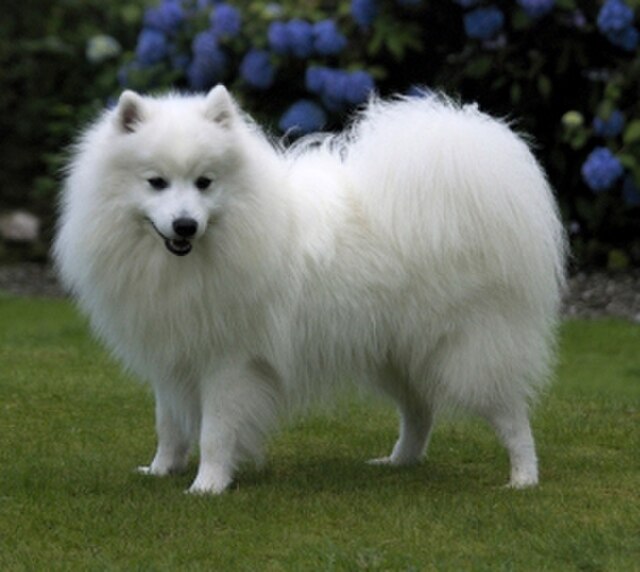
The Japanese Spitz is a small, brilliant-white companion dog with a fox-like face, pricked ears and a plumed tail curled over its back. Behind the showy looks is a cheerful, intelligent, devoted little dog that bonds closely with its family and likes to be in the thick of things. It is alert and will bark to announce visitors, which makes a good small watchdog, but it is friendly rather than aggressive. Exercise needs are moderate, met by daily walks and play, and the breed is bright and very trainable. The dazzling white double coat looks high-maintenance but is surprisingly self-cleaning and needs only regular brushing rather than constant bathing. This breed suits families, couples or singles who want an affectionate, manageable-sized companion and can give it company and a bit of training.
Size
Small
Lifespan
10-16 years
Group
Group 7 - Non Sporting
Height
Male: 30-38 cm (12-15 inches), Female: 30-38 cm (12-15 inches)
Weight
Male: 8-14 kg (18-30 lbs), Female: 8-14 kg (18-30 lbs)
Origin
Japan
Compatibility & care
How this breed fits into life with you
Scores are out of 5. Tap the help icon next to any trait to see what it really means.
Personality
How they think and behave
With family
Who they get along with
Care needs
What they ask of you
Origin & history
The Japanese Spitz was developed in Japan in the first half of the 20th century, created by Japanese breeders from white Spitz-type dogs imported from around the world, with white German Spitz among the main ancestors. The aim was a smart, attractive, good-tempered companion dog of small size, and the result was standardised in Japan by the middle of the century. From there the breed spread to other countries, reaching Australia and elsewhere as a popular family companion. It has no working past to speak of; it was bred from the start to be a house dog and friend. In Australia it is a reasonably well-known small breed, valued for its looks, its size and its sunny temperament, and kept almost entirely as a companion.
Temperament
This is a friendly, outgoing and affectionate dog that genuinely enjoys being part of family life and tends to attach itself closely to its people. It is typically very good with children and sociable with other dogs and household pets, with a playful, even-tempered nature that makes it an easy fit in most homes. With strangers it is alert and will sound off to announce an arrival, giving it a useful watchdog streak, but once introduced it is welcoming rather than wary. The breed is clever and keen to please, which makes it one of the more trainable small companions, responding well to reward-based methods. Its main behavioural need is company: the Japanese Spitz is devoted and can become anxious or bark excessively if left alone too much, so it does best where it is not isolated for long days. Boredom and loneliness, not aggression, are the things to guard against.
Appearance
This is a small, well-proportioned Spitz standing roughly 30 to 38 cm at the shoulder, with males a little larger than females, and weighing in the region of 5 to 10 kg. The body is compact and slightly longer than tall, carried with an upright, lively bearing. The coat is a pure white double coat, with a short dense undercoat beneath a stand-off outer coat that is longer around the neck and shoulders forming a ruff, and a generously plumed tail curled over the back. The face is fox-like and pointed, with small triangular pricked ears, dark oval eyes, and a black nose, lips and eye rims that stand out sharply against the white. The expression is bright, alert and friendly.
Suitability
The Japanese Spitz adapts well to both apartments and houses, provided it gets its daily walk and some play, and it suits city and suburban life equally. It fits a wide range of owners, from families to couples to singles, and is a good choice for a first-time owner thanks to its trainability and friendly nature. The one real caution is time alone: this is a companion breed that dislikes long isolation and can develop separation anxiety and nuisance barking if regularly left for full days, so it suits a household with company around. In the Australian climate the white double coat actually insulates against heat as well as cold, but it is still a coated breed, so provide shade and water, exercise in the cooler parts of the day in summer, and brush out the undercoat as it sheds.
Health
The Japanese Spitz is generally a healthy, hardy breed and tends to be long-lived, often reaching 12 to 16 years. The most commonly mentioned inherited problem is patellar luxation (slipping kneecaps), so screening of breeding dogs is worthwhile. Some eye conditions occur, including progressive retinal atrophy and tear-duct issues that can cause runny eyes and staining, so eye testing of parents is sensible. Allergies and skin sensitivity show up in some individuals. The breed is not affected by the long list of serious conditions that trouble many pedigree dogs, but no breed is risk-free, so look for a breeder who checks patellas, eye tests their stock, and is open about anything that has appeared in their lines. Keeping the dog lean and well groomed supports its overall health.
Find your Japanese Spitz
Browse trusted Japanese Spitz breeders across Australia and read genuine reviews from real owners, or take the quiz to be sure of the fit.