
Keeshond
Dutch Barge Dog, Smiling Dutchman, Chien Loup, Kees
The Keeshond is a medium-sized spitz from the Netherlands, easy to spot thanks to its plush grey coat and the dark "spectacle" markings around its eyes. This is a people-oriented breed first and foremost. Keeshonden are friendly, cheerful and genuinely attached to their families, and they tend to be good with children and other dogs. They were companion and watchdog rather than hunter, so the prey drive is mild, but the watchfulness remains and they will bark to announce visitors. Exercise needs are moderate, met by daily walks and play plus mental stimulation, and they are clever and quick to learn. They do not cope well with being left alone for long and can become noisy or anxious. The thick double coat needs a thorough brush once or twice a week, more during the dramatic seasonal moults. A sociable, adaptable family dog that suits owners who want a companion underfoot.
Size
Medium
Lifespan
12-14 years
Group
Group 7 - Non Sporting
Height
Male: 44-48 cm (17-19 inches), Female: 40-46 cm (16-18 inches)
Weight
Male: 16-20 kg (35-45 lbs), Female: 14-18 kg (30-40 lbs)
Origin
Germany Netherlands
Compatibility & care
How this breed fits into life with you
Scores are out of 5. Tap the help icon next to any trait to see what it really means.
Personality
How they think and behave
With family
Who they get along with
Care needs
What they ask of you
Origin & history
The Keeshond developed in the Netherlands and was the everyday dog of the rivers and canals, kept aboard barges and small boats as a watchdog and companion. It is closely related to the German Spitz, part of the same broad spitz family. In the eighteenth century the breed became tied up with Dutch politics: it was the symbol of the Patriot faction, and one of its leaders, Cornelis de Gijselaar, owned a dog called Kees, which is widely credited as the source of the name. When the rival House of Orange prevailed, the breed's fortunes dipped through association with the losing side, but barge owners and rural families kept it going. Careful work in the early twentieth century, notably by Dutch breeders and later British enthusiasts, restored and standardised the breed. Today the Keeshond is kept around the world as a companion, including a steady following in Australia.
Temperament
The Keeshond is one of the friendlier spitz breeds and was bred for company rather than independent work, which shows in its temperament. It is affectionate, outgoing and strongly bonded to its family, often shadowing its people from room to room. Most are reliably good with children and tend to accept other dogs and household pets without fuss. With strangers they are usually welcoming once introduced, though their watchdog roots mean they will sound off when someone approaches, which makes them a good alarm but a poor guard. They are intelligent, sensitive and eager to please, so they take well to reward-based training and do not respond to heavy-handed methods. The main behavioural watch-point is separation: this breed hates being left alone for long hours and can become anxious, vocal or destructive. Plenty of company, gentle training and a bit of mental work keep a Keeshond settled and happy.
Appearance
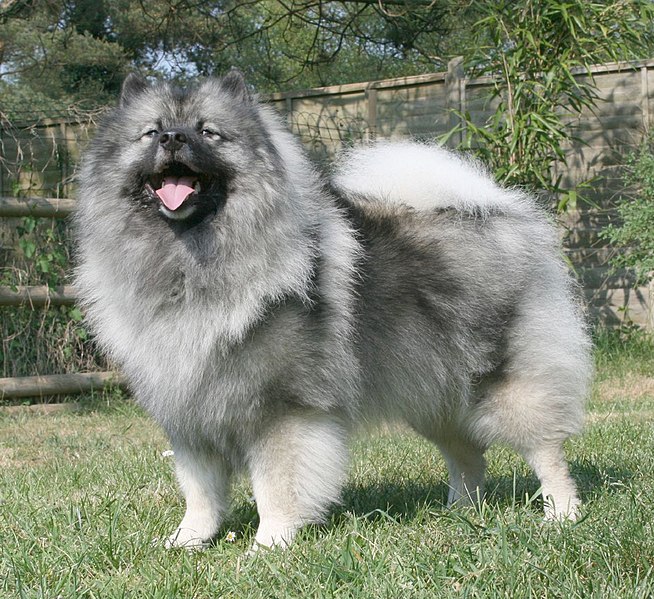
A compact, well-balanced spitz standing around 43 to 46cm at the shoulder and weighing roughly 15 to 20kg. The body is sturdy and almost square, carried on a thick coat that gives the dog a rounded, generous outline. The double coat has a harsh, straight, stand-off outer layer over a dense pale undercoat, longest around the neck where it forms a clear ruff or mane. Colour is a distinctive mix of grey, black and cream, with black tips giving a shaded effect, pale legs, and a well-feathered tail curled tightly over the back. The pointed face carries the breed's hallmark dark "spectacles", fine markings running from the outer eye towards the ear, over alert dark eyes and small erect ears.
Suitability
Keeshonden are adaptable and suit a house or an apartment, provided they get daily walks, play and human company. They work well for first-time owners thanks to their friendly nature and trainability, and they fit families, couples and active older owners alike. The big caveats are that they are a vocal breed and they genuinely struggle with long stretches of solitude, so they are not ideal if the house is empty all day. The dense double coat is built for cold weather, so in the Australian heat they need shade, fresh water and walks scheduled for the cooler parts of the day, and the coat should be kept brushed out rather than clipped. Give a Keeshond company, moderate exercise and regular grooming and it is a happy, easy companion.
Health
Keeshonden are typically long-lived for their size, with many reaching 13 to 15 years. The breed has a few well-documented predispositions worth raising with any breeder. Primary hyperparathyroidism, a hormonal condition affecting calcium levels, is recognised in the breed and there is a DNA test that responsible breeders use. Hip dysplasia and patellar luxation both occur, so hip scoring and a vet check of the knees on breeding stock are sensible. Epilepsy and hypothyroidism are also reported, as are some eye conditions, which makes a current eye examination on the parents reassuring. A good Keeshond breeder will happily discuss the hyperparathyroidism DNA test, hip scores, eye testing and the general health of their lines. Because the coat is so dense, keeping the dog at a healthy weight and well groomed also helps you spot any skin or lump problems early.
Find your Keeshond
Browse trusted Keeshond breeders across Australia and read genuine reviews from real owners, or take the quiz to be sure of the fit.