
Kerry Blue Terrier
Kerry, Irish Blue Terrier
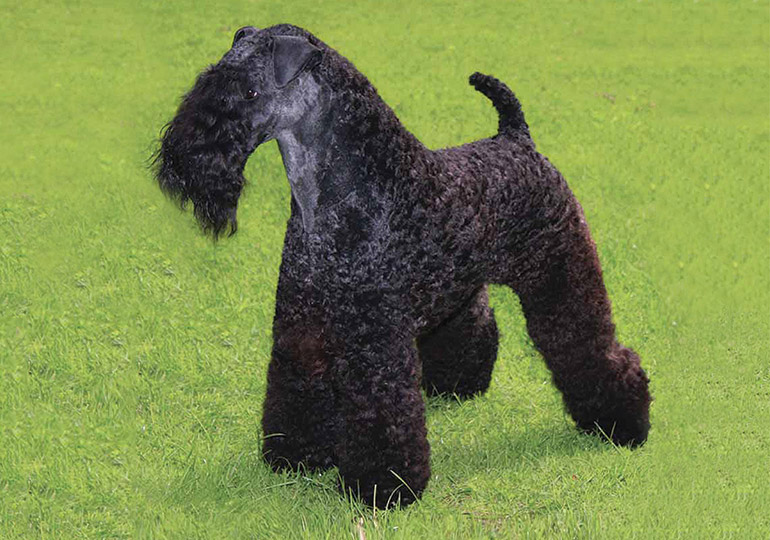
The Kerry Blue Terrier is a medium-sized working terrier from Ireland, known for its soft, curly blue-grey coat and its bold, lively personality. Puppies are born black and the coat clears to blue over the first year or two. This is a proper all-rounder of a terrier: it was used on vermin, as a herder and as a guard, and that versatility comes with plenty of drive and self-confidence. Kerries are devoted and playful with their own people and make alert watchdogs, but they can be feisty with other dogs and have a strong prey drive towards small animals. They need daily exercise and consistent, positive training from the start. The non-shedding coat sheds very little but is high-maintenance, needing regular brushing and clipping every few weeks. Best for active owners who enjoy a smart, characterful dog and will put in the grooming and training.
Size
Small to Medium
Lifespan
12-15 years
Group
Group 2 - Terriers
Height
Male: 46-51 cm (18½-20 inches), Female: 44-48 cm (17½-19 inches)
Weight
Male: 15-18 kg (33-40 lbs), Female: 13-16 kg (29-35 lbs)
Origin
Ireland
Compatibility & care
How this breed fits into life with you
Scores are out of 5. Tap the help icon next to any trait to see what it really means.
Personality
How they think and behave
With family
Who they get along with
Care needs
What they ask of you
Origin & history
The Kerry Blue Terrier comes from the mountainous southwest of Ireland, with the breed long associated with County Kerry. It was the working dog of small farmers, expected to turn its hand to anything: killing rats and other vermin, helping with cattle and sheep, guarding the holding and even retrieving. The distinctive soft, wavy coat that matures from black to blue set it apart from other Irish terriers. The breed became a strong national symbol in Ireland, and Irish patriot Michael Collins was a well-known admirer who reputedly tried to have it made the national dog. It was among the first breeds registered with the Irish Kennel Club in the early twentieth century, and Kerries soon found success in the show ring and obedience as well as on the farm. The breed is uncommon in Australia today, kept by terrier enthusiasts and people who value its versatility and unusual coat.
Temperament
The Kerry Blue is a confident, energetic and intelligent terrier with a real sense of humour. With its family it is affectionate, playful and people-focused, and it bonds closely, often wanting to be involved in whatever is going on. It is alert and territorial enough to make a good watchdog, and it is typically reserved rather than aggressive with strangers until it has taken their measure. The classic terrier traits are all present: a strong prey drive that makes cats and small pets a challenge, and a readiness to stand up to other dogs, especially of the same sex, so early socialisation and supervision around other dogs are important. Kerries are quick learners but also independent and a little stubborn, so training needs to be firm, fair, consistent and rewarding to hold their interest. They are happiest with a job to do and plenty of engagement, and a bored Kerry will invent its own entertainment.
Appearance
A neatly built, upstanding terrier standing around 45 to 49cm at the shoulder and weighing roughly 15 to 18kg, with males a touch larger. The body is compact and muscular with a level back and a tail carried high. The coat is the breed's calling card: soft, dense and wavy, with no harsh outer layer, and it changes colour with age from the black of puppyhood to shades of blue-grey from slate to a lighter silver-blue. Trimmed for show, the dog carries a full beard and eyebrows over dark, keen eyes, with small V-shaped ears folding forward. The overall impression is of a tidy, alert, well-balanced terrier that is all business.
Suitability
Kerry Blue Terriers suit active individuals or families who will give them daily exercise, training and company, and who do not mind committing to regular grooming. They can live happily in a house with a yard or in a well-exercised urban home, but the yard must be securely fenced because they are agile and curious. They are manageable for a motivated first-time owner who reads up on terriers, though their drive and stubborn streak can surprise the unprepared. They tolerate some time alone better than the very clingy breeds but still want to be part of family life. The soft single coat copes reasonably with warm weather, but they still need shade, water and walks in the cooler parts of the Australian day. Plan for clipping every four to six weeks and brushing in between.
Health
Kerry Blue Terriers are generally healthy and often live to around 12 to 15 years. There are a few specific conditions worth discussing with a breeder. The most serious is a rare inherited neurological disorder, progressive neuronal abiotrophy (also called cerebellar abiotrophy), which causes a young dog to become wobbly and uncoordinated; careful breeders avoid pairings known to produce it. Eye conditions including cataracts and keratoconjunctivitis sicca (dry eye) occur, so an eye examination on breeding stock is worthwhile. Hip dysplasia and patellar luxation are seen, making hip scoring and a knee check sensible. The breed can also be prone to skin cysts and to clotting issues such as factor XI deficiency, for which a DNA test exists. A responsible breeder should be open about eye testing, hip scores and the health of their lines, and about any history of neurological problems.
Find your Kerry Blue Terrier
Browse trusted Kerry Blue Terrier breeders across Australia and read genuine reviews from real owners, or take the quiz to be sure of the fit.