
Karelian Bear Dog
KBD, Karjalankarhukoira, Karelsk Björnhund
The Karelian Bear Dog is a tough, intense hunting spitz from Finland, bred to find and hold large game like elk and bear until the hunter arrives. That heritage shapes everything about the dog. It is brave, energetic and fiercely independent, with one of the strongest prey drives of any breed and a low tolerance for other dogs. With its own family it is loyal and affectionate, but this is a serious working animal, not a casual pet. It needs a great deal of exercise, secure high fencing and an experienced owner who can give it structure. They are wary of strangers and make alert watchdogs. The black and white double coat is dense and largely self-cleaning, needing a weekly brush and more during the heavy seasonal moult. This breed is a poor choice for first-time owners, for homes with cats or small pets, and for anyone wanting a relaxed dog-park regular.
Size
Medium
Lifespan
10-12 years
Group
Group 7 - Non Sporting
Height
Male: 54-60 cm (21-24 inches), Female: 49-55 cm (19-22 inches)
Weight
Male: 25-36 kg (55-80 lbs), Female: 20-30 kg (44-66 lbs)
Origin
Finland
Compatibility & care
How this breed fits into life with you
Scores are out of 5. Tap the help icon next to any trait to see what it really means.
Personality
How they think and behave
With family
Who they get along with
Care needs
What they ask of you
Origin & history
The Karelian Bear Dog developed in the Karelia region straddling eastern Finland and what is now Russia, where it was used by local hunters to track and bay up big game. The dog would locate animals such as elk, lynx, wild boar and bear, then hold them at bay with relentless barking and quick movement while the hunter closed in. Fearlessness, stamina, a superb nose and complete independence in the field were the qualities that mattered. The breed was very nearly lost around the Second World War and was rebuilt from a small number of surviving dogs, with the Finnish Kennel Club setting the modern standard in the 1940s. It remains a respected hunting dog in the Nordic countries and has gained a niche role overseas in wildlife management, including conditioning bears to avoid people. In Australia it is rare and found mostly with active, hunting-minded or working-dog owners.
Temperament
With its family the Karelian Bear Dog is devoted, affectionate and very loyal, but it is not an easy-going breed and it is wired to work. The prey drive is enormous, so cats, chickens and small pets are generally not safe around one, and a securely fenced area is essential because they will follow a scent for miles. They tend to be dominant and easily provoked into a fight with unfamiliar dogs, particularly of the same sex, which limits dog-park outings. Around children in their own household they can be good, though their energy and intensity mean supervision is wise. Strangers are met with reserve, and the breed's natural watchfulness makes it a reliable alarm. Independent and strong-willed, they are intelligent but not naturally obedient, so they respond best to firm, fair, consistent handling and early socialisation. Bored or under-exercised, they become noisy and destructive.
Appearance
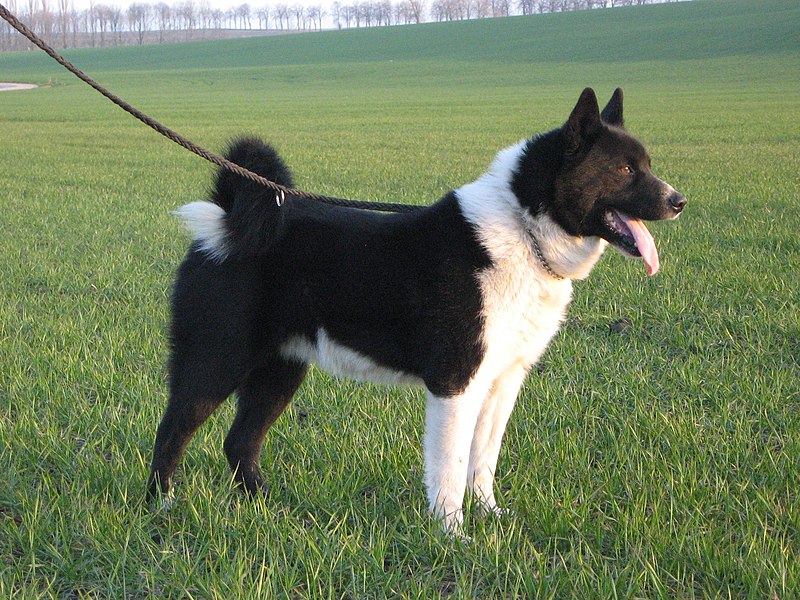
A medium-sized, squarely built spitz with an obvious working look. Most stand around 50 to 60cm at the shoulder, with males larger, and weigh roughly 20 to 28kg. The build is sturdy and balanced rather than heavy, with a wedge-shaped head, dark almond eyes, erect ears and a tail that curls over the back. The coat is the breed's signature: a harsh, straight black outer coat over a soft dense undercoat, marked with crisp white on the head, muzzle, chest, belly and legs. The black often carries a slight brownish cast. Everything about the dog suggests alertness and readiness to move.
Suitability
This breed suits an experienced, active owner on a rural or large property with high, secure fencing and ideally a genuine working or sporting outlet. It is not a fit for apartments, small yards, first-time owners, or households with cats and small animals, and it does not belong in a quiet, low-activity home. They are happiest outdoors and cope well with cold, so the Australian summer demands care: ample shade, fresh water and exercise kept to the cooler parts of the day. They do not like being left idle and alone for long stretches and will make their boredom known. Give a Karelian Bear Dog space, a job and firm guidance, and it thrives; deny those and it becomes a handful.
Health
Karelian Bear Dogs are a hardy, naturally bred working breed with a relatively small population, and many live to around 11 to 13 years. Because the gene pool is limited, buying from a breeder who tests and keeps records matters. Hip dysplasia is the main orthopaedic concern, so ask to see hip scores on the parents, and elbow scoring is sensible too. Eye problems are reported in the breed, so a current eye examination on breeding stock is reassuring. Patellar luxation, where the kneecap slips, also turns up. A good breeder will be candid about the health and temperament of their lines, screen for hips and eyes, and avoid doubling up on close relatives. Given the breed's drive, plenty of exercise and a sensible diet that keeps the dog lean will do as much for long-term health as anything.
Find your Karelian Bear Dog
Browse trusted Karelian Bear Dog breeders across Australia and read genuine reviews from real owners, or take the quiz to be sure of the fit.