
Labrador Retriever
Labrador, Lab
The Labrador Retriever is a medium-to-large gundog and one of the most popular family dogs in Australia and the world. Friendly, outgoing and even-tempered, it was bred to retrieve and remains keen, trainable and strongly food-motivated, which underpins its success as a family pet, assistance dog and detection dog. This is an active, energetic breed that needs a good hour or more of daily exercise and mental work; bored or under-exercised Labs are prone to weight gain, chewing and general mischief. It suits active families and owners who want a sociable, involved companion, and is a poor fit for anyone wanting an aloof guard dog, a calm low-energy pet, or a dog left alone all day. The short double coat is low-maintenance but sheds steadily, with heavier seasonal moults. A standout trait is its appetite and biddability, a combination that makes Labs easy to train but easy to overfeed.
Size
Large
Lifespan
10-12 years
Group
Group 3 - Gundogs
Height
Male: 56-61 cm (22-24 inches), Female: 53-58 cm (21-23 inches)
Weight
Male: 29-36 kg (65-80 lbs), Female: 25-32 kg (55-70 lbs)
Origin
Canada United States
Compatibility & care
How this breed fits into life with you
Scores are out of 5. Tap the help icon next to any trait to see what it really means.
Personality
How they think and behave
With family
Who they get along with
Care needs
What they ask of you
Origin & history
The Labrador Retriever traces back to the St John's water dog of Newfoundland, Canada, where in the early 19th century fishermen used these hardy dogs to retrieve nets, lines and fish from the cold North Atlantic. Dogs imported to England were refined by sporting estates, notably the Earls of Malmesbury and the Dukes of Buccleuch, into a dedicated gundog for retrieving waterfowl and upland game. The breed's soft mouth, swimming ability and trainable temperament made it the premier retriever, and it was recognised in Britain in the early 20th century. It is recognised by the ANKC and has topped popularity rankings in Australia for years. Beyond the field, Labradors have become the default choice for guide-dog and assistance-dog programs and for detection work, reflecting their reliable nature and willingness to work.
Temperament
Labradors are friendly, outgoing and even-tempered, typically excellent with children and welcoming to strangers, which makes them unreliable guard dogs though they may bark to alert. They are highly sociable and generally get on well with other dogs and pets, especially when socialised early. Trainability is a major strength: they are intelligent, enthusiastic and strongly food-motivated, which makes reward-based training straightforward and explains their dominance in assistance and detection roles. They are not especially independent and thrive on company, becoming bored, vocal or destructive if regularly left alone or under-exercised. Many remain boisterous and mouthy through a long adolescence and love to carry things and swim. Key behavioural needs are plenty of daily exercise, mental stimulation, human interaction and consistent training, with careful management of that famous appetite to prevent both begging behaviour and weight gain.
Appearance
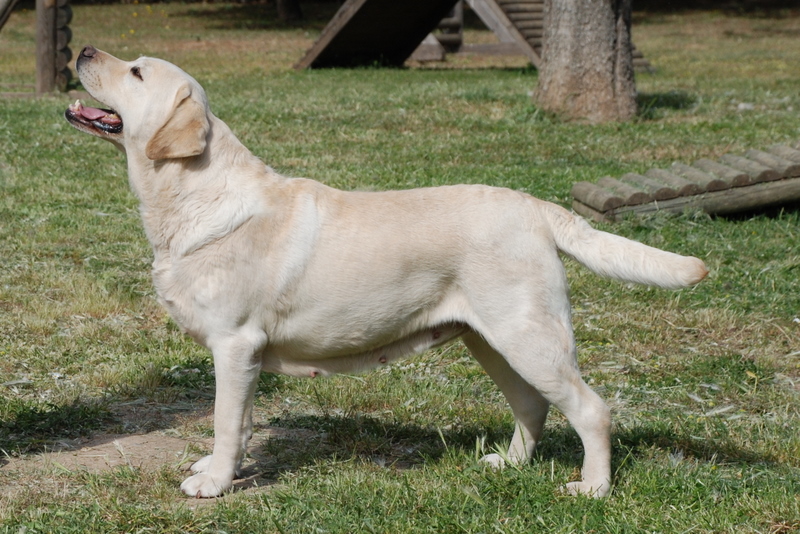
A medium-to-large, strongly built dog, the Labrador Retriever generally stands about 54 to 62 cm at the shoulder and weighs roughly 25 to 36 kg, with males larger than females. The build is solid and athletic, with a broad head, kind expression and well-sprung ribs. The coat is short, dense and weather-resistant, with a noticeably waterproof double layer. Three colours are recognised: yellow (ranging from pale cream to fox-red), black and chocolate. A defining feature is the thick, tapering otter tail, used as a rudder when swimming, along with webbed feet that make the breed a powerful swimmer.
Suitability
The Labrador suits a house with a yard and active owners or families who want a sociable dog to involve in daily life, though a committed owner can keep one happy with enough outings and enrichment. Its trainable, easygoing nature makes it one of the more first-time-owner friendly breeds, provided the owner can meet its exercise, mental and grooming needs and resist overfeeding. It does not enjoy being left alone for long days and is happiest with regular company and activity. In the Australian climate, provide shade and fresh water, exercise in the cooler parts of the day, and offer safe swimming, which most Labs love. The short coat is easy to groom but sheds steadily year round, with heavier moults to brush out seasonally.
Health
Typical lifespan is around 10 to 12 years. Labradors are predisposed to hip and elbow dysplasia, which can cause arthritis, and to inherited eye conditions such as progressive retinal atrophy and hereditary cataract. The breed also carries exercise-induced collapse (EIC) and centronuclear myopathy in some lines, both with DNA tests available, and has a well-documented tendency to obesity, partly linked to a common genetic variant affecting appetite; excess weight worsens joint and other problems. Buy from breeders who hip and elbow score their breeding stock (ANKC/AVA schemes), carry out eye testing, and DNA test for PRA, EIC and CNM as appropriate. Keeping a Labrador lean is one of the single most important things an owner can do for its long-term health, alongside sensible exercise and routine veterinary care.
Find your Labrador Retriever
Browse trusted Labrador Retriever breeders across Australia and read genuine reviews from real owners, or take the quiz to be sure of the fit.