
Lhasa Apso
Lhasa, Lion Dog
The Lhasa Apso is a small, long-coated breed from Tibet, originally a watchful little sentinel in monasteries and noble homes. Behind the glamorous coat is a hardy, self-assured dog with a strong independent streak and a surprisingly deep, serious bark. It is affectionate and loyal with its own people but naturally wary of strangers, more dignified than fawning. Energy needs are modest; daily walks and play are plenty, which makes it adaptable to many homes, but its stubbornness means training calls for patience. It suits owners who appreciate an independent-minded companion and will commit to its coat care, and it does not suit anyone wanting an eager-to-please pushover or a low-maintenance coat. That long double coat needs serious, regular grooming or it mats quickly. A confident, almost cat-like independence is the trait that surprises new owners most.
Size
Smallest
Lifespan
12-15 years
Group
Group 7 - Non Sporting
Height
Male: 25-28 cm (10-11 inches), Female: 25-28 cm (10-11 inches)
Weight
Male: 5.5-7 kg (12-15 lbs), Female: 5.5-7 kg (12-15 lbs)
Origin
Tibet
Compatibility & care
How this breed fits into life with you
Scores are out of 5. Tap the help icon next to any trait to see what it really means.
Personality
How they think and behave
With family
Who they get along with
Care needs
What they ask of you
Origin & history
The Lhasa Apso comes from Tibet, where it lived for centuries as an indoor watchdog and companion in monasteries and the homes of nobility and Buddhist lamas. Its job was to raise the alarm at anything unusual, a role that suits the breed's sharp hearing and tendency to bark to this day, while larger dogs guarded outside. The thick double coat developed as protection against the cold of the high Himalayan plateau. The dogs were held in high regard and were not generally sold but given as gifts, including to visitors and dignitaries, and they were associated with good fortune. They reached the West in the early 20th century, with dogs given as gifts helping to establish the breed in Britain and then North America. The Lhasa Apso is recognised by the ANKC and is kept in Australia as a companion and show dog.
Temperament
Lhasa Apsos are confident, independent and dignified, more inclined to decide things for themselves than to live to please. They are affectionate and loyal with their families, often bonding closely with one or two people, but they are naturally reserved with strangers and slow to give trust, which is exactly the watchdog nature they were bred for. They make alert, vocal little watchdogs and will announce visitors readily. With children they do best in calm households and suit older, respectful kids better than boisterous toddlers, as they can be intolerant of rough handling. They can live well with other dogs and pets, especially when socialised early, though some carry a bossy streak. Training requires patience, consistency and rewards; harsh methods only make them dig in. The key needs are early socialisation, gentle firm boundaries, modest daily exercise and committed grooming.
Appearance
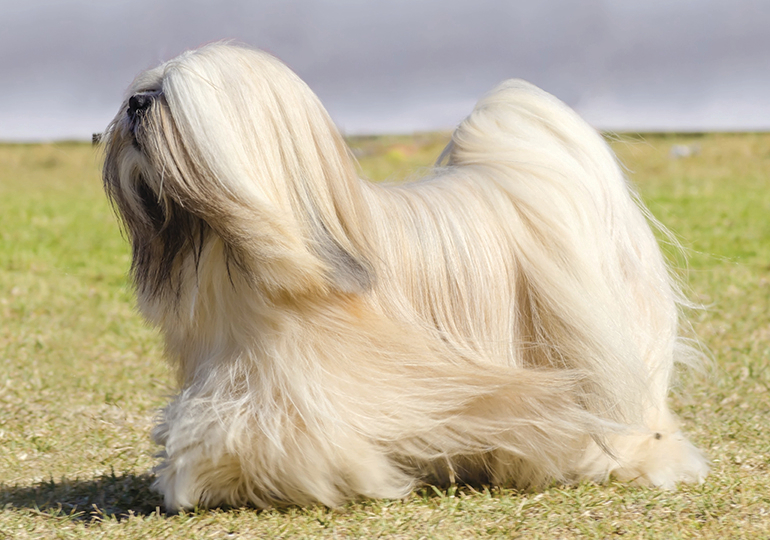
A small but sturdy and slightly long-bodied dog, the Lhasa Apso generally stands about 25 to 28 cm at the shoulder and weighs roughly 6 to 8 kg. The breed is best known for its heavy, straight, hard-textured double coat, which hangs to the floor when grown out and includes a full beard and a fall of hair over the eyes. Almost any colour is acceptable, with golden, honey, cream, sandy, grey, slate, smoke, particolour and black all seen. The tail is carried up over the back in a plume. Dark, oval eyes and a level, confident carriage give the breed its characteristic look of dignity, though many pet owners keep the coat clipped short for easy care.
Suitability
The Lhasa Apso adapts well to apartments and houses alike, as its exercise needs are modest and met by daily walks and indoor play, which makes it a good urban companion. It suits relaxed owners as much as active ones, provided someone is willing to take on the demanding coat care. The independent, stubborn temperament means it is not the most beginner-friendly toy breed, but a patient first-time owner who understands what they are taking on can manage well. It tolerates being left alone a little better than many companion breeds but still prefers company and can bark when bored or lonely. In the Australian climate the dense coat can cause overheating, so many owners keep it clipped short over summer, exercise in the cooler parts of the day and always provide shade and water. Whatever the coat length, regular grooming is non-negotiable to prevent painful matting.
Health
The Lhasa Apso is generally a hardy, long-lived breed, often reaching around 12 to 15 years. The most significant inherited concern is hereditary eye disease, particularly progressive retinal atrophy, which leads to gradual blindness; the breed can also be affected by other eye problems and by primary kidney disease (familial renal dysplasia) in some lines. As a small dog with a long back and short legs it may also be prone to patellar luxation, and its facial structure means eyes and skin folds need watching. Buy from a breeder who has breeding dogs eye tested by a veterinary ophthalmologist and DNA tests for the relevant form of PRA where available. Routine dental care matters, as small mouths are prone to crowding and gum disease, and the ears and eyes benefit from regular cleaning given the surrounding hair.
Find your Lhasa Apso
Browse trusted Lhasa Apso breeders across Australia and read genuine reviews from real owners, or take the quiz to be sure of the fit.