
Lagotto Romagnolo
Romagna Water Dog, Lagotto, Water Dog of Romagna, Lagotti Romagnoli
The Lagotto Romagnolo is a small-to-medium working dog from Italy, the only breed in the world bred specifically to hunt truffles. Under that woolly curly coat is a clever, energetic and affectionate dog that bonds closely with its people. The nose and the brain both need a job: Lagotti love searching games, scentwork and problem-solving, and a Lagotto left with nothing to do will dig craters in the lawn and find its own entertainment. They suit active owners who will give them daily exercise and plenty of mental work, and they are not a good match for someone wanting a placid lapdog or a dog that copes with long days alone. The dense, water-resistant curls do not shed much, which some allergy sufferers tolerate better, but they need regular clipping and combing or they mat. A keen, biddable working nose is the breed's calling card.
Size
Small to Medium
Lifespan
14-16 years
Group
Group 3 - Gundogs
Height
Male: 43-49 cm (17-19 inches), Female: 36-41 cm (14-16 inches)
Weight
Male: 14-16 kg (31-35 lbs), Female: 13-14 kg (28-31 lbs)
Origin
Italy
Compatibility & care
How this breed fits into life with you
Scores are out of 5. Tap the help icon next to any trait to see what it really means.
Personality
How they think and behave
With family
Who they get along with
Care needs
What they ask of you
Origin & history
The Lagotto Romagnolo comes from the Romagna area of north-eastern Italy and is an old type, originally a water retriever working the marshes and lagoons around Comacchio. As those wetlands were drained for farming through the 19th century the dogs lost their first job, and owners turned their exceptional noses to finding truffles in the hills and woods. Over generations the breed was selected for scenting ability and a willingness to work closely with a handler rather than for hunting game, which is part of why it lives so comfortably as a companion today. By the mid-20th century numbers had fallen badly, and a group of Italian enthusiasts worked from the 1970s onwards to rebuild the breed and have it formally recognised. It remains relatively uncommon in Australia but has a steady following among people who enjoy scentwork.
Temperament
Lagotti are clever, affectionate and closely attached to their families, happiest when included rather than left to their own devices. With children they are generally gentle and playful, and most are reserved but not aggressive with strangers, often making useful alert barkers without being guard dogs. They tend to get along with other dogs and, with early socialisation, with household pets, though the hunting nose means small fast animals can trigger a chase. Trainability is high; they are quick, sensitive and keen to work with a handler, which suits reward-based methods and makes them excellent at scentwork, obedience and agility. They are not especially independent and can become anxious or destructive if isolated or bored. The big needs are daily exercise, real mental stimulation, scenting outlets and company, plus an acceptance that this is a dog that loves to dig.
Appearance
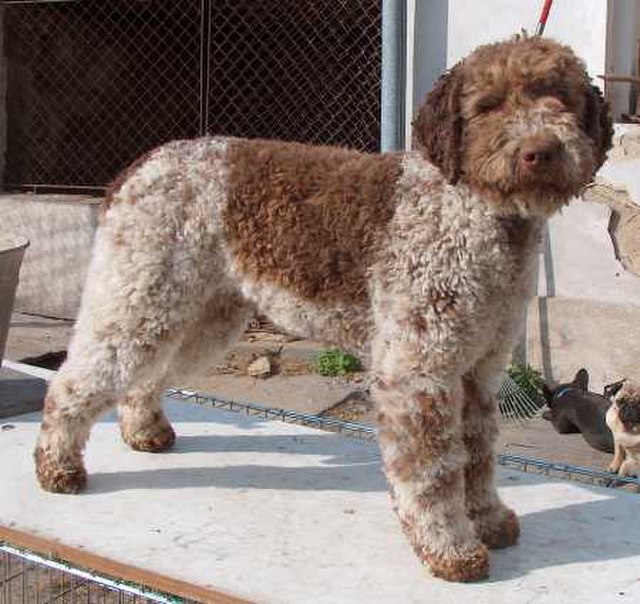
A medium-sized, sturdy and squarely built dog, the Lagotto generally stands about 41 to 48 cm at the shoulder and weighs roughly 11 to 16 kg, with males larger than females. The whole dog is covered in tight, woolly ring-shaped curls, including a beard, eyebrows and moustache, and the coat is normally clipped down a few times a year. Colours include off-white, white with orange or brown patches, solid shades of brown in various tones, and roan, sometimes with tan markings. The eyes are large and round and range from ochre to dark brown, giving a soft, alert expression. The build is robust and athletic rather than refined, fitting a dog meant to work all day in rough country.
Suitability
The Lagotto fits an active owner or family who will give it both physical exercise and brain work every day, and who enjoys training. It can live in an apartment if those needs are genuinely met, but a securely fenced yard suits its love of sniffing and digging better; soft garden beds may suffer. A sensible first dog for an engaged owner, it rewards effort and punishes neglect with boredom behaviours. It does not like being left alone for long stretches and prefers regular company. In the Australian climate the dense curly coat can hold heat, so keep it clipped over summer, exercise in the cool of the day and always provide shade and water. Expect regular combing between clips to keep the coat free of mats.
Health
Most Lagotti live around 14 to 16 years. The breed has two well-documented inherited conditions with DNA tests available: benign familial juvenile epilepsy, which causes seizures in puppies that many outgrow, and Lagotto storage disease, a serious neurological disorder. Hip dysplasia occurs in the breed and hereditary cataract and other eye conditions are also seen. Buy only from a breeder who DNA tests their breeding dogs for both juvenile epilepsy and storage disease, hip scores the parents, and has their eyes examined by a veterinary ophthalmologist; ask to see the certificates. As an active working breed the Lagotto also does best kept lean and fit, with regular ear care because the hanging, hairy ears can trap moisture and debris and lead to infections.
Find your Lagotto Romagnolo
Browse trusted Lagotto Romagnolo breeders across Australia and read genuine reviews from real owners, or take the quiz to be sure of the fit.