
Lakeland Terrier
Lake Terrier, Laker
The Lakeland Terrier is a small, square, workmanlike terrier from the north of England, bred to go to ground after foxes in steep fell country. It is bold, busy and full of self-belief, with the typical terrier mix of affection at home and fire in the field. Smart and game, it can learn quickly but has its own opinions, so training needs patience and consistency. This is an active little dog that wants daily exercise and things to do, and a bored Lakeland will bark, dig and look for trouble. It suits active owners who appreciate terrier character and will keep it occupied, and it does not suit anyone wanting a placid, easily-handled dog or a guaranteed friend to the cat or rabbit. The harsh wiry coat is low-shedding but needs regular tidying, and hand-stripping to keep its proper texture. A big personality in a small, sturdy frame is what defines the breed.
Size
Small
Lifespan
12-16 years
Group
Group 2 - Terriers
Height
Male: 34-37 cm (13.5-14.5 inches), Female: 33-36 cm (13-14 inches)
Weight
Male: 7-8 kg (15-17 lbs), Female: 6-7 kg (13-15 lbs)
Origin
United Kingdom
Compatibility & care
How this breed fits into life with you
Scores are out of 5. Tap the help icon next to any trait to see what it really means.
Personality
How they think and behave
With family
Who they get along with
Care needs
What they ask of you
Origin & history
The Lakeland Terrier was developed in the Lake District of north-western England, taking its modern name from that region. Fell farmers needed a small, hardy terrier that could keep up with hounds over rough ground and then go underground to bolt or kill foxes that preyed on lambs. The breed was built for that exact job, with a narrow, flexible body to follow quarry into rocky dens and the gameness to face it once there. It shares ancestry with other northern working terriers and was refined and standardised into a recognised show and pet breed in the early 20th century. It remains relatively uncommon in Australia. The working heritage still shows clearly in the modern dog's energy, prey drive and readiness to dig.
Temperament
Lakelands are confident, lively and affectionate with their families, often bonding tightly and wanting to be in the thick of things. They are generally good with children they are raised with, though their busy, no-nonsense terrier nature suits older kids better than toddlers. With strangers they tend to be alert and will sound off readily, which makes them sharp little watchdogs in a small package. Other dogs can be met with a challenge, particularly between same-sex adults, and the strong prey drive means cats and small pets are not a safe bet without careful early socialisation and management. They are intelligent and trainable but independent and a little stubborn, so reward-based training, firm consistency and early socialisation are essential. The core needs are daily exercise, mental stimulation, secure fencing and an outlet for digging and chasing instincts.
Appearance
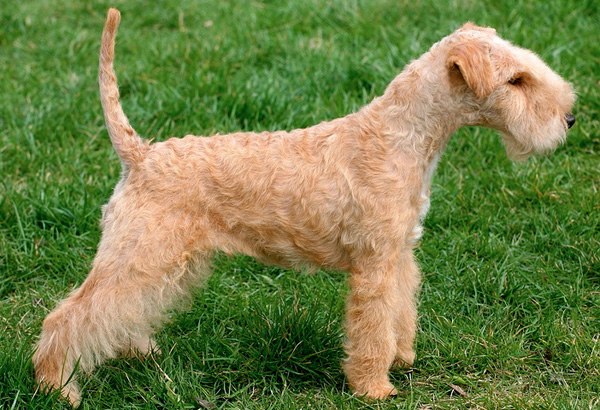
A small but sturdy and squarely proportioned terrier, the Lakeland stands roughly 33 to 38 cm at the shoulder and weighs around 7 to 8 kg, with little difference between the sexes. The body is deep and narrow rather than cobby, built to squeeze into tight spaces. The double coat has a harsh, dense, wiry outer layer over a softer undercoat, with a distinct beard and longer furnishings on the muzzle and legs. Colours include solid red, wheaten, liver, blue and black, as well as saddle-marked patterns such as black and tan or blue and tan. Small folded ears, a confident stance and an alert, slightly mischievous expression complete the picture.
Suitability
The Lakeland suits an active owner or family who enjoys a characterful terrier and will commit to training, exercise and management. It can adapt to many homes, including smaller ones, provided it gets out and stays busy, but a securely fenced yard is a real advantage given its love of digging and tendency to follow its nose. It is not the easiest first dog because of the independent streak and prey drive, though a keen owner who reads up on terriers can do very well. It tolerates some time alone better than many breeds but still wants company and can bark when bored. The wiry coat copes reasonably with the Australian climate, but provide shade and water and avoid hard exercise in the heat of the day. Plan on regular tidying and periodic hand-stripping to keep the coat in good order.
Health
The Lakeland Terrier is generally a hardy, long-lived breed, commonly reaching around 12 to 15 years. The best-documented inherited concern in terriers of this type is primary lens luxation, where the lens of the eye slips from position and can cause glaucoma and blindness; a DNA test for the mutation involved is available and widely used. Like many small breeds it can also be prone to patellar luxation (slipping kneecaps) and to Legg-Calve-Perthes disease affecting the hip in young dogs. Buy from a breeder who DNA tests for primary lens luxation and is open about the eye and joint health of their lines, and who has breeding dogs examined for inherited eye disease. Routine veterinary checks, dental care and keeping the dog lean and fit all help this active terrier make the most of its long potential lifespan.
Find your Lakeland Terrier
Browse trusted Lakeland Terrier breeders across Australia and read genuine reviews from real owners, or take the quiz to be sure of the fit.